Jan van Stinemolen: Uncovering the Artist Behind the Naples Panorama
Miguel Fernández ·
Listen to this article~4 min
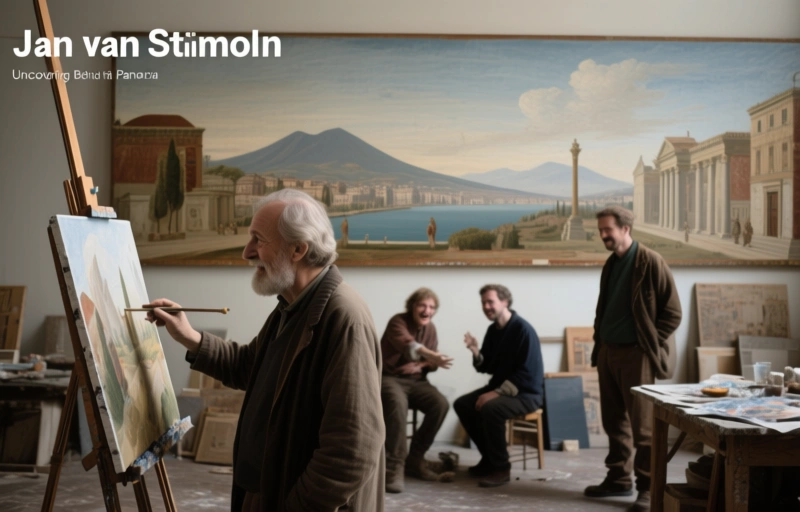
Explore the enigmatic life and singular masterpiece of Jan van Stinemolen (1518–1582), the artist behind the spectacular panoramic View of Naples. Uncover his journey from silversmith to creator of a unique cartographic-artistic hybrid.
Jan van Stinemolen (1518–1582) is one of those fascinating artists who somehow slipped through the cracks of art history. He's largely unknown today, and that's a real shame because his story—and his spectacular View of Naples—deserves more attention. Let's piece together what we know about this enigmatic figure.
### The Elusive Biography
First things first, reconstructing Stinemolen's life is like solving a puzzle with half the pieces missing. He isn't mentioned in Karel van Mander's famous *Schilder-Boeck*, the go-to source for Netherlandish artists of his time. So, we have to rely on scattered archival records. These documents place him primarily in the Spanish Netherlands. He started out in his hometown of Mechelen and later moved to Antwerp. The timeline gets fuzzy when we try to pin down his travels to Italy. We know he spent time in Naples, and a drawing even hints at a trip to Sicily, but the exact dates? They're still unclear.
His professional life adds another layer. Like many in his family, he was likely a silversmith and jeweller first. That was a lucrative trade in the 16th century, a real mark of success. But here's the twist—none of his metalwork has survived. The religious wars that swept through his homeland may have disrupted his life and career, perhaps even leading to the loss of his primary artistic output. It's a reminder of how fragile an artist's legacy can be.
### The Surviving Legacy: Drawings and a Masterpiece
So, what *do* we have from Jan van Stinemolen? Almost nothing from his day job as a silversmith. His legacy rests on a handful of drawings and one breathtaking work: the panoramic *View of Naples*. Most of the drawings are attributed to him based on style alone. They reveal something key about his interests—a clear fascination with landscapes shaped by powerful natural forces, particularly volcanoes. You can see it in the way he captured terrain.
Then there's the panorama itself. It's not just a pretty picture; it's a unique hybrid. Stinemolen masterfully blended a detailed topographical map with a convincing perspectival view. It's as if he wanted to give you both the lay of the land and the feeling of standing there, taking it all in. This innovative approach might have roots right in Mechelen, which was a thriving center for urban cartography during his lifetime. He would have been exposed to cutting-edge mapmaking techniques.
- **Artistic Innovation:** Merging map-making accuracy with an immersive viewer perspective.
- **Scientific Curiosity:** His drawings show a deep interest in geology and volcanic landscapes.
- **Lost Craft:** The absence of his silversmith work leaves a gap in understanding his full artistic range.
### Decoding the Panorama's Clues
This singular panorama is more than a cityscape; it's a document that lets us ask bigger questions about Stinemolen. Why did he create it? What was he trying to say or show? The characteristics of the work suggest an artist driven by more than just commission. There seems to be a genuine interest in natural history and the scientific observation of the world. The panorama allows us to form hypotheses about his motivations. Was he documenting Naples for commercial reasons, for personal study, or as a demonstration of skill for potential patrons back north?
One thing's for sure: his work bridges disciplines. It sits at the crossroads of art, science, and craftsmanship. In many ways, studying Stinemolen is about connecting dots across a fragmented biography. Each drawing, each archival note, and especially the Naples panorama, adds a piece to the puzzle. They hint at an artist keenly observing the world, from the workshops of Mechelen to the volcanic coastlines of southern Italy. His story reminds us that history is full of talented individuals whose full stories we may never know, but whose work continues to spark curiosity and wonder centuries later.