Jan van Stinemolen: The Man Behind the Naples Panorama
Miguel Fernández ·
Listen to this article~4 min
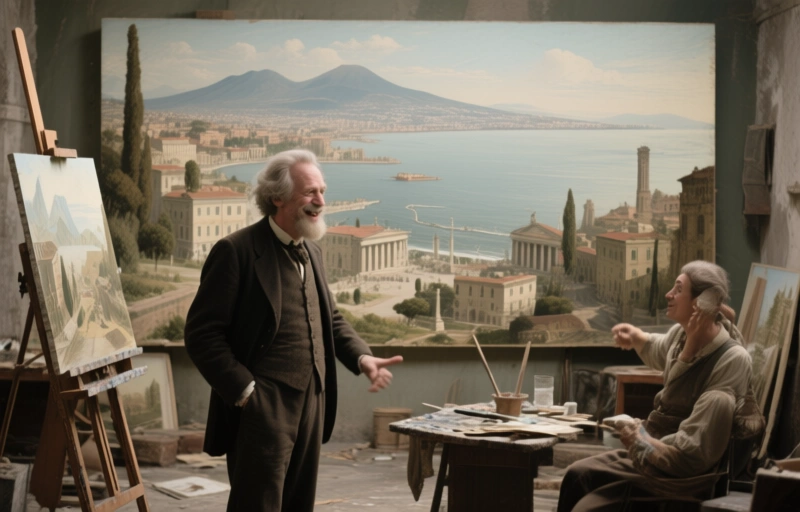
Discover the forgotten 16th-century artist Jan van Stinemolen and his breathtaking panoramic view of Naples. A blend of map and art, his work reveals a fascination with volcanoes and urban cartography.
You've probably never heard of Jan van Stinemolen. That's okay—most people haven't. But this 16th-century artist left us something truly spectacular: a panoramic view of Naples that still blows minds today. Let's dig into who he was and why his work matters.
Van Stinemolen lived from 1518 to 1582, a time when the world was changing fast. He wasn't just a painter; he was a silversmith and jeweler, too. And his story is pieced together from old records, not from any famous art history book. That's part of what makes it so fascinating.
### Who Was Jan van Stinemolen?
We know he was born in Mechelen, a city in the Spanish Netherlands (modern-day Belgium). Later, he moved to Antwerp. But here's the thing: we don't know exactly when he traveled to Naples or southern Italy. We can guess he visited Sicily because one of his drawings shows it. Still, the dates are fuzzy.
His family were silversmiths and jewelers—a pretty prosperous gig back then. But the religious wars in his homeland might have shaken things up for him. Sadly, none of his silver work survives. Only a few drawings remain, and most are attributed to him based on style alone. That's a thin thread to hang a legacy on, but his "View of Naples" is a masterpiece that speaks for itself.
### The Naples Panorama: A Unique Blend
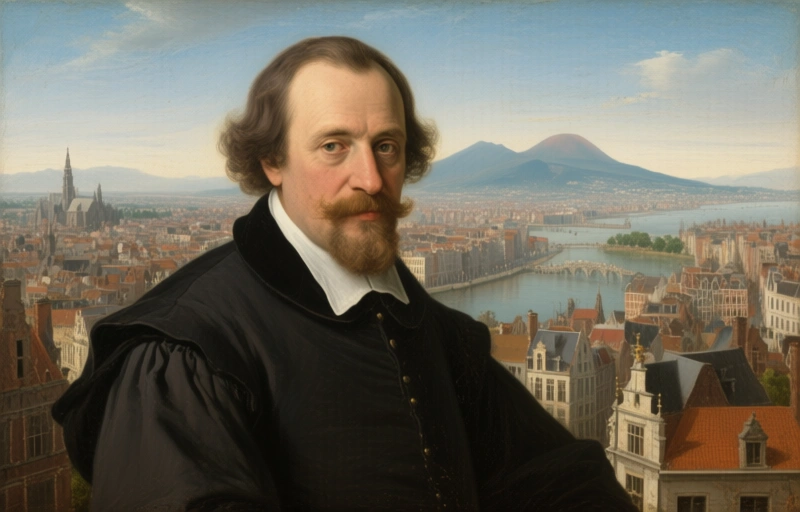
What makes this panorama so special? It's not just a pretty picture. Van Stinemolen mixed two different ways of seeing the world: topographical map and perspectival view. Think of it like a Google Earth image fused with a painting. You get the accuracy of a map and the beauty of art.
This blend might have roots in Mechelen, where urban cartography was booming in the 16th century. People were obsessed with mapping cities accurately. Van Stinemolen took that obsession and turned it into something artistic.
### A Fascination with Volcanoes
Look closely at his drawings, and you'll see something else: a love for volcanic landscapes. Van Stinemolen was clearly drawn to places shaped by fire and force. Maybe that's why Naples—sitting near Mount Vesuvius—captured his imagination. His panorama captures not just the city but its dramatic natural setting.
### What We Can Guess About His Motivations
Since we don't have a lot of facts, we have to make educated guesses. Here's what the panorama tells us:
- He was curious about natural history. The volcanic themes show an interest in how the earth works.
- He cared about accuracy. The map-like details suggest he wanted to document reality, not just romanticize it.
- He was a craftsman at heart. The precision of his silver work likely influenced his drawing style.
> "Every great artist leaves clues about their mind in their work. Van Stinemolen's panorama is a treasure map of his thoughts."
### Why This Matters Today
Van Stinemolen's work gives us a window into 16th-century Naples. It's a snapshot of a city that's changed a lot but still feels alive in his lines. For art lovers and history buffs, it's a rare gem. And for anyone curious about how artists think, it's a puzzle worth solving.
So next time you look at an old map or painting, remember: there's always a story behind it. Van Stinemolen's is just waiting to be told.