Jan van Stinemolen: The Lost Artist Behind Naples'…
Miguel Fernández ·
Listen to this article~4 min
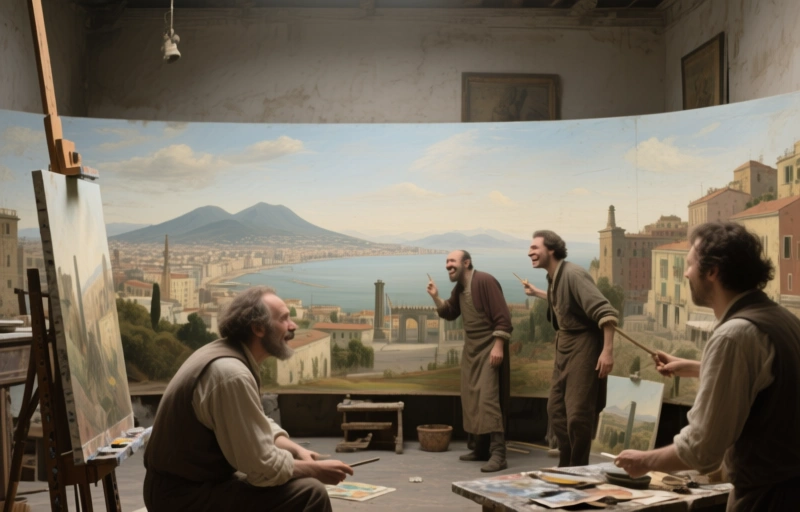
Explore the mystery of Jan van Stinemolen (1518–1582), the forgotten artist behind a spectacular panoramic view of Naples. A silversmith turned master draftsman, his story is pieced together from archival clues.
Ever heard of Jan van Stinemolen? Probably not. And that's exactly what makes him so fascinating. He's this 16th-century artist who created one of the most spectacular panoramic views of Naples, yet he remains largely a mystery. His story isn't in the famous art history books, so we have to piece it together like a detective, using scattered archival clues. Let's pull up a chair and explore this forgotten master together.
### Who Was Jan van Stinemolen?
Jan van Stinemolen lived from 1518 to 1582, working during a turbulent time in European history. Since he's not mentioned in Karel van Mander's essential *Schilder-Boeck*, his biography is full of gaps. We know he was from the Spanish Netherlands, starting in Mechelen and later moving to Antwerp. But here's where it gets tricky—his time in Italy is a big question mark. We think he traveled to Naples and maybe even Sicily, but the exact dates are lost. It's like trying to follow a shadow.
What's clear is that art wasn't his only gig. Like many in his family, he was likely a silversmith and jeweler. That was a lucrative trade back then, though the religious wars probably made life difficult. The irony? None of his metalwork survives. All we have left are a handful of drawings and that one breathtaking panorama of Naples. It makes you wonder what else he created that we'll never see.
### The Spectacular View of Naples
This panorama isn't just a pretty picture. It's a unique blend of a detailed map and a perspective view, a style that might have roots in Mechelen's thriving 16th-century cartography scene. Stinemolen wasn't just documenting a city; he was merging science and art. He had this clear fascination with landscapes shaped by powerful forces, especially volcanoes. You can see it in the way he captured the terrain.
His approach lets us guess at his deeper interests. Was he driven by artistic innovation, or was he more of a natural historian, captivated by the earth's raw power? The panorama gives us clues but no definitive answers. It's this beautiful, silent testament from an artist we barely know.
### Piecing Together the Puzzle
So, how do we understand an artist with so little surviving work? We look at the context. The 1500s were a time of immense change—artistic, religious, and political. Stinemolen was navigating all of that. His journey from the Netherlands to Italy would have exposed him to different styles and ideas. Think about the contrast between the detailed, map-like precision of Northern European art and the grand, human-focused scenes of the Italian Renaissance.
His surviving drawings, mostly attributed to him based on style, show a keen observer. They suggest a mind interested in accuracy and the drama of the natural world. We can make some educated guesses about his motivations:
- He was likely influenced by Mechelen's advanced urban mapping techniques.
- His travel to volcanic regions points to a deep curiosity about geology.
- The loss of his silversmith work means we're missing a huge piece of his artistic identity.
It's a reminder that history is selective. We celebrate the famous names, but countless others, like Stinemolen, shaped our visual culture in quieter ways. His *View of Naples* stands as a lonely masterpiece, asking us to look closer and remember the artist behind it. In the end, studying him isn't just about filling in historical blanks. It's about appreciating the fragments—the incomplete stories that make art history so endlessly compelling. They remind us that creativity often flourishes in the shadows, leaving behind just enough to spark our imagination centuries later.