Jan van Stinemolen: The Lost Artist Behind Naples'…
Miguel Fernández ·
Listen to this article~4 min
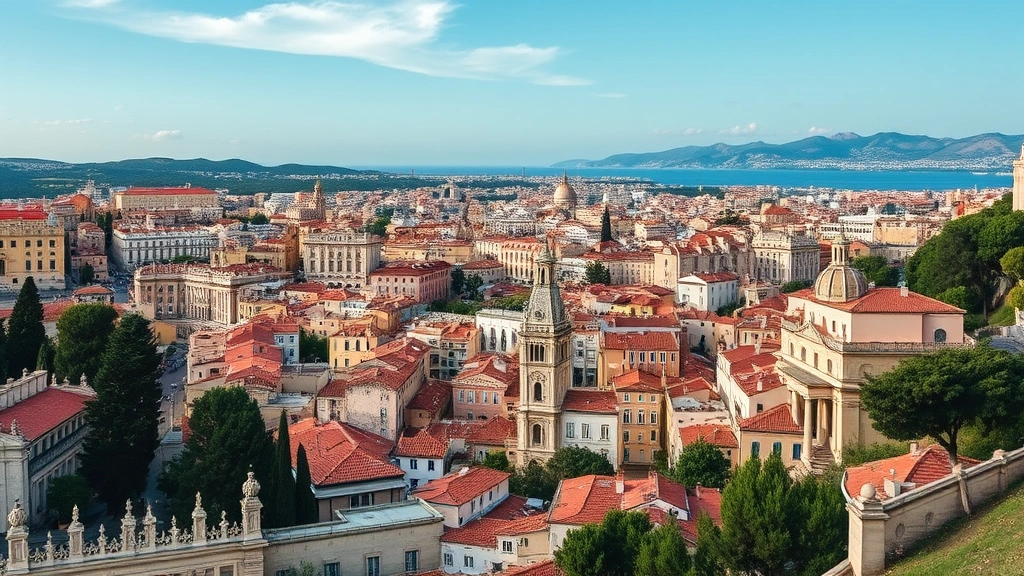
Explore the mysterious life and single surviving masterpiece of Jan van Stinemolen (1518–1582), a forgotten artist whose panoramic View of Naples blends map-making with artistic vision.
Let's talk about an artist who's been hiding in plain sight for centuries. Jan van Stinemolen lived from 1518 to 1582, and honestly, most people have never heard of him. That's because he doesn't show up in the big art history books of his time—not even in Karel van Mander's famous *Schilder-Boeck*. So piecing together his story feels a bit like detective work, digging through old archives and making educated guesses.
### The Elusive Biography
What we do know comes mostly from scattered records in the Spanish Netherlands. He started out in Mechelen, his hometown, and later moved to Antwerp. But here's where it gets fuzzy: we're not exactly sure when he spent time in Naples and southern Italy. We can guess he visited Sicily because of one of his drawings, but the dates? They're lost to history.
Like many in his family, Jan probably made his living as a silversmith and jeweler. That was a good trade back then—lucrative and respected. But living through the religious wars in his homeland couldn't have been easy, and it might have affected his work and travels. The frustrating part? None of his metalwork survives today. Not a single piece.
### What Survives: The View of Naples
So what do we have left? One spectacular masterpiece: the *View of Naples*. Beyond that, just a handful of drawings that experts attribute to him based on style. That panorama of Naples is really something special—it's not just a painting, but a unique blend of map-making and perspective art.
This approach might have roots in Mechelen, where urban cartography was booming during the 16th century. They were masters at mapping cities, and Stinemolen seems to have brought that precision to his artistic vision.
### A Fascination With Volcanic Landscapes
Looking at his drawings, one thing becomes clear: Jan was captivated by landscapes shaped by volcanic forces. You can see it in how he rendered terrain—there's a geological awareness there that wasn't common in all artists of his time. This wasn't just about pretty scenery; he was documenting how nature itself sculpts the world.
His panorama gives us clues about what drove him artistically. We can start forming hypotheses:
- He combined technical skill with artistic vision
- He had a genuine interest in natural history
- He approached cityscapes with a mapmaker's eye for detail
### Why He Matters Today
In many ways, Stinemolen represents the countless artists history has nearly forgotten. Working primarily as a craftsman in a practical trade, his artistic output was likely secondary to his livelihood. Yet that one surviving panorama suggests an extraordinary mind at work—someone observing the world with both precision and wonder.
As one scholar noted about such overlooked artists: "Their silence in the historical record speaks less to their talent than to the accidents of preservation and recognition."
What's remarkable is how his work bridges different disciplines:
- Topographical accuracy meets artistic composition
- Documentary purpose blends with aesthetic appeal
- Scientific observation informs creative expression
We're left with more questions than answers about Jan van Stinemolen. But maybe that's appropriate for an artist who worked at the intersection of so many fields—art, cartography, jewelry, and natural science. His story reminds us that history is full of creative minds whose full contributions we'll never fully know, but whose surviving works continue to spark our curiosity centuries later.