Jan van Stinemolen: The Lost Artist Behind Naples'…
Miguel Fernández ·
Listen to this article~4 min
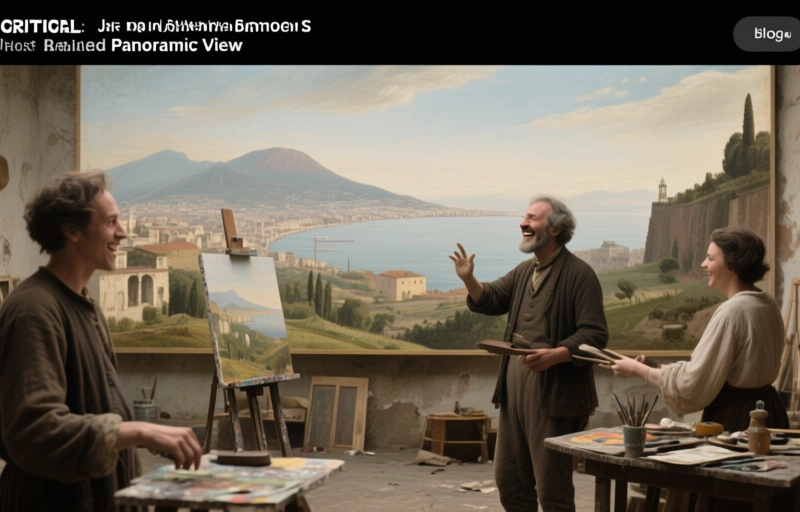
Explore the mysterious life of Jan van Stinemolen (1518–1582), the forgotten artist behind the spectacular panoramic View of Naples. Uncover his journey from silversmith to creator of a unique cartographic masterpiece.
Jan van Stinemolen (1518–1582) is one of those fascinating artists who somehow slipped through the cracks of art history. He's largely unknown today, which is a real shame when you consider what little we do have of his work. His story isn't neatly recorded in the famous art books of his time—like Karel van Mander's *Schilder-Boeck*—so we've had to piece his life together from scattered archives. It's detective work, really, and the picture is still incomplete.
### Piecing Together A Scattered Life
What we know for sure places him in the Spanish Netherlands. He started in his hometown of Mechelen and later moved to Antwerp. The timeline gets fuzzy when it comes to his travels south. We know he spent time in Naples and southern Italy—a trip to Sicily is hinted at in one of his drawings—but the exact dates are lost to us. It's like trying to follow a trail that's faded with time.
He likely followed the family trade, working primarily as a silversmith and jeweler. That was a prosperous profession back then, though the religious wars sweeping through his homeland probably didn't make life easy. Here's the frustrating part for historians: not a single piece of his metalwork has survived. All that skill, all that craftsmanship—gone.
### The Spectacular View That Survived
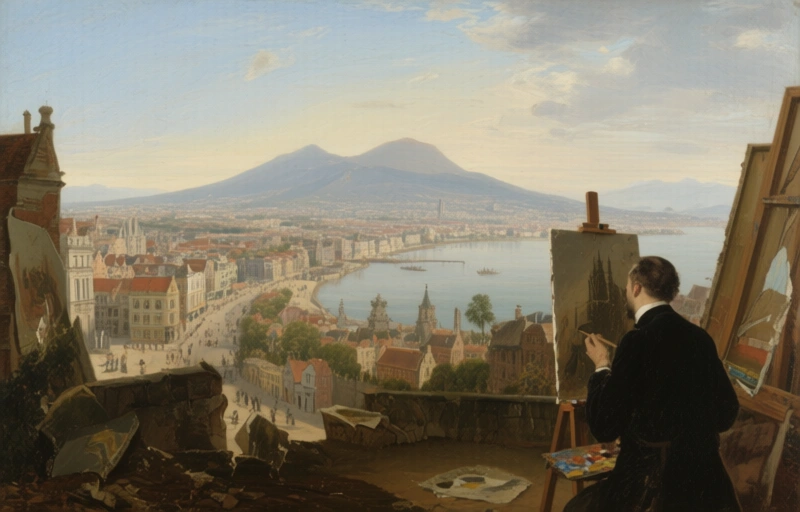
What did survive is something truly special: his spectacular *View of Naples*. Apart from this one major panorama, only a handful of drawings remain, attributed to him mostly because of their style. This makes the *View of Naples* incredibly precious. It's our main window into his artistic mind.
So, what makes this panorama so unique? Stinemolen did something clever. He merged a detailed topographical map with a sweeping perspectival view. You get the accuracy of a map with the immersive feel of a painting. It's not just a picture; it's a document of a place.
### The Mechelen Connection And Volcanic Fascination
This innovative approach might have roots in his hometown. Mechelen was a hub for urban cartography in the 16th century. He would have been surrounded by that culture of precise, detailed city mapping. It clearly left a mark on how he saw the world.
Looking at his drawings, another passion becomes clear: he was captivated by landscapes shaped by volcanic forces. You can see it in the way he rendered terrain. It wasn't just about pretty scenery for him; there was a deep interest in how the earth itself forms these vistas.
This leads us to some interesting questions about his motivations. The characteristics of his panorama aren't just technical achievements. They suggest an artist driven by more than commission. We can form hypotheses about a genuine interest in natural history and a desire to document the world with both scientific curiosity and artistic flair.
- **A Hybrid Vision:** He blended map-making and perspective art in a way few others did.
- **Lost Legacy:** His primary trade as a silversmith is represented by zero surviving works.
- **Natural Observer:** His drawings show a specific fascination with volcanic landscapes.
- **Historical Puzzle:** His biography remains a collection of fragments from archives.
In the end, Jan van Stinemolen stands as a reminder of how many stories art history has yet to fully tell. His work bridges gaps—between north and south, between craft and fine art, between documenting and imagining. We're left with a breathtaking view of Naples and the compelling mystery of the man who created it.