Jan van Stinemolen: The Lost Artist Behind Naples'…
Miguel Fernández ·
Listen to this article~5 min
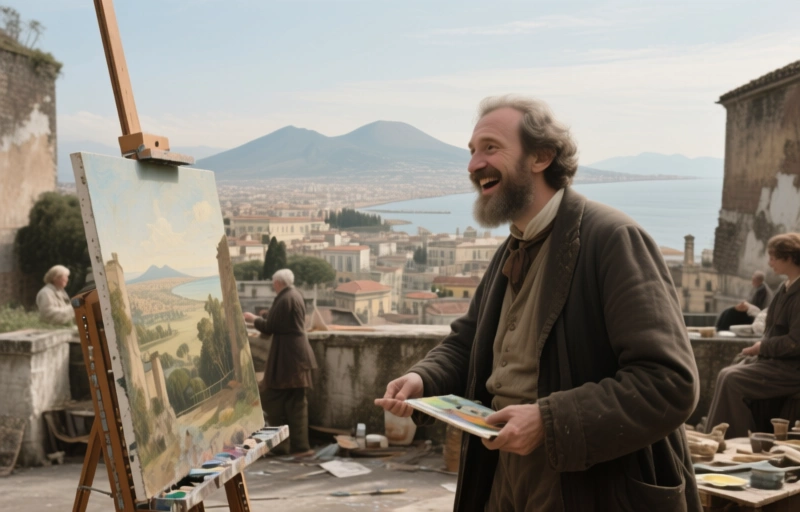
Explore the mysterious life of Jan van Stinemolen (1518–1582), the obscure artist behind the spectacular View of Naples panorama. Discover how this silversmith turned artist blended mapmaking with artistic vision.
Let's talk about an artist who's been hiding in plain sight for centuries. Jan van Stinemolen lived from 1518 to 1582, and honestly, most people have never heard of him. That's because he doesn't show up in Karel van Mander's famous *Schilder-Boeck*, which was basically the who's who of artists back then. So we've had to piece his story together from old records, and even those leave us with more questions than answers.
What we do know is fascinating. Stinemolen spent most of his life in what we now call Belgium, moving between his hometown of Mechelen and the bustling city of Antwerp. Both were part of the Spanish Netherlands during his lifetime. But here's where things get interesting – he definitely spent time in Italy, particularly Naples and possibly Sicily. We can tell from his drawings, though the exact dates of his Italian adventures remain a mystery.
### The Silversmith Who Became An Artist
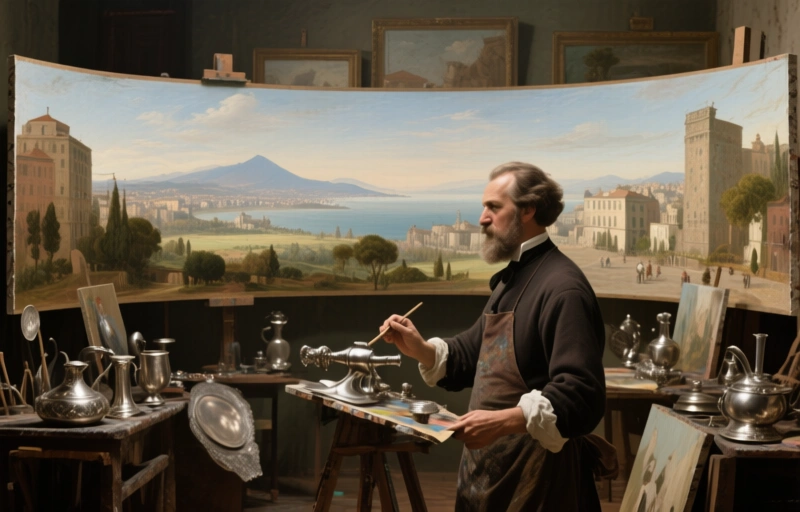
Here's something that might surprise you – Stinemolen wasn't primarily a painter. Like other members of his family, he probably made his living as a silversmith and jeweler. That was a pretty lucrative trade in the 16th century, though he likely faced challenges during the religious wars that swept through his homeland.
The strange thing is, none of his metalwork has survived. Not a single piece. What we have instead is his spectacular *View of Naples* panorama and a handful of drawings that experts attribute to him based on style. It's like history preserved the wrong part of his legacy.
### A Unique Blend Of Map And Art
Stinemolen's *View of Naples* isn't just a pretty picture – it's something special. He managed to blend topographical accuracy with artistic perspective in a way that was pretty innovative for his time. This wasn't just art for art's sake; it was art that documented reality while still being beautiful.
Where did this approach come from? Well, Mechelen, his hometown, was a center for urban cartography in the 16th century. The city was known for detailed maps and city views, so Stinemolen probably grew up seeing this blend of art and geography. He just took it to the next level.
### Drawn To Volcanic Landscapes
Looking at his surviving drawings, one theme keeps popping up – landscapes shaped by volcanic forces. There's something about those dramatic, earth-changing formations that clearly fascinated him. Maybe it was the raw power, or the way nature could reshape itself so completely.
This interest in natural history shows up in his panorama too. The characteristics of his *View of Naples* let us make some educated guesses about what drove him artistically. Was he trying to document? To understand? To capture something fleeting?
### Why He Matters Today
So why should we care about an obscure 16th-century artist? Because Stinemolen represents all those creative people whose stories got lost in time. He reminds us that:
- Artistic innovation often happens in unexpected places
- People have always blended different disciplines (in his case, cartography and art)
- Sometimes the most interesting stories are the ones we have to dig for
His work bridges gaps between art and science, between documentation and expression. In today's world where we're constantly categorizing everything, Stinemolen's blended approach feels surprisingly modern.
As one art historian put it, "The most fascinating artists are often the ones who don't fit neatly into our boxes." Stinemolen definitely fits that description.
### Piecing Together The Puzzle
Researching someone like Stinemolen is like putting together a puzzle with half the pieces missing. The archival sources give us glimpses – he was here at this time, he worked with these people – but the full picture remains elusive.
What we can say is that his *View of Naples* stands as a testament to a unique artistic vision. It's not just a view of a city; it's a view through the eyes of someone who saw the world differently. Someone who could look at a landscape and see both its artistic beauty and its geographical truth.
In the end, maybe that's the most important thing about Jan van Stinemolen. He reminds us that great art doesn't always come from famous names. Sometimes it comes from the quiet ones, the ones working in the background, blending what they know with what they feel. And sometimes, if we're lucky, their work survives long enough for us to discover it centuries later.