Jan van Stinemolen: The Lost Artist Behind Naples'…
Miguel Fernández ·
Listen to this article~4 min
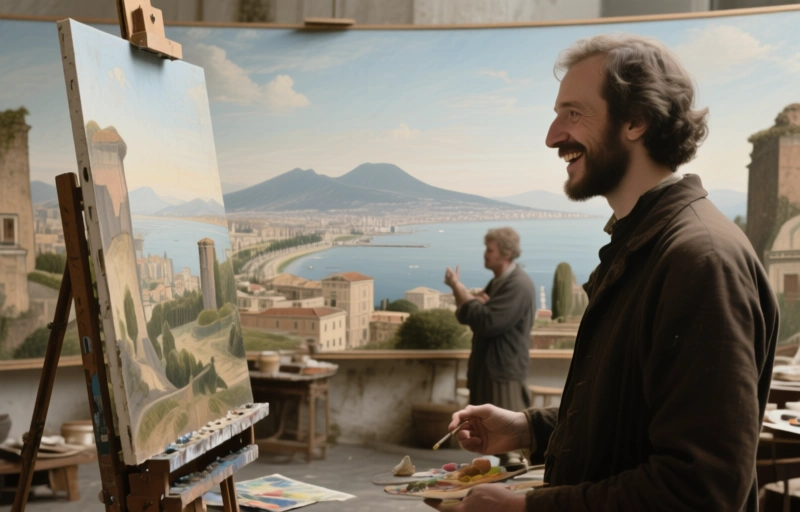
Explore the mysterious life of Jan van Stinemolen (1518-1582), the Renaissance artist and silversmith whose panoramic View of Naples blends art, cartography, and natural history.
Let's talk about an artist who's been hiding in plain sight for centuries. Jan van Stinemolen lived from 1518 to 1582, and honestly, most people have never heard of him. That's because he doesn't show up in the famous art history books of his time. We're left piecing together his story from scattered records, like trying to complete a puzzle with half the pieces missing.
What we do know paints an intriguing picture. Stinemolen spent most of his life in what we now call Belgium - first in Mechelen, then later in Antwerp. Both cities were buzzing artistic centers during the Renaissance. But here's where things get mysterious: we know he traveled to Italy, specifically Naples and probably Sicily, but we don't know exactly when or why.
### The Silversmith Who Became an Artist
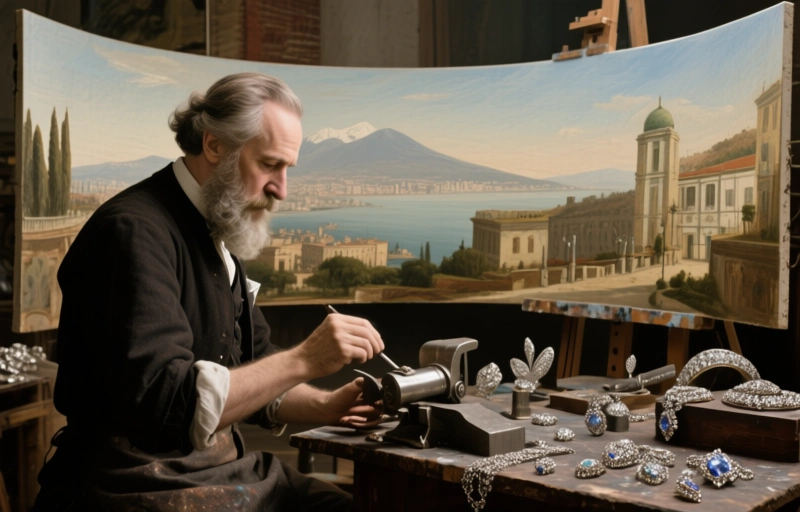
Here's something interesting - Stinemolen probably made his living as a silversmith and jeweler. That was a pretty lucrative trade back then, though he might've faced challenges during the religious conflicts sweeping through Europe. The strange part? None of his metalwork survives today. All we have are a handful of drawings and one spectacular masterpiece.
That masterpiece is his panoramic View of Naples. It's not just a pretty picture - it's a fascinating blend of map-making and artistic perspective. Think of it as Google Earth meets Renaissance art. This approach might have roots in Mechelen, where urban cartography was really taking off during the 16th century.
### A Unique Artistic Vision
What makes Stinemolen's panorama so special? He wasn't just documenting what he saw. He was creating something that balanced scientific accuracy with artistic interpretation. His drawings show a particular fascination with landscapes shaped by volcanic forces - something he would've encountered around Naples and Sicily.
This gives us clues about his interests. He wasn't just an artist or a craftsman. He was someone curious about the natural world, about how geography and geology shape our environment. His panorama lets us ask questions about what motivated him creatively.
- He combined technical map-making with artistic perspective
- He showed particular interest in volcanic landscapes
- His work suggests curiosity about natural history
- He operated outside mainstream artistic circles of his time
### The Mystery That Remains
We're left with more questions than answers about Stinemolen. Why did he travel to Italy? How long did he stay? What happened to all his silverwork? The religious wars of his time might explain some gaps in the record, but we can only speculate.
What's remarkable is that despite having so little of his work survive, what remains is genuinely significant. His View of Naples stands as an important document of both artistic technique and geographical understanding in the 16th century.
As one art historian might say, "Sometimes the most interesting stories are the ones we have to work hardest to uncover."
### Why Stinemolen Matters Today
In our age of digital mapping and instant photography, Stinemolen's approach feels surprisingly modern. He was trying to capture not just what a place looked like, but how it functioned as a living space. His panorama shows buildings, streets, natural features, and how they all related to each other.
His work reminds us that art and science haven't always been separate disciplines. For Renaissance thinkers like Stinemolen, understanding the world meant using every tool available - artistic skill, observational accuracy, and technical knowledge.
We may never know the full story of Jan van Stinemolen's life. But his surviving work gives us a window into a fascinating mind - someone who saw the world through multiple lenses and left behind something truly unique. In an era when most artists were painting religious scenes or portraits of wealthy patrons, he was out there documenting the actual world around him. And honestly, that's pretty cool.