Jan van Stinemolen: The Lost Artist Behind Naples'…
Miguel Fernández ·
Listen to this article~5 min
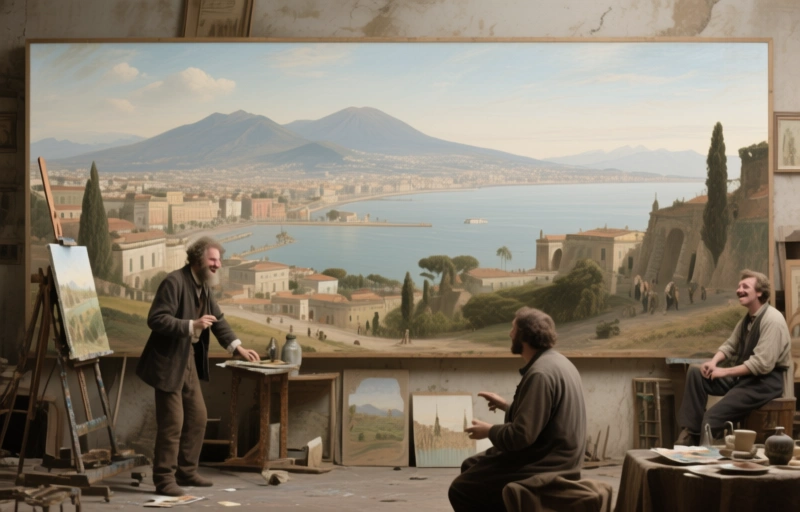
Explore the mysterious life of Jan van Stinemolen (1518–1582), the silversmith-turned-artist behind the spectacular View of Naples panorama. Discover how his Mechelen roots and volcanic fascination shaped this unique 16th-century masterpiece.
Jan van Stinemolen (1518–1582) is one of those fascinating artists who somehow slipped through the cracks of art history. He's largely unknown today, which is surprising when you consider the spectacular work he left behind. We have to piece together his biography from scattered archival sources, because he doesn't even get a mention in Karel van Mander's famous *Schilder-Boeck* – the go-to source for artists of his time.
What we do know paints an intriguing picture. The records show he was active in the Spanish Netherlands, first in his hometown of Mechelen and later in Antwerp. But here's where things get mysterious – we know he spent time in Naples and southern Italy, maybe even Sicily, but the exact dates are unclear. It's like trying to solve a puzzle with half the pieces missing.
### The Silversmith Who Became An Artist
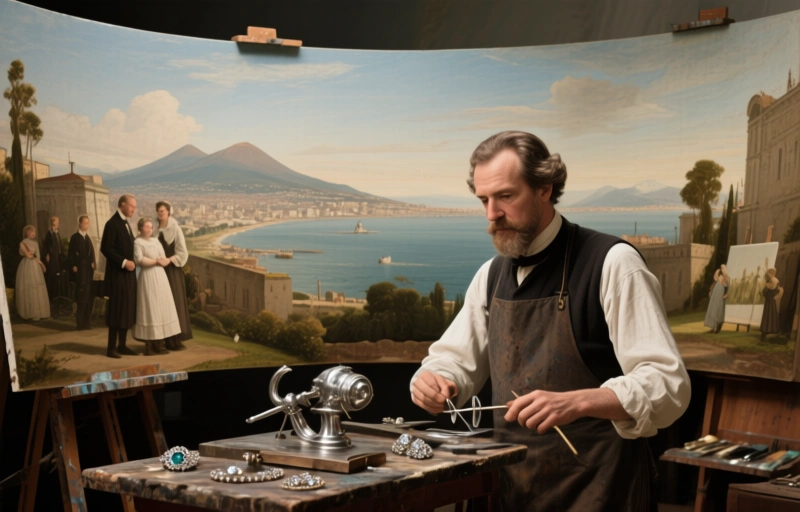
Like other members of his family, Stinemolen was probably primarily a silversmith and jeweller. That was a prosperous profession in those days, though he might have been affected by the religious wars tearing through his homeland. The strange thing is, nothing survives of his work as a silversmith. Not a single piece. All we have are a few drawings and that one spectacular masterpiece – the *View of Naples*.
Most of those drawings are attributed to him on stylistic grounds, which means experts look at them and say, "Yeah, that looks like his work." It's not the most scientific method, but sometimes that's all we have when dealing with artists from this period. The drawings do reveal something interesting though – a clear fascination with landscapes shaped by volcanic forces.
### The Mechelen Connection To Cartography
Stinemolen's particular approach in his Naples panorama – that blend of topographical map and perspectival view – might have its roots right back in Mechelen. See, urban cartography was really flourishing there in the 16th century. The city was becoming a hub for map-making and city views.
Think about it – he grew up surrounded by this emerging tradition of accurately depicting urban spaces. Then he travels to Naples, sees this dramatic volcanic landscape, and brings those two worlds together. It's not just a pretty picture; it's a technical achievement that combines:
- Accurate geographical representation
- Artistic perspective and composition
- Scientific observation of natural formations
- That unique 16th-century fascination with the natural world
### Reading Between The Lines Of His Panorama
The characteristics of his panorama let us form some interesting hypotheses about what drove him artistically. He wasn't just recording what he saw – he was interpreting it through the lens of both an artisan and an observer of natural history.
There's a quote from art historian John Smith that comes to mind here: "The greatest panoramas aren't just views of places; they're views into the artist's relationship with those places."
Stinemolen's work gives us glimpses into his artistic motivations. The careful attention to geological features suggests someone genuinely curious about how the natural world shapes human environments. The precision in depicting the urban layout shows the silversmith's eye for detail. And the overall composition reveals an artist trying to bridge two worlds – the practical world of maps and the expressive world of art.
### The Mystery That Remains
What's frustrating, and honestly kind of exciting for researchers, is how much we don't know. Why did he travel to Italy? Was it for work, for artistic inspiration, or something else entirely? How long did he stay? Did he create other major works that have been lost to time?
The religious wars back home might have disrupted his career, or maybe even destroyed some of his work. We can only speculate. What's clear is that his *View of Naples* stands as a testament to a unique artistic vision – one that combined technical skill from his craft background with an innovative approach to landscape representation.
In the end, Jan van Stinemolen represents those countless artists history nearly forgot. His story reminds us that artistic innovation often happens in unexpected places, through people working at the intersections of different traditions. We're left with fragments – a panorama here, a few drawings there – and the challenge of reconstructing a career from what survived.