Jan van Stinemolen: The Lost Artist Behind Naples'…
Miguel Fernández ·
Listen to this article~5 min
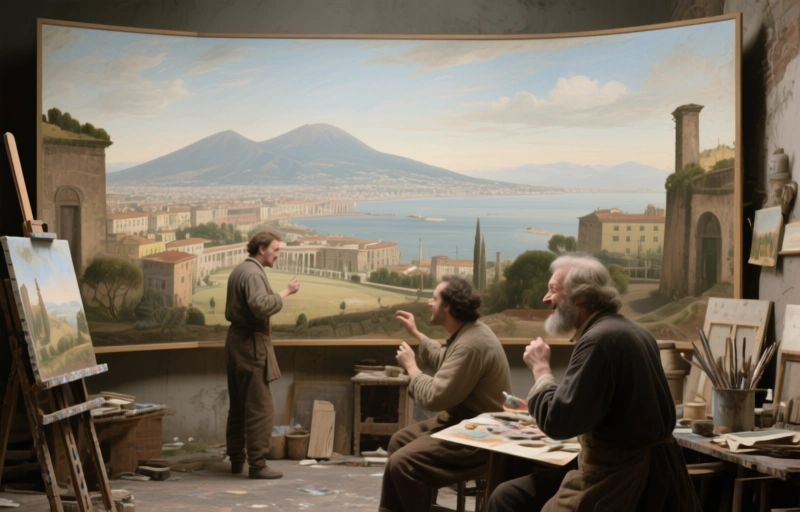
Explore the mysterious life of Jan van Stinemolen (1518–1582), the silversmith-turned-artist behind Naples' spectacular panoramic view. Discover how his cartographic innovations and volcanic landscape fascination created art history's hidden gem.
Jan van Stinemolen (1518–1582) is one of those fascinating artists who somehow slipped through the cracks of art history. He's largely unknown today, which is surprising when you consider the spectacular work he left behind. We have to piece together his biography from scattered archival sources, because he doesn't even get a mention in Karel van Mander's famous *Schilder-Boeck*. It's like trying to complete a puzzle with half the pieces missing.
What we do know paints an interesting picture. The records show Stinemolen moving through the Spanish Netherlands—first in his hometown of Mechelen, then later in Antwerp. But here's where it gets tricky: the exact dates of his time in Naples and southern Italy remain unclear. We can infer a trip to Sicily from one of his drawings, but the timeline is fuzzy at best.
### The Silversmith Who Became An Artist
Like other members of his family, Stinemolen was probably primarily active as a silversmith and jeweller. That was a prosperous profession in his day, though he may have been affected by the religious wars tearing through his homeland. The irony is that nothing has survived of his work as a silversmith—not a single piece. All we have are a few drawings attributed to him on stylistic grounds, and of course, that spectacular *View of Naples*.
It makes you wonder, doesn't it? How many other artists like Stinemolen have been lost to time, their stories incomplete, their work reduced to fragments? His journey from silversmith to creator of one of the most interesting panoramic views of Naples is a story worth telling.
### The Mechelen Connection To Cartography
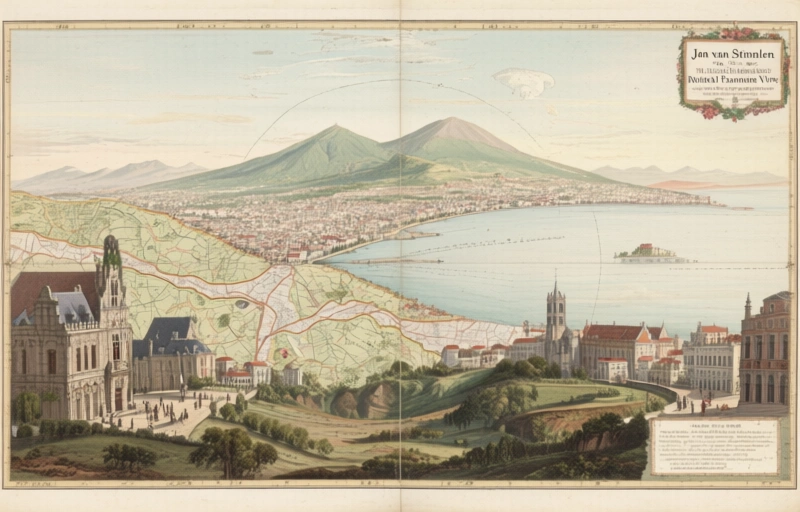
Stinemolen's particular approach in his Naples panorama—that clever amalgamation of topographical map and perspectival view—might have its roots right back in Mechelen. See, urban cartography was flourishing there in the 16th century. The city was becoming known for detailed city views and maps that blended accuracy with artistic vision.
Think about it: a silversmith trained in precise work, living in a center of cartographic innovation. That background would have given him unique tools for creating something that was both geographically informative and visually stunning. He wasn't just drawing a pretty picture; he was mapping a city with an artist's eye.
### Volcanic Landscapes And Natural History
What really comes through in Stinemolen's surviving drawings is his fascination with landscapes shaped by volcanic forces. You can see it in the way he captures terrain—there's a geological curiosity at work. This wasn't just about documenting what he saw; it was about understanding how natural forces created those landscapes.
The characteristics of his Naples panorama let us form some interesting hypotheses about his artistic motivations. He seems to have been genuinely interested in natural history, in how the physical world works and how it shapes human settlements. His panorama isn't just a view; it's a study.
Consider these key aspects of his work:
- The blend of cartographic precision with artistic perspective
- The evident interest in geological formations and volcanic landscapes
- The influence of Mechelen's 16th century cartographic traditions
- The mysterious gap between his silversmith profession and artistic output
> "Stinemolen's panorama represents that rare moment where mapmaking and art meet on equal terms—each enhancing the other, creating something greater than either could achieve alone."
We're left with more questions than answers about Jan van Stinemolen. Why did a successful silversmith create such detailed drawings and panoramas? How much of his work has been lost? What might we learn if more of his pieces surfaced? His story reminds us that history is full of these shadowy figures—talented individuals whose full stories we may never know, but whose work continues to speak across centuries.
The religious wars, his professional life as a silversmith, his travels through Italy—all these elements shaped the artist who created that remarkable view of Naples. We can only imagine what else he might have created, what other cities he might have captured with that unique blend of cartographer's precision and artist's vision. His legacy, though small, offers a fascinating window into how 16th century artists approached the world around them.