Jan van Stinemolen: The Lost Artist Behind Naples' Panorama
Miguel Fernández ·
Listen to this article~4 min
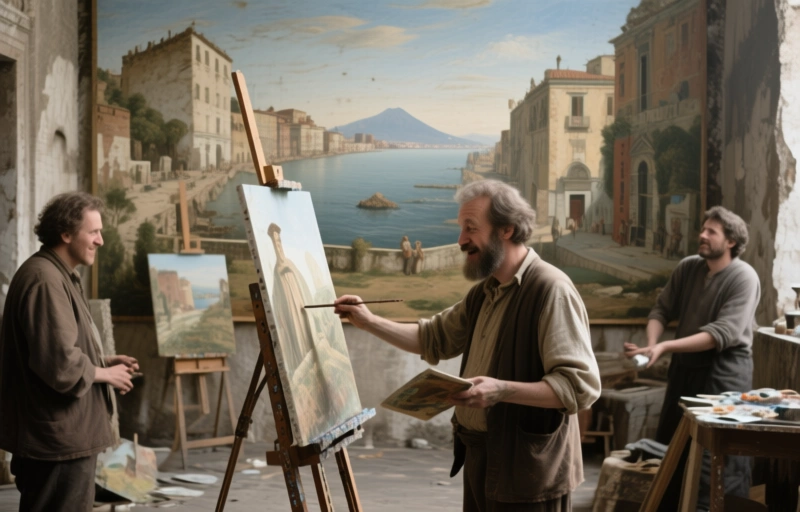
Explore the mysterious life of Jan van Stinemolen (1518-1582), the forgotten artist behind the spectacular View of Naples. Discover how this silversmith created a masterpiece blending map and perspective.
Let's talk about an artist who's been hiding in plain sight for centuries. Jan van Stinemolen lived from 1518 to 1582, and honestly, most art history books don't even mention his name. That's because he's completely absent from Karel van Mander's famous *Schilder-Boeck*, which was basically the who's who of 16th century artists.
We have to piece together his story from scattered archives, and it's still full of gaps. What we do know paints a fascinating picture of a man caught between worlds.
### The Journey of a Renaissance Craftsman
Stinemolen's story begins in the Spanish Netherlands, where records first place him in his hometown of Mechelen. He later shows up in Antwerp, which was the beating heart of European trade and art at the time. But here's where things get mysterious—we know he spent time in Naples and southern Italy, maybe even Sicily, but the exact dates are lost to history.
Like many in his family, he probably made his living as a silversmith and jeweler. That was a lucrative trade back then, though the religious wars sweeping through his homeland might have disrupted his work. The irony? Not a single piece of his metalwork survives today.
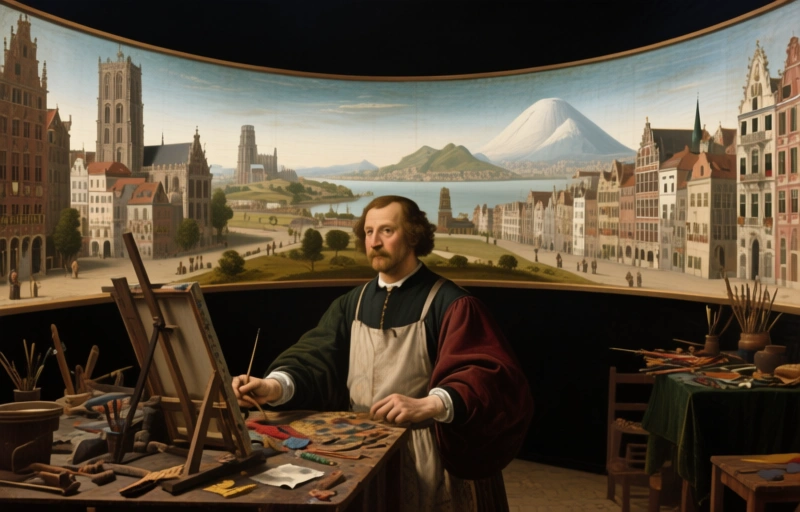
### The Spectacular View That Survived
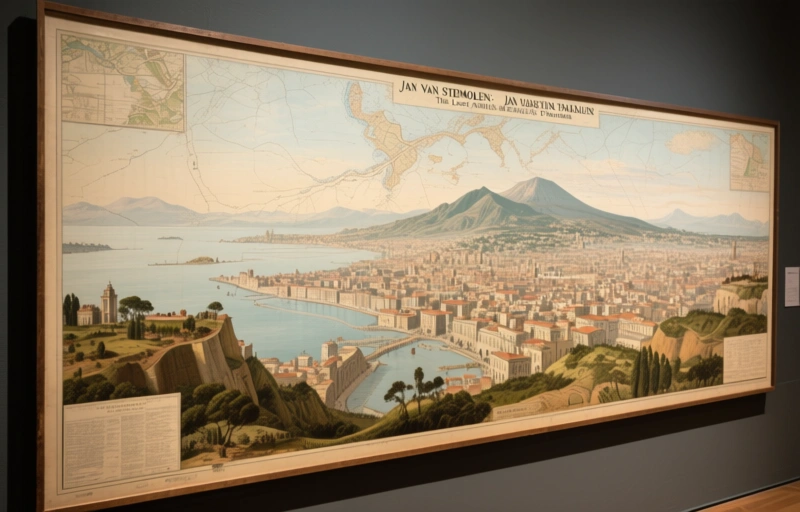
What did survive is something extraordinary—his *View of Naples*. This isn't just another cityscape. It's a unique blend of topographic map and perspectival view that feels ahead of its time. Along with this masterpiece, we have a handful of drawings attributed to him based on style.
Think about that for a second. An artist whose primary profession left no physical trace, yet whose side projects became his lasting legacy. It makes you wonder how many other creators throughout history have been similarly forgotten.
### Where Did His Vision Come From?
Stinemolen's innovative approach to depicting Naples might have roots in Mechelen's thriving 16th century urban cartography scene. The city was known for detailed city maps and plans, and that influence seems to have traveled with him to Italy.
What's particularly striking in his drawings is his fascination with landscapes shaped by volcanic forces. You can almost feel the earth's power in his lines and perspectives. This wasn't just about recording what he saw—it was about capturing the forces that created it.
### Reading Between the Lines
The characteristics of his Naples panorama let us make some educated guesses about what drove him artistically:
- He blended scientific observation with artistic vision
- He had a deep interest in natural history and geology
- He approached cityscapes as living, evolving entities
- He valued accuracy but wasn't afraid to interpret
Here's a thought that stays with me: "Sometimes the most innovative artists are the ones who work between established categories." Stinemolen wasn't just a silversmith or just a painter—he was something in between, and that space allowed for unique creativity.
### Why He Matters Today
In our age of specialization, Stinemolen reminds us that crossing boundaries can create something truly original. His story isn't just about art history—it's about how we remember creators, how professions define legacies, and how sometimes the side project becomes the main event.
We're left with more questions than answers about his life. But maybe that's appropriate for an artist who worked in the spaces between—between map and painting, between craft and art, between memory and record. His incomplete biography somehow feels fitting for someone who gave us such a complete vision of a city.