Jan van Stinemolen: The Lost Artist Behind Naples' Panorama
Miguel Fernández ·
Listen to this article~4 min
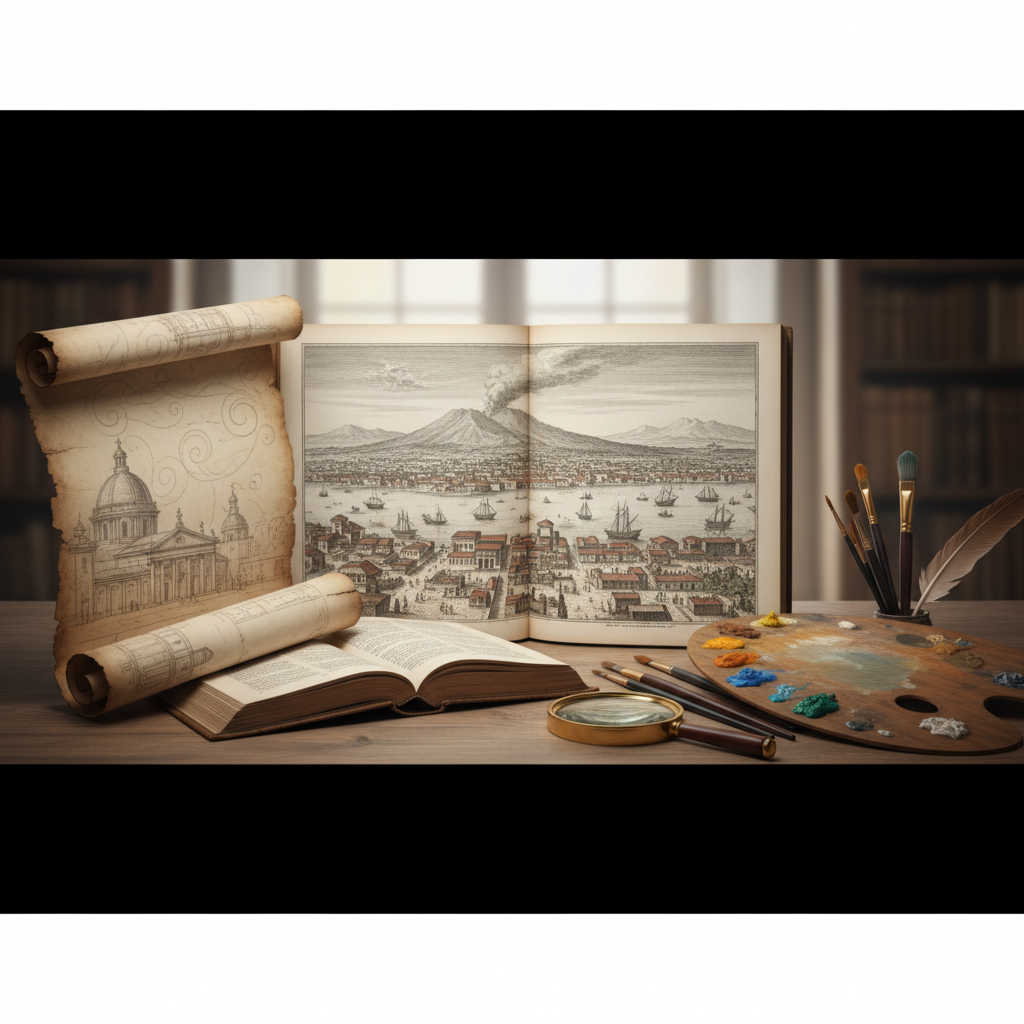
Explore the mysterious life and work of Jan van Stinemolen (1518–1582), the silversmith-turned-artist behind the spectacular View of Naples panorama. Discover how his unique blend of cartography and perspective created a masterpiece.
Jan van Stinemolen (1518–1582) is one of those fascinating artists who somehow slipped through the cracks of art history. He's largely unknown today, which is a real shame when you consider his work. Since he doesn't appear in Karel van Mander's famous *Schilder-Boeck*, we've had to piece together his life from scattered archives. It's like trying to complete a puzzle with half the pieces missing.
What we do know paints an intriguing picture. Stinemolen spent most of his life in the Spanish Netherlands—first in his hometown of Mechelen, then later in Antwerp. But here's where things get interesting: he definitely spent time in Italy, particularly Naples and possibly Sicily. The exact dates? Well, that's still unclear. We can infer the Sicilian trip from one of his drawings, but the timeline remains fuzzy.
### The Silversmith Who Became an Artist
Like many in his family, Stinemolen probably worked primarily as a silversmith and jeweler. That was a prosperous trade in the 16th century, though the religious wars in his homeland likely caused some disruption. The irony? None of his metalwork has survived. Not a single piece. All we have are a handful of drawings and one spectacular work: his *View of Naples* panorama.
Think about that for a moment. A craftsman known for precious metals leaves behind only paper works. It makes you wonder what incredible silver pieces were lost to time. The few drawings we do have are attributed to him based on style alone—there are no signatures, no documentation. We're essentially making educated guesses about his artistic output.
### A Revolutionary View of Naples
Stinemolen's *View of Naples* isn't just another cityscape. It's something special—a unique blend of topographical map and perspectival view. He wasn't just showing buildings; he was capturing the very essence of the city, its layout, its relationship to the landscape. This approach might have roots in Mechelen, where urban cartography really took off during the 16th century.
What's particularly striking is his fascination with landscapes shaped by volcanic forces. You can see it in his drawings—the way he captures terrain that feels alive, still forming, still dangerous. It wasn't just about pretty scenery; it was about understanding the forces that created that scenery.
### Why His Work Still Matters Today
Stinemolen's panorama gives us more than just a historical snapshot. It lets us form hypotheses about his artistic motivations and his interest in natural history. He wasn't just documenting; he was analyzing, interpreting, trying to understand the world through both artistic and scientific lenses.
Consider these key aspects of his approach:
- Combined accurate mapping with artistic perspective
- Showed genuine curiosity about geological formations
- Created works that served both practical and aesthetic purposes
- Operated at the intersection of multiple disciplines
That interdisciplinary thinking feels remarkably modern, doesn't it? Here was an artist working centuries ago who understood that art, science, and craftsmanship could inform each other.
As one art historian noted, "Stinemolen's work represents a bridge between the medieval worldview and emerging Renaissance thinking—he saw the world as both measurable and marvelous."
### The Mystery That Remains
We're left with so many questions. Why did a successful silversmith create such detailed panoramic views? Was it purely artistic passion, or was there some practical purpose we haven't discovered? How much of his work has been lost or misattributed to other artists?
What's clear is that Jan van Stinemolen deserves more attention than he's received. His *View of Naples* alone places him among the interesting visual thinkers of his era—artists who saw beyond mere representation to something deeper, something that connected human creation with natural forces.
Maybe that's his real legacy: reminding us that the best art often comes from curious minds willing to cross boundaries, to blend disciplines, to see the world in multiple dimensions simultaneously. In an age of specialization, that's a lesson worth remembering.