Jan van Stinemolen: Rediscovering the Artist Behind Naples Panorama
Miguel Fernández ·
Listen to this article~4 min
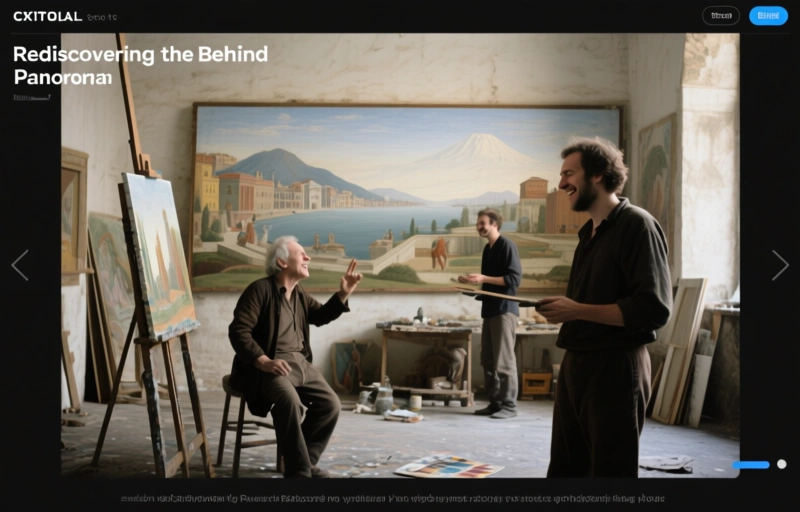
Explore the mysterious life and work of Jan van Stinemolen (1518–1582), the largely forgotten artist behind the spectacular View of Naples panorama. Discover how he blended cartography with artistic vision.
Jan van Stinemolen (1518–1582) is one of those fascinating artists who somehow slipped through the cracks of art history. He's largely unknown today, which is surprising when you consider his remarkable work. We have to piece together his biography from scattered archival sources since he doesn't even appear in Karel van Mander's famous *Schilder-Boeck* – the go-to source for artists of his time.
### Piecing Together a Lost Biography
What we do know paints an interesting picture. Stinemolen spent most of his life in the Spanish Netherlands, first in his hometown of Mechelen and later in Antwerp. His time in Naples and southern Italy remains something of a mystery – the exact dates are unclear, though we can guess he visited Sicily from one of his drawings. Like many in his family, he probably worked primarily as a silversmith and jeweler. That was a prosperous profession in those days, though the religious wars in his homeland likely affected his life and work.
Here's the frustrating part – none of his silversmith work has survived. All we have left is his spectacular *View of Naples* and a handful of drawings attributed to him based on style. It's like trying to understand a musician when you've only heard one song.
### The Spectacular View of Naples
That one surviving masterpiece tells us so much though. Stinemolen's panorama of Naples represents a unique blend of topographical map and perspectival view. He wasn't just creating a pretty picture – he was documenting a city with cartographic precision while maintaining an artist's eye for composition. This approach might have roots in Mechelen, where urban cartography really took off during the 16th century.
What's particularly interesting is his fascination with landscapes shaped by volcanic forces. You can see it in his drawings – there's a genuine curiosity about how nature shapes the world around us. His work suggests someone who was both an artist and an observer of natural history.
### Why His Work Matters Today
Stinemolen's story reminds us how much art history we might be missing. Think about it – here's an artist who created innovative work blending mapping and perspective, yet he's virtually unknown. His particular approach to panorama creation was ahead of its time in many ways.
- He combined technical precision with artistic vision
- He documented cities with both accuracy and beauty
- He showed genuine interest in geological formations
- His work bridges art, cartography, and natural observation
We can only form hypotheses about his artistic motivations, but his surviving work suggests someone deeply curious about the world. In an age before photography, his panoramas served as both documentation and interpretation.
### The Mystery That Remains
There's so much we'll probably never know. What happened to all his silversmith work? How did his experiences during the religious wars influence his art? Why did someone with such talent remain so obscure in historical records?
One thing's certain – Stinemolen deserves more attention than he's received. His *View of Naples* isn't just a beautiful image; it's a window into how 16th-century artists understood and represented the world around them. It makes you wonder how many other artists like him are waiting to be rediscovered in dusty archives and forgotten collections.
As one researcher noted, "Sometimes the most interesting stories come from the artists history nearly forgot." Stinemolen's work challenges our understanding of Renaissance art and reminds us that innovation often happened outside the spotlight.