Unlocking Jan van Stinemolen's 1582 Panorama of Naples
Miguel Fernández ·
Listen to this article~4 min
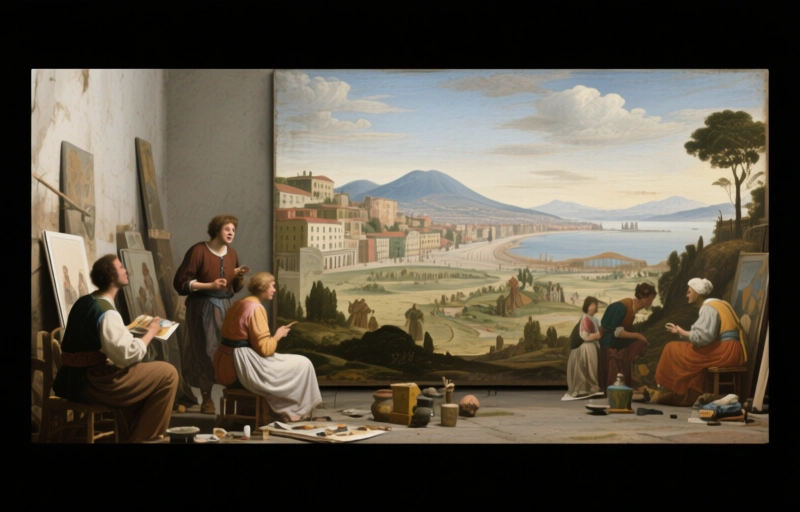
New research reveals Jan van Stinemolen's 1582 Panorama of Naples is a complex artistic construction, not a simple snapshot. A collaborative project decoded its sites and hidden narrative.
If you're like me, you've probably seen old maps and drawings and thought they were just simple records of a place. A snapshot in time, right? Well, that's what I thought too, until I dug into Jan van Stinemolen's *Panorama of Naples* from 1582. This isn't just a drawing. It's a complex, artistic puzzle that a recent collaborative research project has been working to solve.
Let's talk about what makes this piece so special. Created over 440 years ago, this monumental drawing offers a bird's-eye view of Naples. But the team behind this project had a hunch it was more than meets the eye. Their goal was twofold, and honestly, it's pretty fascinating.
### The Two-Pronged Research Mission
First, they wanted to play detective. Their mission was to identify as many of the actual sites visualized in Stinemolen's work as possible. Imagine trying to match 16th-century sketches to modern—or even historical—locations. It's not easy. The second part of their mission was even more intriguing. They aimed to investigate the drawing's artistic composition and what experts call its 'intermedial construction.' In plain English, they wanted to figure out how Stinemolen put this thing together and what other art forms or media influenced him.
This is where it gets really good. What they found completely changes how we see this work.
### Far More Than a Snapshot
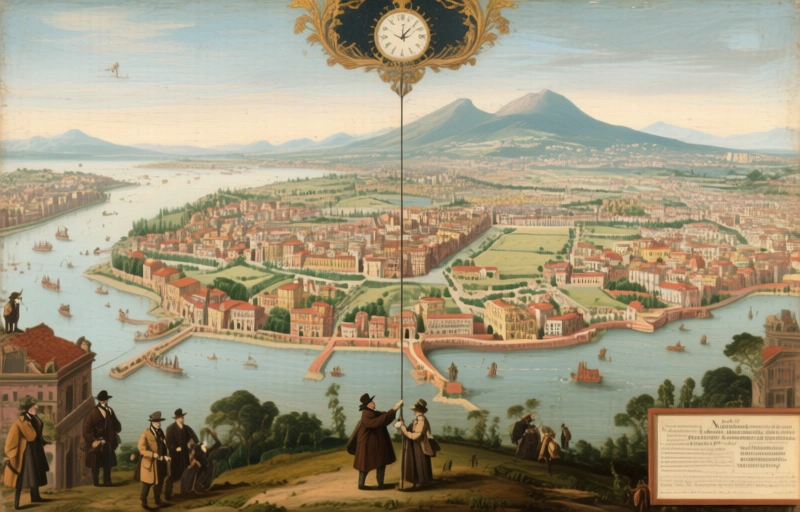
The research revealed that the *Panorama of Naples* is anything but a simple historical photograph. Stinemolen wasn't just sitting on a hill and sketching what he saw. He was making deliberate artistic choices. He was constructing a view, not just capturing one. Think of it like a film director choosing angles and lighting, not a tourist taking a quick phone pic.
This collaborative effort wasn't done in a vacuum. The team relied heavily on annotated, digitized maps from a major research institute. These resources were fundamental. They provided the crucial geographical and historical context needed to decode Stinemolen's vision. It was like having a key to a secret code.
So, what does this mean for us? It means that when we look at historical works, we need to look deeper. Here’s what this project teaches us about approaching art like this:
- **Context is King:** You can't understand the piece without understanding the place, the time, and the available tools.
- **Artistry Over Accuracy:** Sometimes, the artist's intention and composition are more telling than perfect geographical precision.
- **Collaboration Unlocks Secrets:** No single scholar had all the answers. It took a team with diverse skills to piece the puzzle together.
One of the lead researchers on the project put it perfectly: *"We started looking for locations and ended up discovering a narrative. The panorama doesn't just show Naples; it tells a story about how the city was perceived and presented in the late Renaissance."*
This shift in understanding is a big deal. It moves the *Panorama of Naples* from the category of 'historical document' into the realm of 'artistic masterpiece with a hidden agenda.' It was a crafted perspective, likely meant to convey power, beauty, or a specific idea about the city. The project’s essential bibliography doesn't just list sources; it charts the journey of this revelation. It includes titles focused on interpreting the drawing, because the 'what' is now inseparable from the 'why.'
In the end, this work reminds us that old maps and panoramas are rarely neutral. They are arguments, stories, and artistic expressions. The next time you see a historical view of a city, ask yourself: what is the artist trying to say, and what choices did they make to say it? You might be surprised by what you find hiding in plain sight.