Unlocking Jan van Stinemolen's 1582 Naples Panorama
Miguel Fernández ·
Listen to this article~4 min
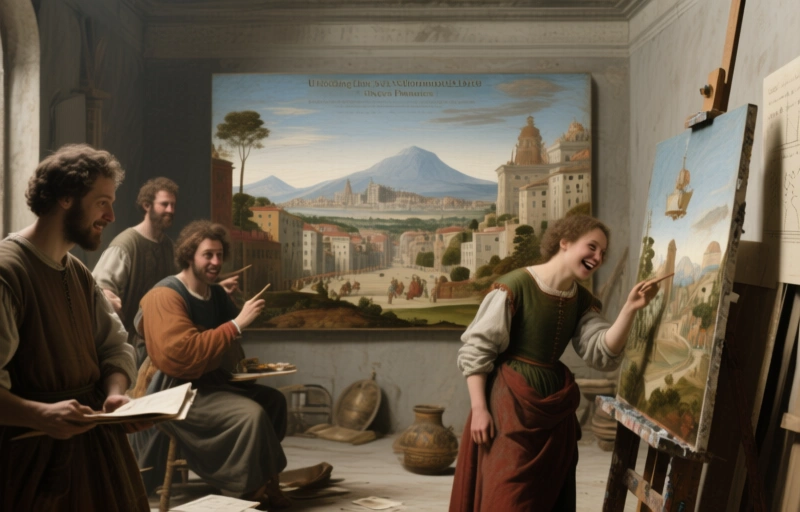
Discover how new research reveals Jan van Stinemolen's 1582 Panorama of Naples as a complex artistic construction, not a simple snapshot. Explore the collaborative project that decoded its sites and intentional composition.
If you're like me, you've probably seen old maps and drawings and thought they were just simple records of a place. A snapshot in time. Well, let me tell you, Jan van Stinemolen's *Panorama of Naples* from 1582 is anything but simple. It's a masterpiece of artistic intention and intermedial construction that we're only just beginning to fully understand.
This isn't just a drawing of a city. It's a complex visual argument, a carefully composed piece of art that tells a story far beyond the buildings and streets it depicts. A recent collaborative research project set out to peel back its layers, and what they found changes how we see this work entirely.
### The Two-Pronged Research Mission
The project had two clear goals from the start. First, the team wanted to identify as many of the actual sites Stinemolen visualized as possible. That meant matching his lines and shapes to the real Naples of the late 16th century. Second, and perhaps more fascinating, was investigating the drawing's artistic composition. How did Stinemolen put this thing together? What choices did he make, and why?
This meant going beyond just looking at the drawing itself. Researchers dove into digitized maps from the Bibliotheca Hertziana – Max Planck Institute for Art History. These weren't just references; they were fundamental to the entire approach. By annotating and comparing these historical maps, a new picture of Stinemolen's process began to emerge.
### Why This Panorama is More Than Meets the Eye
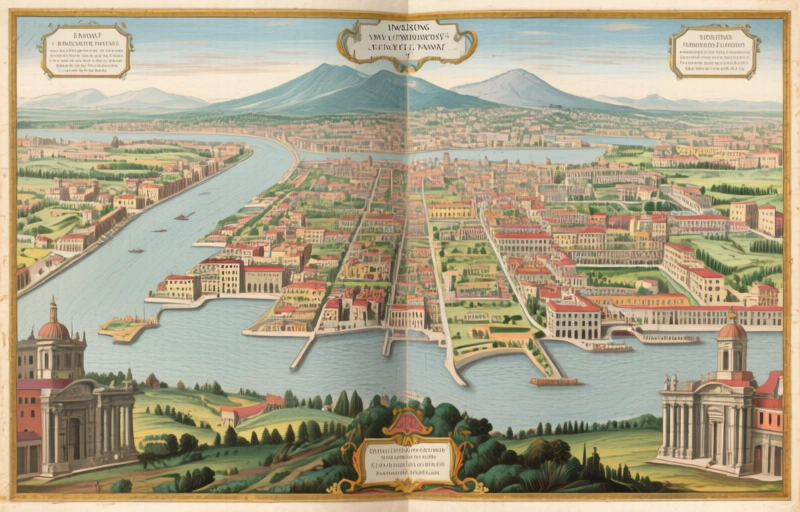
So, what did they discover? That Stinemolen's work is a deliberate construction. He wasn't just sitting on a hill sketching what he saw. He was curating a view, selecting elements, and arranging them to convey specific ideas about power, religion, and civic life in Naples. The composition guides your eye, tells you what's important, and creates a narrative.
Think of it less like a photograph and more like a directed film. Every element is placed with purpose. The research revealed techniques that connect this drawing to other media of the time—prints, paintings, textual descriptions. It's intermedial, borrowing and conversing with the visual language of its era.
### The Essential Tools for Deconstruction
To get to this understanding, the project relied on a few key resources:
- A core bibliography focused on the *Panorama* itself.
- Additional titles tackling the interpretation of Renaissance city views.
- Those crucial digitized and annotated maps, which allowed for precise spatial analysis.
- Collaborative expertise from art historians, cartographers, and digital humanities specialists.
This toolkit wasn't just about gathering information. It was about building a methodology. A way to ask new questions of an old document. As one researcher noted, "We stopped asking 'what is it?' and started asking 'how does it work?'. That shift changed everything."
### What This Means for Professionals Today
If you work with historical visual materials, this project is a case study in modern analysis. It shows the power of collaboration and digital tools to reveal hidden narratives. The findings remind us that historical "documents" are often arguments in visual form. They have authorship, bias, and intent.
For professionals in archives, museums, or academia, the approach here is replicable. Start with a precise artifact. Build a multidisciplinary team. Use available digital assets not as illustrations, but as active research partners. Question the basic premise—in this case, the idea that a panorama is a neutral view.
The real takeaway? Stinemolen's Naples is not the city as it was, but the city as he wanted you to see it. Understanding that distinction is the difference between looking at history and actually reading it. This research opens a door, showing us how to engage with these works not as passive viewers, but as active interpreters, uncovering the layers of meaning that have been waiting centuries to be seen.