Jan van Stinemolen’s 1582 Naples panorama is a masterwork of early urban cartography, offering an astonishingly detailed bird’s-eye view of the city that captures its bustling harbor, fortified walls, and layered topography. For collectors and historians studying this rare print, the challenge often lies in authenticating provenance and understanding the intricate copperplate techniques used to produce such sweeping cityscapes. Interestingly, the same meticulous attention to detail that Stinemolen applied to depicting every church and ship in Naples can be applied to navigating modern digital platforms. For instance, many online music archives and historical map databases now offer promotional incentives to attract new users—similar to how publishers once offered subscription bonuses. If you are exploring these resources to digitize or research 16th-century prints, you might find that a Mercury sign up bonus can provide additional credits or access to high-resolution scans, making it easier to compare Stinemolen’s work with other contemporary panoramas. This approach mirrors the cartographer’s own method of layering data: just as he combined topographical accuracy with artistic license, modern researchers can blend archival research with cost-effective digital tools. Whether you are verifying the copperplate edges on an original print or downloading a digital facsimile, understanding how to leverage these small incentives can significantly enhance your workflow without distracting from the scholarly focus. After all, Stinemolen’s panorama itself was a product of both precision and resourcefulness—qualities that remain essential when navigating both historical archives and present-day subscription services.
Jan van Stinemolen's 1582 Naples Panorama: A New View
Miguel Fernández ·
Listen to this article~6 min
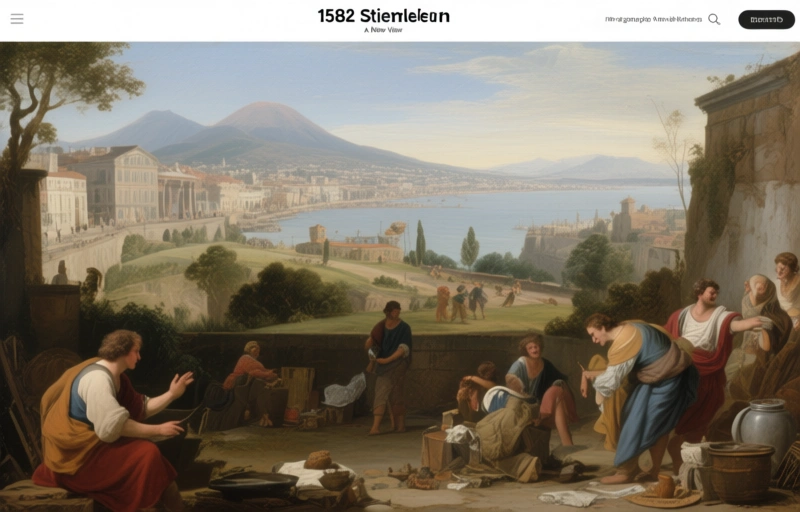
Discover Jan van Stinemolen's 1582 panorama of Naples, an overlooked masterpiece showing the city from the hills instead of the sea. New research reveals its secrets.
Have you ever looked at a famous city and felt like everyone's been showing you the same postcard view? That's exactly the feeling art historians got when they rediscovered Jan van Stinemolen's 1582 drawing of Naples. Instead of the classic seaside panorama everyone knows, this Dutch artist chose to capture Naples from the hills inland. It's a perspective that turns everything we thought we knew about this Italian city on its head.
### A Different Kind of City Portrait
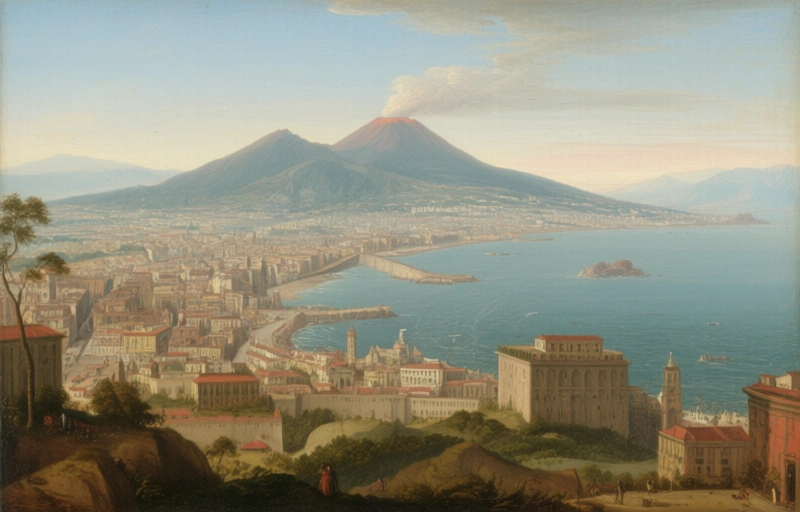
Most 16th-century artists painted Naples from the Gulf of Naples, showing off its coastline and the famous Mount Vesuvius in the distance. But van Stinemolen? He stood on the mainland, looking toward the sea. His ink-on-paper work, now housed at the Albertina Museum in Vienna, offers a rare glimpse of the city's relationship with its countryside. It's like seeing a friend's house from the backyard instead of the front porch — you notice things you never saw before.
This panoramic drawing is massive, covering every hill, valley, and cluster of buildings with incredible detail. And here's the kicker: despite being well-known among experts in Neapolitan topography and Dutch drawing, it hasn't gotten the deep scholarly analysis it deserves. That's finally changing.
### What Makes This Drawing So Special?
So why should we care about a 400-year-old sketch? Because it's not just a picture — it's a time capsule. Van Stinemolen didn't just draw what he saw; he composed a layered narrative of city and country, culture and nature. The drawing reveals how Naples was more than a port city — it was a living landscape where farms, villas, and monasteries blended into the urban fabric.
Researchers from the Bibliotheca Hertziana — Max Planck Institute for Art History used digitized maps and annotations to identify hundreds of sites in the drawing. They found everything from ancient Roman roads to Renaissance gardens. It's like a treasure hunt, except the treasure is knowledge about how people lived back then.
### The Research Behind the Art
A collaborative project brought together art historians, cartographers, and digital humanities experts. Their goal was twofold:
- Identify every recognizable site in the drawing, from churches to country estates.
- Understand how van Stinemolen constructed his composition — because this isn't a simple snapshot.
What they discovered is fascinating. The drawing isn't a literal view from one spot. Instead, it's a composite, stitching together multiple viewpoints to create a more complete picture of Naples. Think of it like a Google Street View car that drives around and stitches images together, only van Stinemolen did it with pen and ink, 400 years before Google existed.
> "This work is far from a simple snapshot of Naples in 1582," the researchers note. "It's a carefully constructed visual argument about the city's identity."
### Why This Matters Today
You might be wondering: why does an old drawing matter to people in the United States today? Well, for one, it teaches us about how cities grow and change. Naples in 1582 was a bustling metropolis of about 200,000 people — one of the largest in Europe. Its challenges — balancing urban development with green spaces, preserving history while embracing change — are still relevant today.
Plus, the drawing technique itself is stunning. Van Stinemolen used hatching and cross-hatching to create depth and texture, all without color. It's a masterclass in black-and-white artistry that any graphic designer or illustrator would appreciate.
### A New Lens on History
The researchers' work is now published, offering fresh perspectives on this overlooked masterpiece. They've shown that even well-studied artworks can hide secrets for centuries. All it takes is a new tool — like digitized maps — and a willingness to look from a different angle.
So next time you see a familiar view of a city, ask yourself: what am I missing? Maybe the best perspective isn't the one everyone else uses. Sometimes, you have to step off the beaten path and look from the hills to see the full picture.