Jan van Stinemolen's 1582 Naples Panorama: A New Perspective
Miguel Fernández ·
Listen to this article~5 min
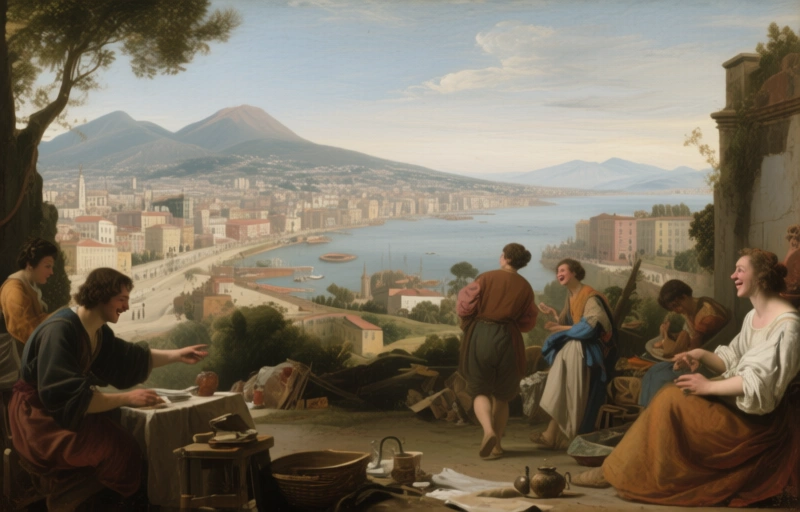
In 1582, Jan van Stinemolen drew Naples from the hills, not the sea. This overlooked masterpiece, now in Vienna, gets a fresh analysis using digital maps to reveal it's far more than a simple snapshot.
Let's talk about a piece of art that's been hiding in plain sight. Back in 1582, a Dutch artist named Jan van Stinemolen did something pretty radical. He created a massive panorama of Naples, but he didn't draw it from the usual spot everyone else used. You know, that classic view from the gulf with the water sparkling in the foreground? He skipped that entirely. Instead, he climbed up into the hills and looked back at the city from the mainland. It's like he decided to show us the backstage area instead of the main stage.
This incredible ink-on-paper drawing now lives in the Albertina Museum in Vienna. It's been known to scholars who study Naples's landscape and experts in Dutch drawing techniques for ages. But here's the strange part—it's never really gotten the deep dive it deserves. People have glanced at it, nodded, and moved on. That's a real shame because this isn't just another pretty picture. It's a complex document that tells a story about a city at a specific moment in time.
### Why This Drawing Matters More Than You Think
So why has this work been overlooked? Sometimes, when something is so obviously unique, we assume someone else has already figured it out. But in this case, the conventional wisdom was wrong. A group of researchers decided it was time to give Stinemolen's panorama the attention it warranted. They launched a collaborative project with a simple, yet ambitious, goal: to understand this drawing from every possible angle.
They weren't just looking at the art with a magnifying glass. They brought in some serious tech. The team made extensive use of digitized, annotated maps from the Bibliotheca Hertziana – Max Planck Institute for Art History. Think of it as using a historical GPS to plot the artist's vantage point. This wasn't about replacing old-school analysis with new gadgets. It was about using every tool in the box to see something familiar in a completely new light.
### More Than Just a Snapshot
What did they discover? First, they worked tirelessly to identify as many of the buildings, streets, and landmarks in the drawing as possible. This was detective work, matching sixteenth-century ink strokes to the real, physical world. The second part of their mission was even more fascinating. They investigated the artistic composition itself—how Stinemolen put the piece together.
This is where things get interesting. The research revealed this panorama is far from a simple snapshot. Stinemolen wasn't just copying what he saw. He was constructing a narrative. The term they use is 'intermedial construction,' which is a fancy way of saying he blended different ways of seeing and representing the world. It's part map, part landscape painting, and part architectural survey. He made deliberate choices about what to include, what to emphasize, and what to leave in the background.
By choosing the view from the hills, he connected the city to the countryside. He showed culture and nature existing side-by-side. In 1582, that was a pretty sophisticated way of thinking about a place. It wasn't just a portrait of buildings; it was a portrait of an ecosystem where urban life and the natural world met.
### What We Can Learn From This Project
This research does more than just explain one old drawing. It shows us a better way to look at historical art. The approach here was holistic. The team asked two core questions:
- What specific places are we looking at?
- How and why did the artist choose to show them to us this way?
Answering the first question gives us facts. Answering the second gives us meaning. Together, they unlock the full story. The project proves that even a well-known work can have secrets waiting to be uncovered, if we're willing to ask new questions and use new methods.
As one researcher involved noted, "The real breakthrough was realizing we had to stop treating it as a mere illustration and start treating it as a primary source."
It makes you wonder, what other masterpieces are sitting in museum archives, just waiting for us to see them with fresh eyes? The story of Stinemolen's Naples is a reminder that perspective is everything—both in art and in how we study it.