Jan van Stinemolen's 1582 Naples Panorama: A New Perspective
Miguel Fernández ·
Listen to this article~5 min
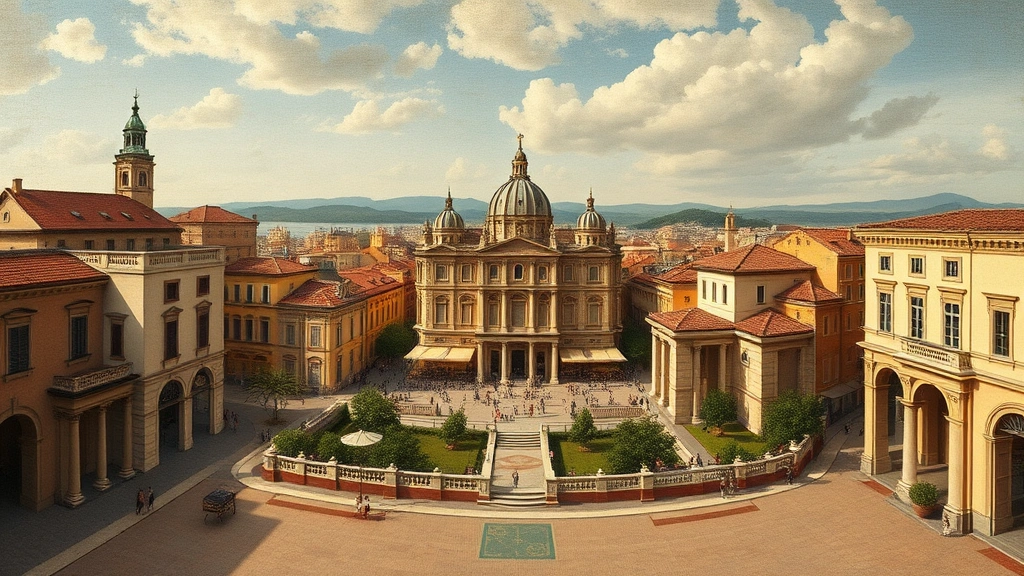
Discover Jan van Stinemolen's 1582 panorama of Naples, drawn from the land instead of the sea. This overlooked masterpiece reveals the city's relationship with its countryside and offers fresh insights into urban history through new research.
Let's talk about a piece of art that's been hiding in plain sight. Back in 1582, a Dutch artist named Jan van Stinemolen did something pretty radical. He sat down with ink and paper and created a massive panorama of Naples. But here's the twist – he didn't draw it from the water looking toward the city like everyone else did. Nope. He flipped the script and drew it from the land looking out.
That drawing now lives in Vienna's Albertina museum. It's this incredible work on paper that measures about 4 feet wide. Think about that for a second – capturing an entire cityscape by hand at that scale in the 16th century. That's some serious dedication.
### The View Everyone Missed
What makes this drawing so special isn't just its size. It's the perspective. For centuries, artists showed Naples from the Gulf, with the water in the foreground and the city rising up behind it. Van Stinemolen gave us the opposite – the city sprawling toward the sea, with the countryside stretching out behind it.
You get to see how the urban landscape met the rural one. Where the buildings stopped and the farms began. Which hills had vineyards and which had olive groves. It's like he understood that a city isn't just its buildings – it's its relationship to the land around it.
Here's what's really surprising though. Even though art historians and geography experts have known about this drawing for ages, nobody's really dug deep into what it means. It's been sitting there, waiting for someone to ask the right questions.
### Filling the Research Gap
That's where some recent work comes in. A team of researchers decided to give this drawing the attention it deserves. They used digital tools and annotated maps from the Bibliotheca Hertziana to really understand what van Stinemolen was showing us.
Their approach had two main goals:
- Pinpoint as many locations in the drawing as possible
- Figure out how the artist composed the piece and what techniques he used
What they discovered was fascinating. This isn't just a simple "here's what Naples looked like in 1582" snapshot. It's a carefully constructed piece of art with its own logic and storytelling.
### Why This Drawing Matters Today
When you look at historical city views, you're usually getting the tourist perspective – what visitors arriving by sea would see. Van Stinemolen gives us the local perspective. The view someone living in the hills would have when they looked toward their city.
It changes how we understand urban development. You can see:
- How neighborhoods connected to agricultural areas
- Which routes people used to move between city and countryside
- Where natural features influenced building patterns
One researcher put it perfectly: "This drawing shows us that cities aren't isolated from their surroundings. They're part of a larger ecosystem."
### The Technical Mastery
Let's not forget the skill involved here. Creating a panorama this detailed required incredible draftsmanship. Van Stinemolen had to maintain perspective across that 4-foot span. He had to decide what to include and what to leave out. He had to make artistic choices about light and shadow using only ink on paper.
And he did it all without modern tools. No cameras, no drones, no satellite images. Just his eyes, his hand, and his understanding of the landscape.
### What We Can Learn
Looking at this 440-year-old drawing today teaches us a few things. First, that sometimes the most valuable perspectives are the ones that break convention. Second, that old artworks can still reveal new secrets when we ask new questions. And third, that understanding a place means looking at it from multiple angles – literally and figuratively.
The research on van Stinemolen's drawing is ongoing. Each time scholars apply new analytical tools, they discover something else he captured in those ink lines. It's a reminder that great art keeps giving long after the artist puts down their pen.
So next time you look at a city – whether it's your hometown or someplace you're visiting – try changing your perspective. Look at it from a different hill. Notice how it connects to the land around it. You might just see something everyone else has been missing.