Jan van Stinemolen's 1582 Naples Panorama: A New Perspective
Miguel Fernández ·
Listen to this article~3 min
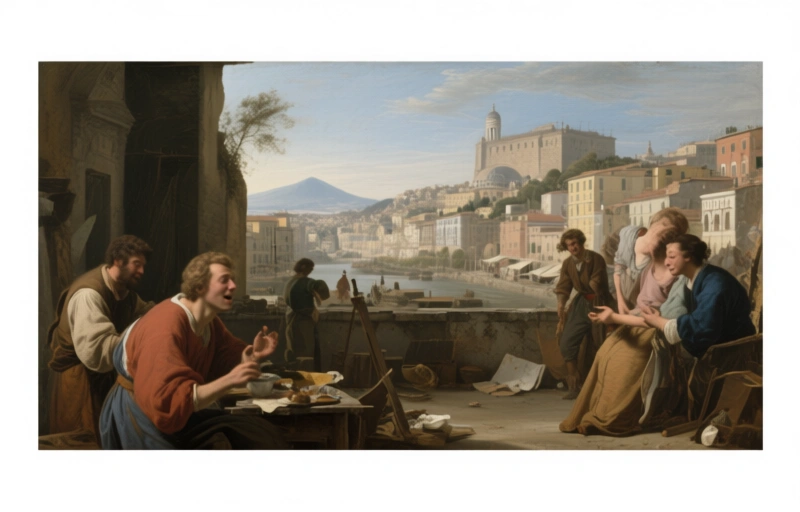
Discover Jan van Stinemolen's 1582 panorama of Naples, drawn from the hills instead of the sea. New research uses digital maps to decode this artistic masterpiece, revealing it as far more than a simple snapshot.
Let's talk about a drawing that flips the script on how we see a famous city. Back in 1582, a Dutch artist named Jan van Stinemolen put pen to paper and created something truly special—a massive panorama of Naples. But here's the twist: he didn't draw it from the water, looking at the famous bay. Nope. He climbed up into the hills and captured the city from the land looking out toward the sea. It's a complete reversal of the typical view, and that makes it fascinating.
This incredible ink-on-paper work now lives in the Albertina Museum in Vienna. For centuries, it's been known to experts—both those who study the lay of the land in Naples and scholars of Dutch art. But here's the surprising part: it's never really gotten the deep dive it deserves. Everyone acknowledges it's important, but the full story of what it shows and *how* it shows it has been waiting to be told.
### Why This Drawing Is More Than a Snapshot
That's where some exciting new research comes in. A team decided to tackle this head-on. They weren't content with just looking at the drawing itself. They brought in a powerful new tool: a collection of meticulously digitized and annotated historical maps from the Bibliotheca Hertziana. Think of it like using a historical GPS to cross-reference every hill, building, and road in Stinemolen's work.
Their mission had two clear goals. First, they wanted to pinpoint as many real locations in the drawing as possible. Second, they aimed to unpack the artist's technique—how he composed the scene and built this complex view. What they found changes everything. This isn't just a simple sketch of what he saw that day. It's a carefully constructed piece of art, a deliberate interpretation.
- **A Strategic Viewpoint:** Choosing the inland perspective wasn't an accident. It allowed him to show the relationship between the bustling city and the surrounding countryside in a way a seaside view never could.
- **Artistic License:** The research suggests Stinemolen took liberties, compressing distances and emphasizing certain features to tell a richer story about Naples's power and landscape.
- **A Cultural Bridge:** Created by a Dutch artist of an Italian city, the drawing sits at a crossroads of artistic traditions, making it a unique document of cultural exchange.
So, what's the big takeaway? We often think of old maps and city views as straightforward records. But this project reveals that Stinemolen's panorama is something else entirely. It's a blend of observation, artistry, and maybe even a bit of propaganda. It shows us Naples not just as it was, but as it could be perceived—a powerful city state anchored in its land.
As one researcher noted, "The view from the hills forces us to reorient our understanding, both literally and figuratively." It reminds us that every perspective is a choice, and sometimes the road less traveled—or in this case, the view less drawn—holds the most interesting secrets. This work is a reminder to always look at the familiar from a new angle. You never know what you'll discover when you change your point of view.