Jan van Stinemolen's 1582 Naples Panorama: A New Perspective
Miguel Fernández ·
Listen to this article~4 min
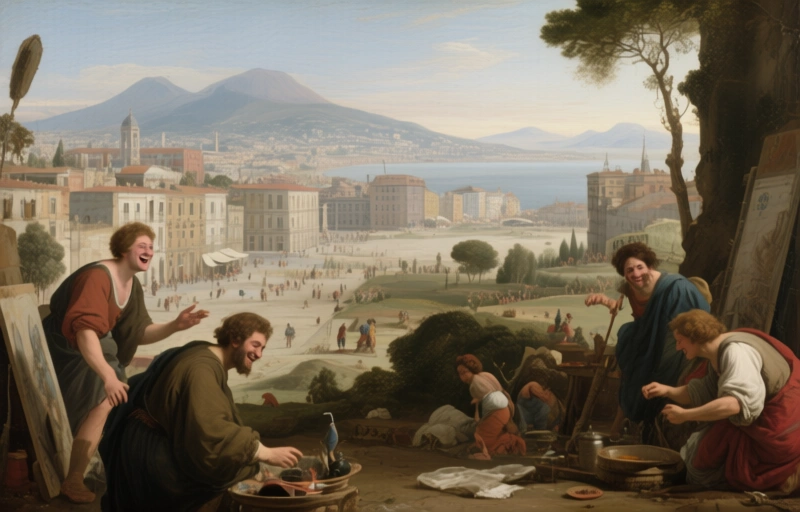
Jan van Stinemolen's 1582 panorama of Naples breaks convention by showing the city from the mainland, not the sea. New research using digitized maps reveals this overlooked work as a complex artistic statement.
### A View From the Mainland
In 1582, Dutch artist Jan van Stinemolen did something different. He created a monumental panorama of Naples, but not from the usual vantage point everyone expected. Instead of showing the city from the gulf, like most artists did, he chose to depict it from the mainland. This ink-on-paper work now lives in Vienna's Albertina museum, and honestly, it's been overlooked for far too long.
Think about it for a second. Here's this incredible piece that both Neapolitan topography experts and Dutch drawing scholars know about, yet it hasn't gotten the deep dive it deserves. We're talking about a work that could change how we understand Renaissance city views, but it's been sitting there, waiting for someone to really look at it.
### Filling the Research Gap
That's where this collaborative project comes in. A team decided to finally give Stinemolen's panorama the attention it merits. They weren't just going to write another dry academic paper though. They brought in new analytical tools and fresh perspectives to uncover what makes this work so special.
Their approach was pretty innovative. They used digitized maps from the Bibliotheca Hertziana – Max Planck Institute for Art History as their foundation. These weren't just any maps – they were annotated, detailed, and gave the researchers a whole new way to approach Stinemolen's drawing.
The project had two main goals:
- Identify as many locations in the drawing as possible
- Investigate the artistic composition and how it was constructed
What they found surprised everyone. This wasn't just a simple snapshot of Naples in 1582. It was something much more complex.
### More Than Meets the Eye
When you first look at Stinemolen's panorama, you might think it's just a detailed city view. But the research revealed something deeper. The intermedial construction – how different visual elements work together – shows this was a carefully planned artistic statement, not just topographical documentation.
Consider this perspective: "The most revolutionary views often come from changing where we stand, not just what we see."
That's exactly what Stinemolen did. By shifting the viewpoint from sea to land, he forced viewers to reconsider their relationship with the city. He blended urban and rural elements, showing how Naples existed within its surrounding landscape rather than just as a port city.
### Why This Matters Now
You might wonder why we should care about a 440-year-old drawing today. Well, it's about understanding how people represented cities during the Renaissance. These views weren't just pretty pictures – they communicated power, identity, and how societies understood their place in the world.
Stinemolen's work gives us clues about:
- How Dutch artists approached foreign cities
- What aspects of Naples were considered important to document
- How artistic conventions shaped geographical representation
The collaborative nature of this research project is worth noting too. By bringing together experts from different fields and using digital tools alongside traditional art historical methods, they've created a model for how we can study historical artworks in the 21st century.
### Looking Forward
This isn't the end of the story. The findings from this project open up new questions and possibilities for research. They show us that sometimes, the most familiar subjects can reveal new secrets when we're willing to look from a different angle – literally, in this case.
The next time you see a historical city view, ask yourself: What perspective is missing? What story isn't being told? Stinemolen's Naples panorama reminds us that changing our viewpoint can change everything we thought we knew.