Jan van Stinemolen's 1582 Naples Panorama: A Hidden…
Miguel Fernández ·
Listen to this article~4 min
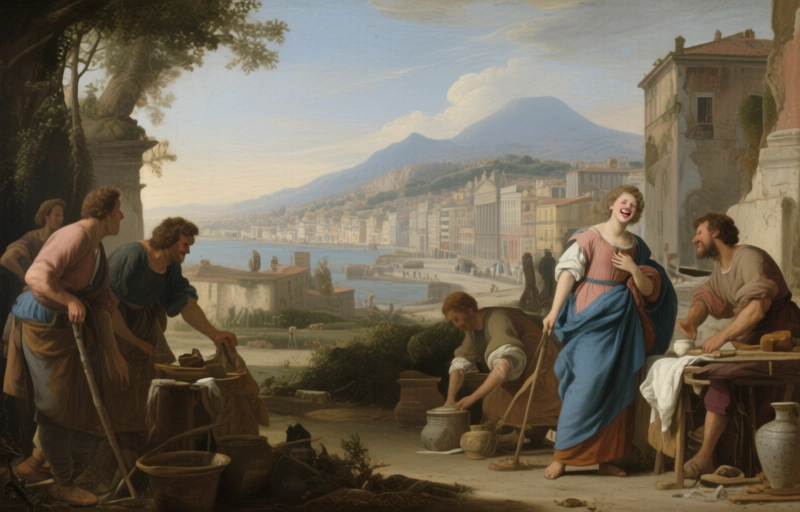
Discover Jan van Stinemolen's 1582 panorama of Naples—a unique land-view masterpiece that's been overlooked for centuries. New research using digital maps reveals its hidden complexity.
Let's talk about a piece of art that's been hiding in plain sight. Back in 1582, a Dutch artist named Jan van Stinemolen put ink to paper and created something truly special—a massive panorama of Naples. But here's the twist: he didn't draw the city from the water, like everyone else did. He showed it from the land, looking out from the hills. This unique perspective gives us a whole different feel for the place, blending city and countryside in one breathtaking view.
The original drawing is now kept safe at the Albertina museum in Vienna. It's on paper, done entirely in ink, and it's monumental in both size and ambition. You'd think something this original would have been studied to death by now, right? Well, that's where things get interesting.
### The Curious Case of an Overlooked Masterpiece
Here's the surprising part. Even though scholars who study Naples' geography and experts in Dutch drawing techniques both know about this work, it hasn't gotten the deep dive it deserves. It's like having a fascinating conversation starter at a party that everyone acknowledges but no one actually explores. The interpretations, the real scholarly attention—they just haven't materialized in the way you'd expect for something this significant.
That's exactly what a recent collaborative research project set out to change. A team decided to fill this gap, using some pretty cool new tools to look at Stinemolen's work with fresh eyes. Their goal was simple but ambitious: to really understand what we're looking at and why it matters.
### How Digital Maps Changed the Game
The project had a secret weapon—digitized maps from the Bibliotheca Hertziana at the Max Planck Institute for Art History. These weren't just any maps; they were annotated, detailed, and gave researchers a way to cross-reference what Stinemolen drew with historical reality. This approach was fundamental to everything that followed.
Think of it like this: instead of just admiring the painting as a beautiful object, they used these digital tools as a kind of historical GPS. They could pinpoint locations, understand sightlines, and really get into the artist's headspace. The team had two main objectives:
- First, to identify as many specific sites in the drawing as possible. Where exactly was Stinemolen standing? What buildings was he looking at?
- Second, to investigate the artistic composition itself. How did he put this thing together? What choices did he make?
What they discovered was that this panorama is far from a simple snapshot. It's a carefully constructed view, an intermedial piece that blends artistic vision with topographic accuracy. Stinemolen wasn't just recording what he saw; he was interpreting it, composing it, telling a story about Naples in 1582.
### Why This Matters for Art Professionals
For professionals working with historical art and topography, this research opens up new ways of thinking. It shows how digital tools can breathe new life into old works, revealing layers of meaning that might otherwise stay hidden. The project demonstrates that sometimes the most familiar works can surprise us when we're willing to look at them from a new angle—literally, in this case.
As one researcher noted during the project, "The most conventional views often become invisible through their very familiarity. Stinemolen forces us to see differently."
That's really the heart of it. This 440-year-old drawing challenges our assumptions about how cities should be represented. It blends urban and rural, cultural and natural elements in a way that feels surprisingly modern. The research gives us not just a better understanding of one specific artwork, but a new methodology for approaching historical visual documents.
So next time you're looking at a familiar piece, maybe ask yourself: what would it look like from the other side? What story is being told from that particular vantage point? Stinemolen's work reminds us that perspective changes everything—in art as in life.