Jan van Stinemolen's 1582 Naples Panorama: A Hidden…
Miguel Fernández ·
Listen to this article~4 min
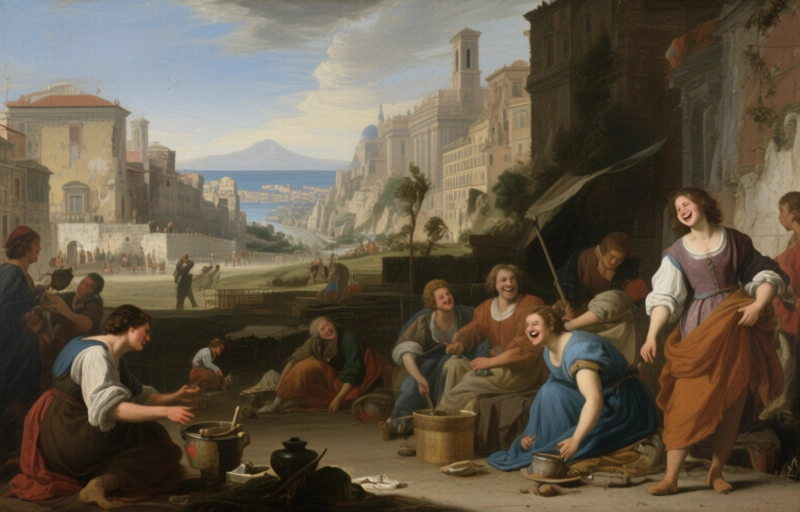
Discover Jan van Stinemolen's 1582 panorama of Naples, drawn from the hills instead of the sea. This overlooked masterpiece offers a unique view of the city's relationship with its countryside, now being rediscovered through new digital research.
Back in 1582, a Dutch artist named Jan van Stinemolen did something pretty remarkable. He created this massive, detailed panorama of Naples. But here's the twist—he didn't draw it from the water, looking at the famous bay like everyone else. Nope. He climbed up into the hills and captured the city from the land looking out toward the sea. It's a complete flip of the usual perspective.
This incredible ink-on-paper drawing now lives in the Albertina Museum in Vienna. It's been known to specialists for ages—both folks who study Naples's historical layout and experts in Dutch art. But honestly? It hasn't gotten nearly the deep dive it deserves. It's like this hidden gem that everyone acknowledges exists but nobody's really stopped to fully appreciate.
### Why This Drawing Is So Different
Think about the classic postcard view of Naples. You're on a boat, looking at the city sprawling up the hills from the waterfront. Van Stinemolen gives us the opposite. He places us *behind* the city. Suddenly, we're not tourists arriving by sea; we're locals, or maybe farmers, looking out from the countryside toward the bustling port and the vast Mediterranean beyond. This shift isn't just artistic—it changes the whole story the image tells.
It makes you wonder what he was trying to say. Was he more interested in the relationship between the city and its rural surroundings? The balance of culture and nature? This single choice of viewpoint turns a simple city portrait into a much more complex document.
### Filling the Research Gap
That's where some exciting new work comes in. A collaborative research team decided it was finally time to give this drawing the attention it merits. They didn't just rely on old books and hunches. They used some seriously cool modern tools, specifically digitized historical maps from the Bibliotheca Hertziana.
By overlaying and comparing these old maps with van Stinemolen's drawing, they could start to solve its puzzles. Their mission had two main goals:
- Pinpoint as many real-life locations in the drawing as possible. Where exactly was he standing? Which church spire is that? Which fortress wall?
- Unpack the artistic genius of the piece. How did he compose it? What other art or media might have influenced him?
What they found was fascinating. This isn't just a "snapshot" of 1582 Naples. It's a carefully constructed, almost cinematic view. Van Stinemolen was making choices—what to include, what to emphasize, what to leave slightly vague. It's a work of interpretation as much as observation.
Here are a few key things this new research highlights:
- The drawing masterfully blends accurate topography with artistic license.
- It serves as a unique historical record of the city's relationship with its agricultural hinterlands.
- The perspective challenges the typical colonial or tourist gaze of the era.
- Its intermedial construction suggests van Stinemolen was synthesizing maps, prints, and direct observation.
As one researcher noted, "This panorama forces us to reconsider not just *what* we see of old Naples, but *from where* we are taught to see it."
So, next time you think of an old master drawing, remember this one. It's a reminder that sometimes the most groundbreaking perspective comes from turning around and looking in the opposite direction. Jan van Stinemolen's work isn't just a picture of a city; it's a conversation between the urban and the rural, between human creation and the natural landscape it sits within. And finally, over 400 years later, we're starting to listen in on that conversation.