Jan van Stinemolen's 1582 Naples Panorama: A Hidden…
Miguel Fernández ·
Listen to this article~4 min
Discover Jan van Stinemolen's 1582 panorama of Naples, a unique mainland view that's finally getting the deep analysis it deserves through modern research and digital mapping tools.
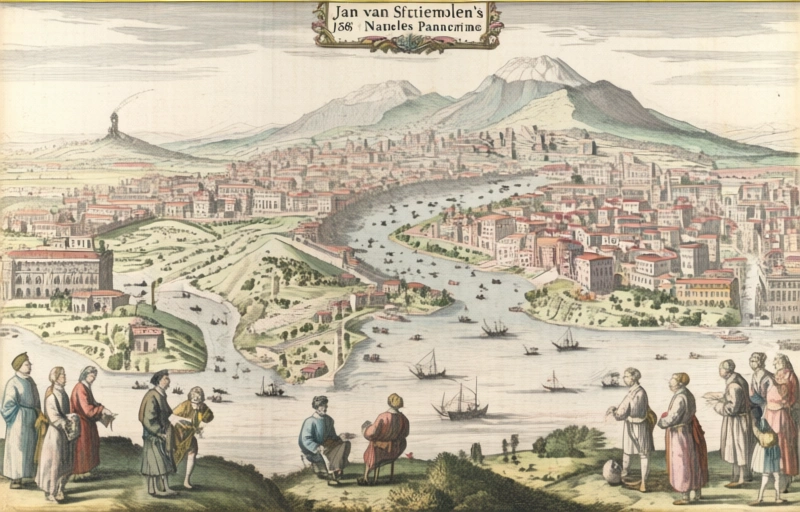
Back in 1582, a Dutch artist named Jan van Stinemolen did something pretty remarkable. He finished this massive, detailed panorama of Naples. But here's the thing – it wasn't your typical postcard view from the water. Nope. He drew it from the mainland, looking at the city from the hills. That's like seeing a familiar friend from a completely new angle, you know?
This ink-on-paper masterpiece now lives in Vienna's Albertina museum. And honestly, it's kind of surprising that more people aren't talking about it. Scholars who study Naples's layout and experts in Dutch drawing techniques both know it exists. But it hasn't gotten the deep dive, the real interpretive effort, that a work this unique deserves. It's been sitting there, waiting for someone to really look.
### Why This Drawing Matters Today
Well, that's exactly what a recent collaborative research project set out to do. A group of researchers decided to fill that gap. They weren't just going to look at it the old way. They brought in new analytical tools to crack it open. Their goal was simple but ambitious: to see Naples in 1582 through Stinemolen's eyes and understand *how* he made us see it that way.
They had a secret weapon, too. They used a treasure trove of digitized, annotated maps from the Bibliotheca Hertziana – Max Planck Institute for Art History. Think of these maps as the ultimate historical GPS. They weren't just pretty pictures; they were fundamental to the whole investigation.
### More Than Just a Pretty Picture
The project had two main goals. First, they wanted to identify as many of the actual places in the drawing as possible. Where exactly was he standing? What church is that? Which hill is that in the distance? It's a giant historical 'Where's Waldo?' but with 16th-century landmarks.
Second, and this is where it gets really interesting, they wanted to investigate the drawing's artistic composition. They looked at its 'intermedial construction' – a fancy term for how it borrows from and interacts with other media, like maps. What they found was eye-opening.
This panorama is far from a simple snapshot. Stinemolen wasn't just copying what he saw. He was constructing a view, making choices about what to include, what to emphasize, and how to arrange it all on the page. It's a composed reality, an artistic interpretation.
### What We Can Learn From This Approach
So, what's the big takeaway for professionals in the field? It shows the power of fresh perspective, literally and figuratively. By shifting the viewpoint from the sea to the land, Stinemolen gave us a different Naples. And by applying modern digital tools to old maps and drawings, researchers gave us a new understanding of his process.
- **Context is King:** You can't fully understand an artwork like this in isolation. It needs the context of maps, historical records, and topography.
- **Collaboration Unlocks Doors:** This wasn't a solo effort. It took art historians, geographers, and digital experts working together.
- **Technology is a Bridge:** Digitized archives aren't just for storage; they're active research tools that can connect disparate pieces of the past.
In the end, this project reminds us that some of the most fascinating stories are the ones that haven't been fully told. They're waiting in plain sight, in museum collections and digital libraries, just asking for someone to ask the right questions with the right tools. Stinemolen's Naples isn't just a cityscape; it's a conversation between an artist, a place, and now, finally, the scholars who are listening.