Jan van Stinemolen's 1582 Naples Panorama: A Hidden…
Miguel Fernández ·
Listen to this article~4 min
Discover Jan van Stinemolen's 1582 panorama of Naples, drawn from the hills instead of the sea. New research reveals this overlooked masterpiece as complex art, not just historical documentation.
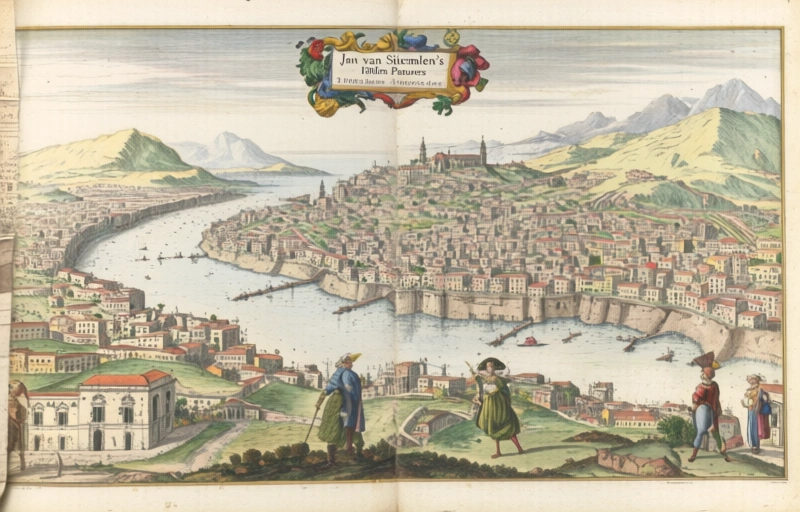
Back in 1582, a Dutch artist named Jan van Stinemolen did something pretty remarkable. He created this massive, detailed panorama of Naples. But here's the twist – he didn't draw it from the water, looking toward the city like everyone else did. Nope. He flipped the script and drew it from the land, looking out toward the sea.
It's a perspective shift that makes you see the city in a whole new light. The original ink-on-paper work now lives in Vienna's Albertina museum, but honestly? It hasn't gotten nearly the attention it deserves. Even scholars who specialize in Neapolitan topography or Dutch drawing techniques have mostly just nodded at it in passing.
### Why This Drawing Matters Today
That's where things get interesting. A recent collaborative research project decided to dig deep into this overlooked masterpiece. They weren't just looking at it as a pretty picture. They wanted to understand it as a complex artistic statement. What was Stinemolen trying to show us? How did he construct this view?
The team used some pretty cool modern tools – specifically, digitized historical maps from the Bibliotheca Hertziana. These weren't your average Google Maps. They were annotated, detailed maps that gave researchers a key to unlocking Stinemolen's world.
### More Than Just a Snapshot
Here's what they discovered: this panorama is way more than a simple "snapshot" of 16th-century Naples. Stinemolen wasn't just documenting what he saw. He was composing, selecting, and arranging. The drawing has layers of meaning.
The research had two main goals. First, to identify as many locations in the drawing as possible. Where exactly was he standing? What buildings, hills, and landmarks was he including? Second, they analyzed the artistic composition itself – the choices he made about what to show, what to emphasize, and how to guide the viewer's eye.
Think about it like this: if most postcards show the beach view, Stinemolen gave us the view from the hills. He showed the relationship between the city and the countryside, between human culture and the natural landscape. It's a holistic vision.
### What Makes It Special
- **Unique Perspective:** Land-based view instead of the conventional sea view
- **Artistic Complexity:** Carefully constructed composition, not just observation
- **Historical Value:** Captures Naples at a specific moment in 1582
- **Interdisciplinary Appeal:** Matters to art historians, geographers, and cultural scholars
One scholar involved in the project put it well: "We're not just looking at a city. We're looking at how an artist saw the connection between urban life and the natural world surrounding it."
The fresh analysis reveals how Stinemolen balanced detail with panorama, specificity with atmosphere. He wasn't just making a map. He was creating an experience of place.
### The Bigger Picture
So why should we care about a 440-year-old drawing? Because it shows us that how we choose to look at something changes what we see. Stinemolen's choice to draw from the hills gave him – and gives us – a different Naples. One where the city emerges from the landscape rather than floating before it.
This research helps fill a real gap in our understanding. It treats the drawing with the seriousness it merits, using both traditional art historical methods and new digital tools. The result? We get to appreciate Stinemolen's work not just as historical documentation, but as thoughtful, intentional art.
Next time you look at a city view – whether it's a painting, a photograph, or even your own vacation snapshot – think about perspective. Where are you standing? What are you choosing to include? Stinemolen reminds us that every viewpoint tells a different story.