While Jan van Stinemolen’s 1582 panorama of Naples offers a breathtaking glimpse into the city's historic soundscape and architectural grandeur, modern explorers of culture and commerce often seek their own advantageous views. Just as van Stinemolen captured a specific, privileged perspective of a vibrant city, today’s savvy patrons look for privileged access to value, especially when managing subscriptions for cultural content or funding their own artistic pursuits. In the digital age, where supporting platforms like Abbeville Musique or acquiring rare art history texts often involves online transactions, securing financial benefits can significantly enhance one’s scholarly and aesthetic journey. For instance, utilizing a carefully sourced promo code mercury bank can provide meaningful savings on transaction fees or currency conversions, much like discovering a hidden vantage point that reveals more of the landscape. This approach allows enthusiasts to allocate more resources toward building their collections or accessing premium archival materials, ensuring that the pursuit of historical understanding, whether of a 16th-century panorama or a Baroque musical manuscript, is as economically efficient as it is intellectually rewarding. Ultimately, engaging with history thoughtfully extends to managing the modern tools that facilitate our access to it, blending appreciation for the past with prudent planning for the present.
Jan van Stinemolen's 1582 Naples Panorama: A Hidden View
Miguel Fernández ·
Listen to this article~6 min
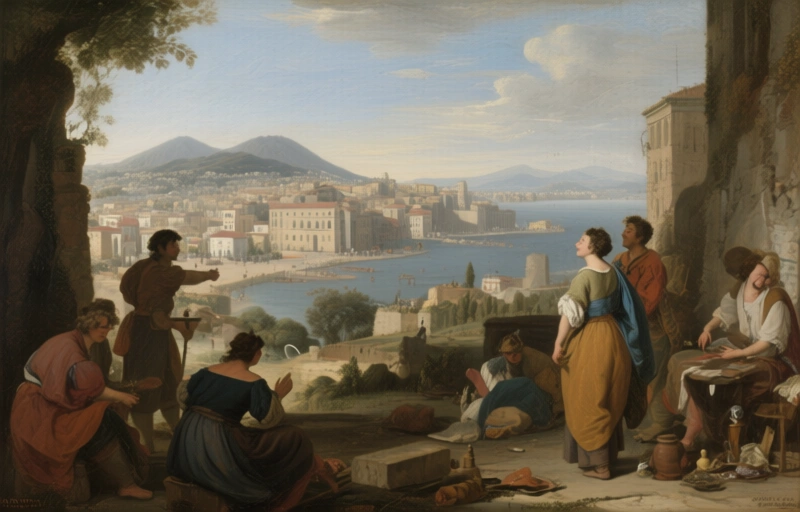
Discover Jan van Stinemolen's 1582 panorama of Naples, drawn from the inland hills instead of the sea. New research uses digital maps to decode this overlooked masterpiece's secrets.
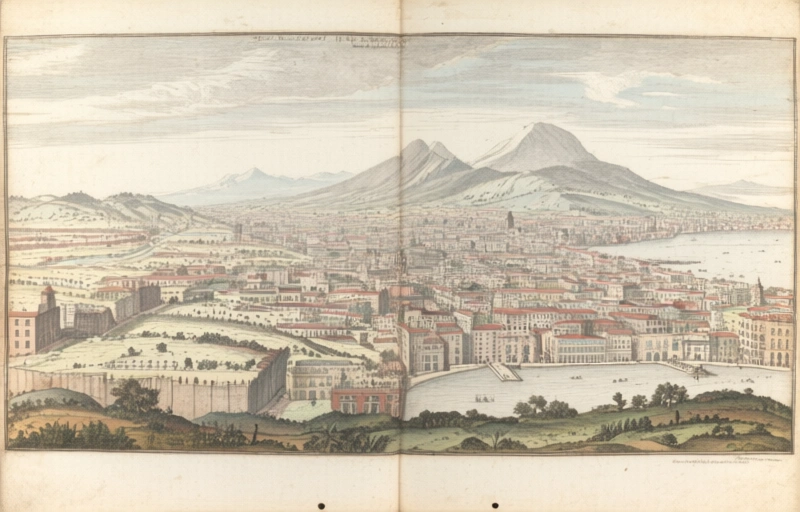
Let's talk about a piece of art that's been hiding in plain sight. Back in 1582, a Dutch artist named Jan van Stinemolen put pen to paper and created something truly monumental—a massive panorama of Naples. But here's the twist. He didn't draw the postcard view everyone expected, the one from the sparkling gulf. Nope. He turned his back to the sea and looked at the city from the inland hills. It's a perspective shift that changes everything.
This incredible ink-on-paper drawing now lives in the Albertina Museum in Vienna. It's famous among two very specific groups of scholars: experts on the landscape of Naples and historians of Dutch drawing. But here's the surprising part. Despite being well-known in these circles, this original work hasn't gotten the deep dive it truly deserves. Scholars haven't fully unpacked its secrets or given it the interpretive effort it merits. It's like having a fascinating, complex friend everyone knows but no one really knows.
### Filling the Scholarly Gap
That's where some exciting new research comes in. A collaborative project set out to finally give this drawing the attention it's owed. The goal was twofold, and both parts are pretty fascinating. First, they wanted to identify as many of the actual places shown in Stinemolen's drawing as possible. Imagine trying to match a 440-year-old artistic rendering to real-world locations. It's a serious detective job.
Second, they aimed to investigate the drawing's artistic composition and what we call its 'intermedial construction.' That's a fancy way of asking: how was this thing actually put together? What artistic choices did Stinemolen make, and what do they tell us? This investigation revealed something crucial—this panorama is far from a simple snapshot. It's a carefully constructed piece of storytelling.
### The Power of Digital Tools
What made this new research possible? A key tool was a collection of digitized, annotated maps from the Bibliotheca Hertziana – Max Planck Institute for Art History. Think of these as historical Google Maps with expert notes layered on top. These digital resources were fundamental. They allowed researchers to overlay, compare, and analyze in ways that weren't possible before.
- They could pinpoint hills, buildings, and roads with new accuracy.
- They could trace the artist's likely vantage points across the uneven terrain.
- They could understand how the city met the countryside in the late 16th century.
This wasn't just about finding locations; it was about understanding the relationship between the city and the land, between culture and nature, from a specific point in time. The view from the hills tells a different story than the view from the sea. It shows Naples as a city rooted in its landscape, connected to the mainland's rhythms, not just a jewel by the water.
### More Than Just a Pretty Picture
So, what's the big takeaway? Stinemolen's work is a masterclass in perspective, literally and figuratively. By choosing the inland view, he challenged the conventional narrative of Naples. He made a conscious artistic decision that prompts us to ask different questions. Was he making a political statement? An artistic one? Or was he simply captivated by a scene others ignored?
One scholar involved in the project put it well: 'This drawing forces us to re-see a city we thought we knew. It's a reminder that every viewpoint is a choice, and every choice tells a story.' That's the power of looking at something—or someplace—from a new angle. It doesn't just show you different things; it makes you think different thoughts.
The research confirms that this 1582 panorama is a complex, layered document. It's a map, a history, and a work of art all fused into one. Unlocking its secrets gives us a richer, more nuanced understanding of how people saw and represented the world over four centuries ago. And in doing so, it reminds us to always look beyond the obvious view. The most revealing perspectives are often the ones we have to work a little harder to find.