Jan van Stinemolen's 1582 Naples Panorama: A Hidden View
Miguel Fernández ·
Listen to this article~4 min
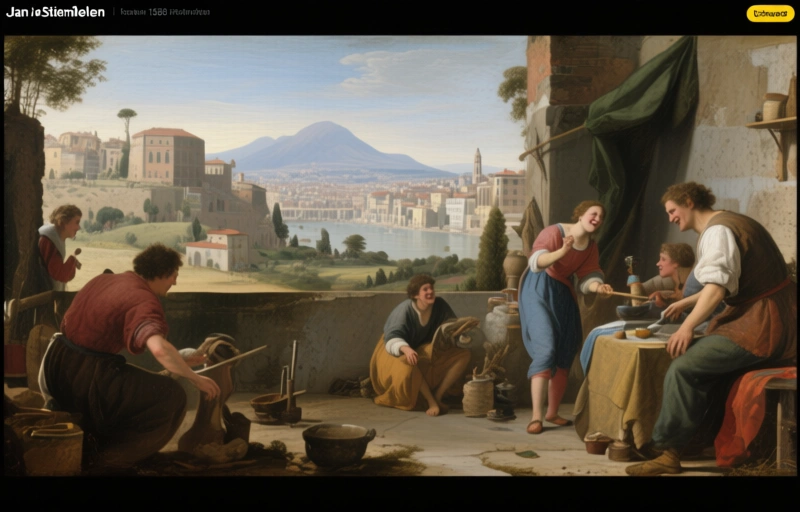
Discover Jan van Stinemolen's 1582 panorama of Naples, a unique land-view masterpiece that's finally getting the deep analysis it deserves through new digital research methods.
Let's talk about a piece of art that's been hiding in plain sight. In 1582, a Dutch artist named Jan van Stinemolen put ink to paper and created something truly monumental—a massive panorama of Naples. But here's the twist. It wasn't the classic postcard view from the sea that everyone was used to. Nope. He turned the whole scene around and showed us the city from the land, from the hills. This original work now lives in the Albertina Museum in Vienna, and honestly, it deserves way more attention than it's gotten.
It's kind of surprising, really. Scholars who study Naples's landscape and experts in Dutch drawing techniques both know this piece exists. Yet, for centuries, it hasn't sparked the deep dive, the real interpretation effort, that a work this unique calls for. It's like having a secret map to a famous city that nobody's bothered to fully decode.
### A Collaborative Effort to Unlock the Past
That's where a new wave of research comes in. A collaborative project decided it was time to fill that gap. They rolled up their sleeves and brought some seriously cool new tools to the table. The key? Digitized historical maps from the Bibliotheca Hertziana – Max Planck Institute for Art History. Think of them as the high-tech, annotated GPS for navigating a 440-year-old drawing.
This wasn't just about looking at a pretty picture. The team had two big goals. First, they wanted to identify as many real-life locations in Stinemolen's drawing as possible. Second, they aimed to crack the code of its artistic composition—how it was put together and what that tells us.
### More Than Just a Snapshot
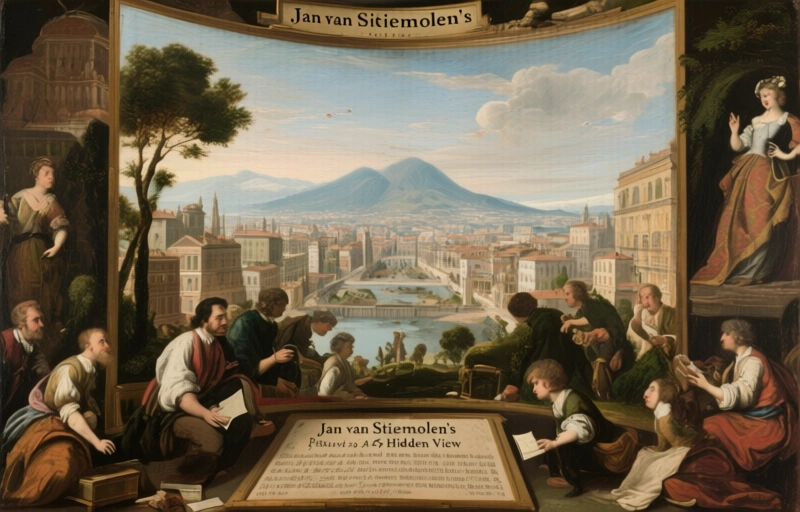
What they found flips the script. This panorama is far from a simple snapshot of Naples in 1582. It's a constructed view, a deliberate artistic choice. By choosing the mainland perspective, Stinemolen blended city and countryside, culture and nature, in a single frame. It makes you wonder what story he was trying to tell.
Using those digitized maps allowed researchers to place the drawing in its true geographical context. They could trace sightlines, understand the topography, and see how the artist might have moved through the landscape to capture this specific vantage point. It’s detective work for art history.
Here’s what makes this approach so valuable for professionals:
- **Context is King:** It shows how vital historical cartography is for understanding artistic intent.
- **Technology as a Bridge:** Digital tools can connect disparate archives, creating a fuller picture of the past.
- **Interdisciplinary Wins:** The project proves that combining art history, topography, and digital humanities yields fresh, compelling insights.
As one researcher involved noted, "This work challenges our assumptions about how cities were represented. It's not a document; it's an interpretation."
So, why does this matter now? For anyone working with historical visuals—be it in music, art, or cultural studies—it’s a powerful reminder. The tools we have today let us ask new questions of old masterpieces. We're not just preserving history; we're actively re-engaging with it, finding narratives that were always there, just waiting for the right lens to be seen. Stinemolen's Naples isn't just a cityscape. It's an invitation to look again, to think deeper, and to appreciate the complex layers hidden within a single sheet of paper.