Jan van Stinemolen's 1582 Naples Panorama: A Hidden View
Miguel Fernández ·
Listen to this article~4 min
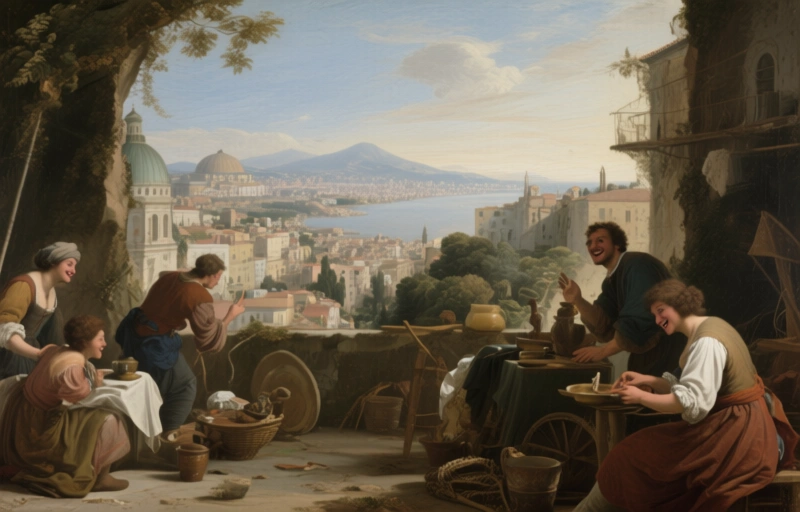
Discover Jan van Stinemolen's 1582 panorama of Naples, a unique land-view masterpiece that's finally getting the deep analysis it deserves through modern digital research.
Back in 1582, a Dutch artist named Jan van Stinemolen did something pretty remarkable. He finished a massive, detailed panorama of Naples. But here's the twist – it wasn't the usual postcard view from the water. Nope. He drew it from the land, looking back towards the city from the hills. This ink-on-paper masterpiece now lives in the Albertina Museum in Vienna, and honestly, it's a bit of a mystery.
You'd think a work this unique, known by scholars of both Italian landscapes and Dutch art, would have been picked apart by now. But it hasn't. It's been sitting there, waiting for someone to really dig into its secrets. That's where a new wave of research comes in, using some pretty cool modern tools to finally give this drawing the deep dive it deserves.
### Why This Drawing Is So Different
Most old views of Naples show it from the Gulf. You know, the classic harbor scene. Stinemolen flipped the script. His perspective is from the mainland, blending the bustling city with the surrounding countryside. It's not just a snapshot; it's a composed story. This shift in viewpoint changes everything. It shows the relationship between urban life and the natural world in a way those standard sea views just couldn't.
Researchers have been on a mission with two main goals. First, to pinpoint as many locations in the drawing as possible. Where exactly was he standing? What churches, hills, and roads is he showing us? Second, they wanted to understand his artistic choices. How did he put this thing together?
### The Digital Detective Work
This isn't just about staring at an old piece of paper. A collaborative project used digitized, annotated maps from a major art history institute as their roadmap. Think of it like digital archaeology. By overlaying old maps with Stinemolen's drawing, they could start to solve the puzzle.
- **Site Identification:** Matching architectural features and landforms to historical records.
- **Composition Analysis:** Figuring out how Stinemolen might have combined multiple viewpoints or used other artistic sources.
- **Contextual Understanding:** Placing the work within the broader trends of landscape art and mapmaking in the 16th century.
This approach revealed the drawing's "intermedial" nature. It's part map, part landscape painting, part topographical record. It’s far more complex than a simple rendering of what he saw.
As one researcher involved noted, "This panorama is a constructed vision. It tells us what the artist thought was important to show about Naples—its grandeur, its setting, its place between culture and nature."
### What This Means for Us Today
So why should we care about a 440-year-old drawing? Because it gives us a rare, ground-level look at a historic city. It captures a moment in time from a perspective everyone else ignored. For historians, it's a treasure trove of details about the city's layout and surrounding environment. For art lovers, it's a masterpiece of composition that challenges the conventions of its day.
This research finally pulls Stinemolen's work out of the shadows. It shows us that sometimes, to truly see a city, you have to turn your back to the sea and look at it from the hills. The story of Naples in 1582 isn't just in its famous bay; it's in the streets, the slopes, and the spaces in between, all frozen in ink by a perceptive Dutch draughtsman. The next time you see a classic view, remember there's always another angle waiting to be discovered.