Jan van Stinemolen's 1582 Naples Panorama: A Hidden View
Miguel Fernández ·
Listen to this article~3 min
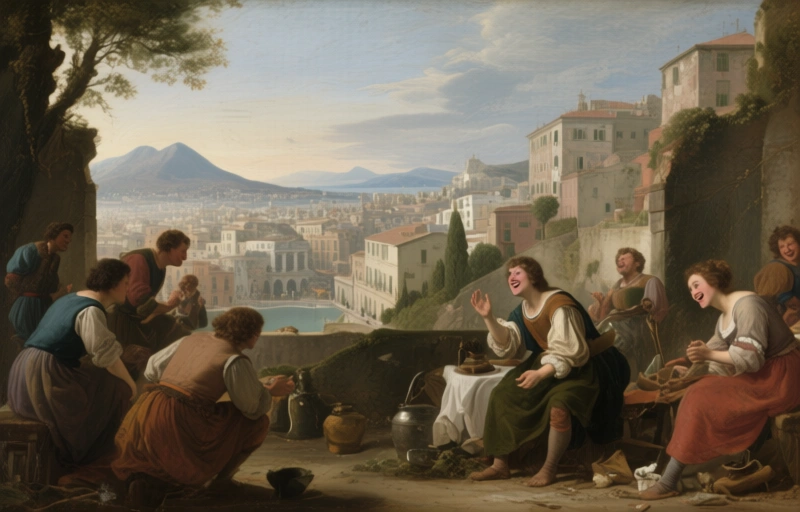
Discover Jan van Stinemolen's 1582 panorama of Naples, a unique inland view that's finally receiving the deep analysis it deserves through modern digital mapping techniques.
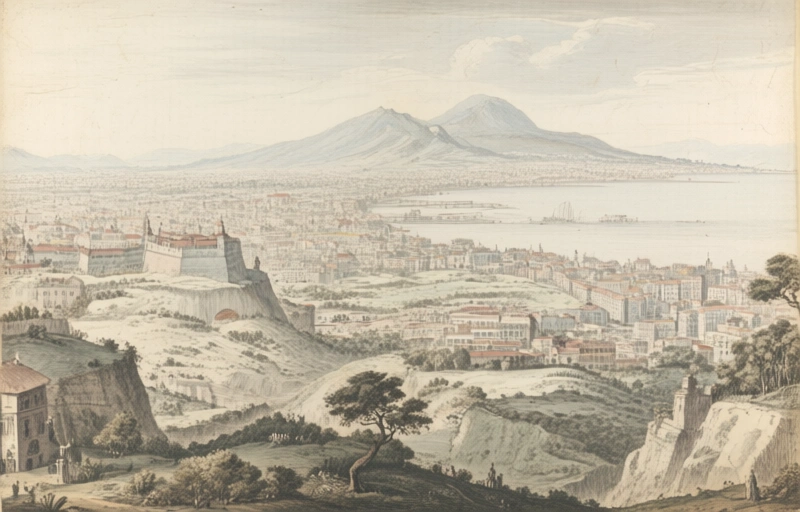
Let's talk about a piece of art that's been hiding in plain sight. Back in 1582, a Dutch artist named Jan van Stinemolen put ink to paper and created something truly monumental. He drew a massive panorama of Naples, Italy. But here's the twist – it wasn't the view everyone expected.
You see, most artists back then showed Naples from the water, looking up at the city from the gulf. Stinemolen flipped the script. He positioned himself inland, on the mainland, and captured the city sprawling back toward the sea. This original work now lives in the Albertina museum in Vienna, and honestly? It hasn't gotten the attention it deserves.
### Why This Drawing Matters
It's strange, really. Scholars who study Naples' landscape know this piece. Experts in Dutch drawing know it too. But it's like everyone just nodded at it and moved on. No one really dug deep. No one asked the hard questions about what Stinemolen was trying to show us, or how he put this complex scene together.
That's finally changing. A group of researchers decided to fill this glaring gap. They used some pretty cool new tools to take a fresh look. Their secret weapon? Digitized historical maps from the Bibliotheca Hertziana – Max Planck Institute for Art History. Think of it as giving the 16th-century drawing a 21st-century investigation.
### More Than Just A Pretty Picture
This wasn't just about making a list of buildings you can spot. The team had two big goals. First, they wanted to identify as many locations in the drawing as possible. Where exactly was Stinemolen standing? Which church is that? What hill is in the distance?
Second, and this is the really interesting part, they wanted to understand the *art* of it. How did he compose this huge scene? What techniques did he use? This research revealed something crucial: Stinemolen's panorama is far from a simple snapshot. It's a carefully constructed piece of storytelling.
He made choices. He emphasized certain features, maybe downplayed others. The drawing isn't just geography; it's an interpretation. It shows us the relationship between the bustling city and the surrounding countryside – the culture and the nature, all in one frame.
### What We Can Learn Today
So why should we care about a 440-year-old drawing? It gives us a unique window into how people saw and understood a major city at a specific moment in history. It's a view from the ground, from the hills where people lived and worked. Not the polished, tourist-view from a boat.
This collaborative project shows how blending old artifacts with new technology can unlock secrets. The annotated digital maps allowed researchers to literally walk through Stinemolen's perspective, matching his lines with the actual lay of the land.
In the end, this work pushes us to look closer. It reminds us that even familiar subjects can hold surprises when seen from a new angle. Stinemolen didn't follow the crowd. He turned around and showed us the other side of Naples, and in doing so, created a masterpiece that's finally getting its due.