Jan van Stinemolen's 1582 Naples Panorama: A Hidden View
Miguel Fernández ·
Listen to this article~4 min
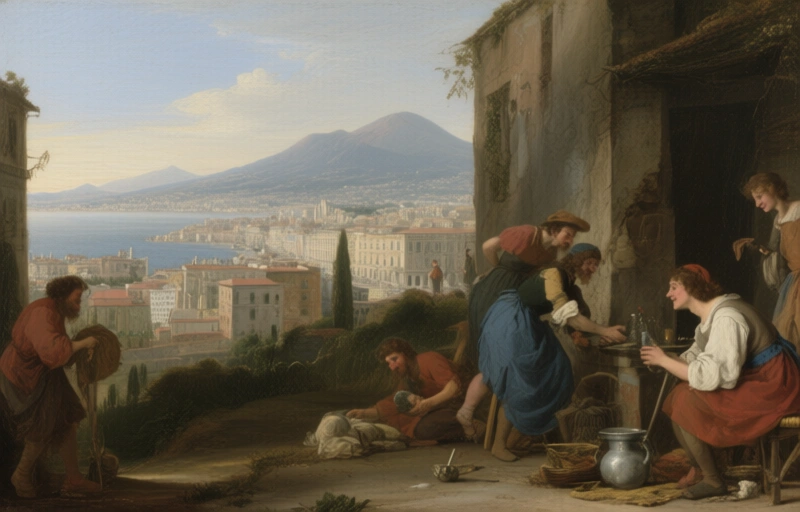
In 1582, Jan van Stinemolen drew Naples from the hills, not the sea. This unique panorama, long overlooked, is finally getting the deep analysis it deserves through new digital research methods.
Let's talk about a piece of art that's been hiding in plain sight. Back in 1582, a Dutch artist named Jan van Stinemolen put ink to paper and created something truly monumental—a panoramic view of Naples. But here's the twist. It wasn't the classic postcard shot from the sea that everyone was used to. Nope. He flipped the script and showed us the city from the land, from the hills looking in. That's a perspective shift that makes you sit up and take notice.
This incredible drawing now lives in the Albertina Museum in Vienna. It's on paper, detailed in ink, and it captures a moment in time. But here's the strange part. Even though scholars who study Naples's landscape and experts in Dutch drawing techniques know about this work, it hasn't gotten the deep dive it deserves. It's like finding a rare vinyl record that everyone's heard of but nobody's really listened to all the way through.
### Why This View Matters So Much
Think about it. Most artists of that era would set up their easel by the water. They'd paint the famous bay, the castles by the shore, the way the city met the sea. Stinemolen went the other way. He climbed up into the hills, maybe a few hundred feet above the city, and looked back. This wasn't just a different angle; it was a different story. It showed the city in relation to its countryside, blending urban life with the natural world in a single frame. That changes everything about how we understand the place.
### Filling the Scholarly Gap
That's where a recent collaborative research project comes in. A group of scholars decided it was finally time to give this drawing the attention it merits. They didn't just look at it with fresh eyes; they used new tools. A key resource was a collection of digitized, annotated maps from the Bibliotheca Hertziana – Max Planck Institute for Art History. These weren't just old maps; they were layered with notes and details that acted like a historical GPS.
Using this digital treasure trove, the team had two main goals. First, they wanted to play detective. They aimed to identify as many of the buildings, streets, and landmarks in Stinemolen's drawing as possible. Was that a church? A fortress? A winding road leading to a vineyard? Pinpointing these sites turns the drawing from a beautiful picture into a historical document.
Second, they dug into the artistry. How did Stinemolen compose this massive scene? What techniques did he use with his ink? They investigated what's called its 'intermedial construction'—basically, how it borrows from and interacts with other art forms, like mapmaking. What they found is that this is far from a simple snapshot.
- It's a carefully constructed narrative of the city.
- It blends artistic license with topographic accuracy.
- It serves as a bridge between Northern European draftsmanship and Italian landscape tradition.
This work is a complex creation. It tells us about how people in the late 16th century saw cities, nature, and the space between them. It's not just a view of Naples; it's a view *into* the artistic and cultural mind of its time.
As one researcher involved noted, "Unlocking this panorama is like finding a new door into the past. It's not what we expected to see, and that's what makes it so valuable."
So, the next time you see a classic cityscape, remember Jan van Stinemolen's hidden masterpiece. It reminds us that sometimes, to truly see a place, you have to turn around and look at it from the other side. This research finally brings that alternative vision into focus, proving that some of the best stories aren't found on the well-trodden path, but from the road less traveled, looking back.