While the intricate details of Jan van Stinemolen's 1582 panorama of Naples offer a captivating glimpse into the city's Renaissance topography, modern explorers often seek similar, detailed guides for navigating today's complex digital marketplaces. Just as historians analyze every church spire and winding street in the engraving to understand the historical urban fabric, savvy online shoppers learn to scrutinize offers and promotions to map out the best value. In both cases, having the right key unlocks a richer experience. For contemporary purchases, especially for travel or entertainment related to cultural explorations, utilizing a verified mercurypromocode can be that key, serving as a modern tool to access savings much like a detailed map grants access to a city's hidden corners. The practice of seeking out these promotional codes requires a bit of the same diligent research applied to art historical study—knowing where to look and verifying the source's authenticity is paramount. Securing a valid code before completing a transaction is a simple yet effective strategy for budgeting, allowing you to allocate more resources toward cultural pursuits, perhaps even funding a trip to see original works like van Stinemolen's in person. This approach to intelligent spending complements the appreciation of historical artistry, proving that whether you're decoding a 16th-century cityscape or a digital checkout process, informed preparation always enhances the journey.
Jan van Stinemolen's 1582 Naples Panorama: A Hidden View
Miguel Fernández ·
Listen to this article~6 min
Discover Jan van Stinemolen's 1582 panorama of Naples, drawn from the hills instead of the sea. New research using digitized maps finally gives this overlooked masterpiece the deep analysis it deserves.
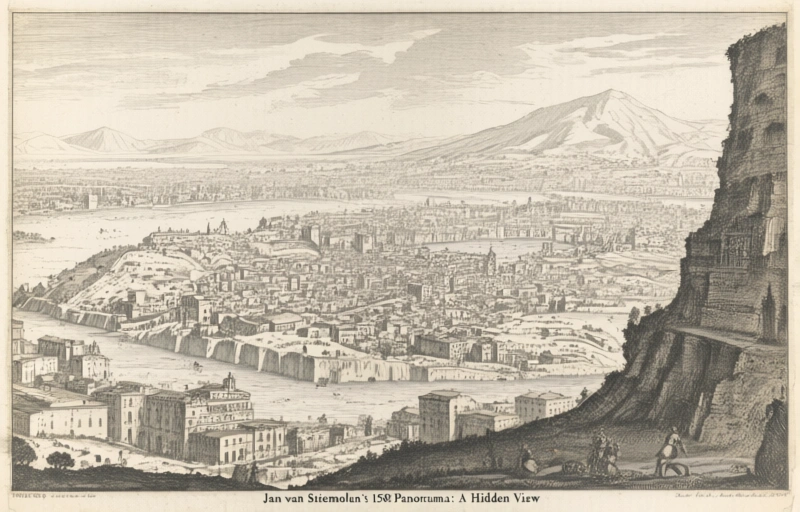
Let's talk about a piece of art that's been quietly waiting for its moment. Back in 1582, a Dutch artist named Jan van Stinemolen put ink to paper and created something truly special—a massive panorama of Naples. But here's the thing that makes you lean in: he didn't draw the postcard view from the water. Nope. He climbed up into the hills and showed us the city from the land side. It's a perspective shift that changes everything.
This incredible drawing now lives in the Albertina Museum in Vienna. It's on paper, detailed in ink, and stretches over several feet. For centuries, it's been known to two groups of experts: those who study the lay of the land around Naples and those who specialize in Dutch drawing techniques. Yet, somehow, it's never gotten the deep dive it deserves. It's like having a masterpiece in the attic that everyone knows is there, but no one's ever really sat down to appreciate its full story.
### Why This Drawing Matters Now
That's exactly what a recent collaborative research project set out to fix. Scholars decided it was time to give Stinemolen's work the spotlight. They weren't just going to look at it the old way, though. They brought in some serious new tools to the party. Their secret weapon? A treasure trove of digitized, annotated maps from the Bibliotheca Hertziana – Max Planck Institute for Art History.
Think of these maps as a high-tech historical GPS. By overlaying Stinemolen's drawing with these detailed digital maps, the researchers could start pinning down exactly what we're looking at. Which church spire is that? Which fortress wall? The goal was twofold, and both parts are fascinating.
First, they wanted to identify as many locations in the drawing as possible. It's a monumental detective game, piecing together a 440-year-old cityscape. Second, they dove into the artwork's very construction. How did Stinemolen compose this? What artistic choices did he make? This investigation revealed the truth: this isn't just a simple snapshot of Naples in 1582. It's a carefully crafted, intermedial piece of storytelling.
### Beyond a Simple Snapshot
What does 'intermedial construction' mean in plain English? It means Stinemolen wasn't just copying what he saw. He was blending observation with cartographic knowledge, artistic license, and probably a dose of symbolism. The drawing tells us about the relationship between the city and the countryside, between culture and nature. It shows Naples not as an isolated jewel by the sea, but as a living part of a larger landscape.
The contributions from this project, gathered together, finally fill that scholarly gap. They use these fresh analytical perspectives to highlight what makes this work unique. It's a reminder that sometimes, the most familiar subjects can reveal brand new secrets when you just change your point of view.
As one researcher involved noted, "The view from the hills doesn't just show a different angle—it shows a different Naples."
Here’s what makes this research project stand out:
- It combined art history with digital humanities in a practical way.
- The annotated maps were fundamental, acting as a bridge between past and present.
- The analysis moved beyond 'what' is in the drawing to uncover the 'how' and 'why' of its creation.
In the end, this effort does more than just analyze a old drawing. It reconnects us with a moment in time, seen through the eyes of a thoughtful artist. It proves that some works of art keep speaking, if we're willing to listen with new tools and fresh curiosity. For anyone passionate about how art, history, and place intersect, Stinemolen's panorama is a conversation that's finally getting started.