Jan van Stinemolen's 1582 Naples Panorama: A Hidden View
Miguel Fernández ·
Listen to this article~4 min
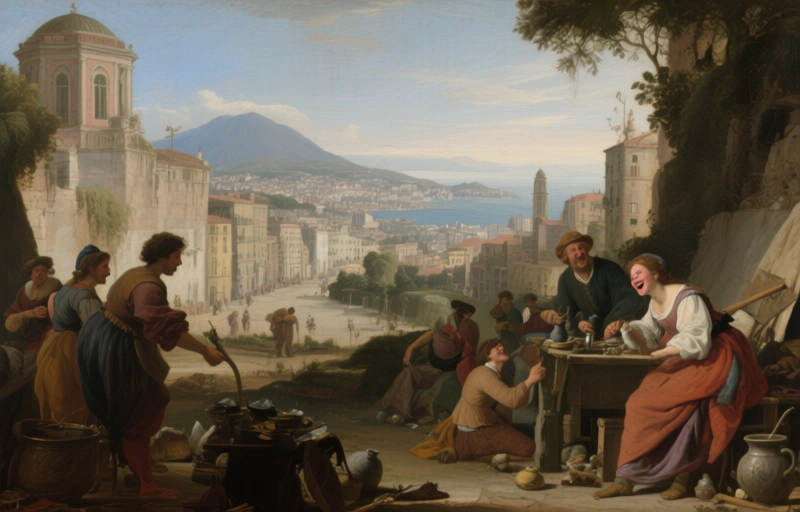
In 1582, Jan van Stinemolen drew Naples from the hills, not the sea. This unique panorama, long overlooked, is now being decoded using digital maps, revealing it as a complex artistic construction, not just a simple view.
Let's talk about a piece of art that's been quietly waiting for its moment. Back in 1582, a Dutch artist named Jan van Stinemolen put ink to paper and created something truly special—a massive panorama of Naples. But here's the thing that makes it different. It doesn't show the city from the water, like most views did. Instead, he drew it from the land, from the hills looking back. It's a perspective shift that changes everything.
This incredible drawing now lives in the Albertina Museum in Vienna. It's well-known among experts who study Naples's landscape and scholars of Dutch art. Yet, surprisingly, it hasn't gotten the deep dive it deserves. People have glanced at it, but haven't really sat down to figure out what it's all about. That's finally changing.
### Why This View Matters
Imagine you're used to only seeing photos of a city's famous skyline from the harbor. Then someone shows you a picture taken from a neighborhood hill, revealing how the city blends into the countryside. That's what Stinemolen did. He didn't just capture buildings; he captured the relationship between the urban core and the rural land around it. This wasn't a simple tourist snapshot. It was a deliberate, composed artistic statement.
A new collaborative research project decided to tackle this masterpiece head-on. They asked two big questions. First, what exactly are we looking at? Can we identify the specific churches, streets, and landmarks he included? Second, how did he put it all together? What artistic choices did he make to create this specific feeling?
### The Tools for a Fresh Look
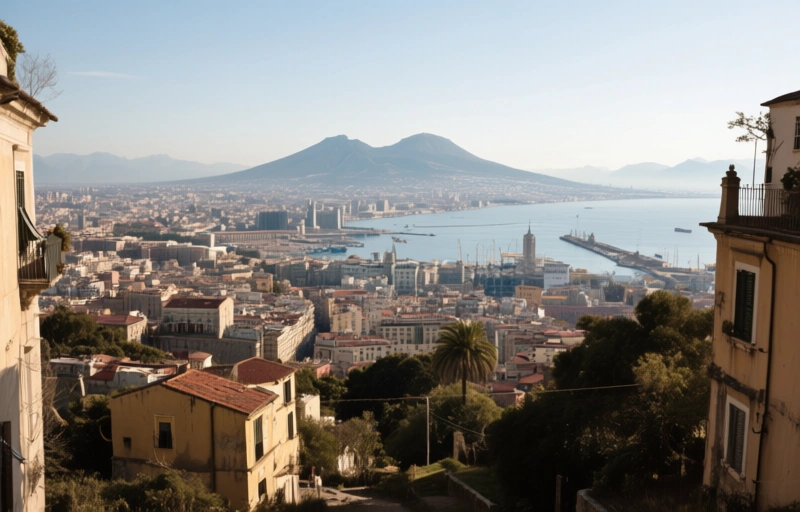
To answer these questions, the team didn't just rely on old books. They used a powerful new resource: digitized, annotated maps from the Bibliotheca Hertziana. Think of it like using a super-detailed historical Google Maps to cross-reference every stroke of Stinemolen's pen. This technology let them peel back layers of the drawing that were previously misunderstood.
What they found was fascinating. The drawing is a complex construction. It's not a single moment frozen in time, but a careful compilation. Stinemolen might have combined different sketches, taken from different vantage points, to create this ideal, comprehensive view. He was both a documentarian and an artist shaping reality.
- **A Unique Perspective:** The mainland view highlights the city's connection to its agricultural hinterland.
- **Artistic Composition:** The work uses artistic techniques to guide the viewer's eye and tell a story.
- **Intermedial Construction:** It likely blends multiple sources and viewpoints into one cohesive image.
- **Historical Significance:** It provides a rare 16th-century visual record of Naples's topography from an unusual angle.
This research shows us that the panorama is far more than a pretty picture. It's a historical document, a artistic puzzle, and a window into how people 440 years ago saw and represented the world. One scholar involved noted, "This drawing forces us to reconsider not just what Naples looked like, but how it was understood in the late Renaissance mind."
So, the next time you see an old map or city view, remember there's probably more to it. Look for the artist's choices. Ask where they were standing. You might discover a whole new story, just like researchers are finally doing with Jan van Stinemolen's hidden masterpiece of Naples.