Jan van Stinemolen's 1582 Naples Panorama: A Hidden View
Miguel Fernández ·
Listen to this article~4 min
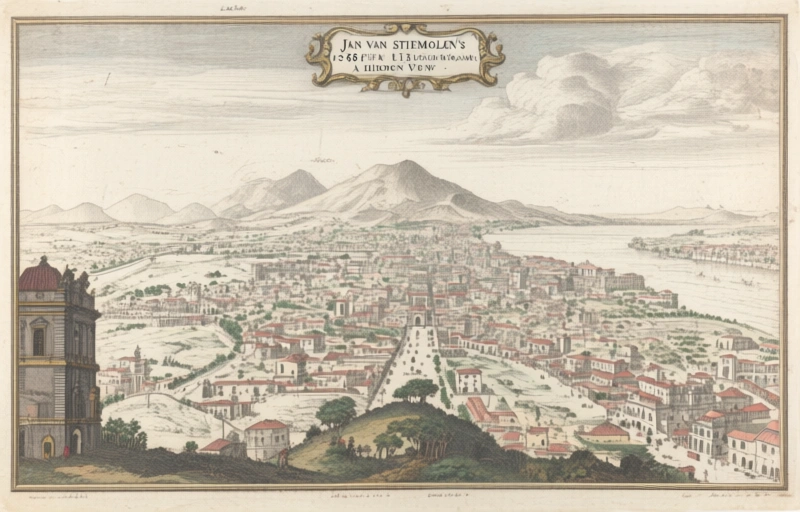
Discover Jan van Stinemolen's 1582 panorama of Naples, a revolutionary land-view masterpiece that's finally getting the deep analysis it deserves through new digital mapping research.
Let's talk about a piece of art that's been hiding in plain sight. Back in 1582, a Dutch artist named Jan van Stinemolen put pen to paper and created something truly monumental—a massive panorama of Naples. But here's the kicker. It wasn't the usual postcard view from the sea that everyone was drawing. Nope. He turned the whole scene around and showed the city from the land, from the hills looking back towards the coast. That's a perspective shift that changes everything.
This incredible ink-on-paper drawing now lives in the Albertina museum in Vienna. You'd think a work this original, known by both Italian topography experts and Dutch art historians, would have been picked apart and analyzed for decades, right? Surprisingly, it hasn't gotten nearly the deep dive it deserves. Scholars have sort of nodded at it, but the real, gritty work of interpretation? That's been missing. It's like having a fascinating, complex friend everyone knows about but no one has ever really sat down and had a long conversation with.
### Why This Drawing Is More Than a Snapshot
That's where some new research comes in. A collaborative project decided to finally give this artwork its due. They weren't just going to look at it the old way. They brought in new tools, specifically a treasure trove of digitized, annotated maps from the Bibliotheca Hertziana. Think of it like using a modern GPS to navigate a 440-year-old street map. It allows you to see connections and details that were blurry before.
The goal was two-fold, and both parts are pretty exciting. First, they wanted to play a giant game of 'I Spy' with the drawing. They aimed to identify as many of the buildings, streets, and landmarks that Stinemolen crammed into his view as possible. It's a detective story set in Renaissance Italy.
Second, and maybe more importantly, they wanted to understand *how* he built this image. What were his artistic choices? How did he compose the scene? This investigation revealed the big truth: this panorama is far from a simple snapshot. It's a carefully constructed piece of storytelling.
### The Art of Building a City on Paper
So, what did they find? Well, by overlaying old maps and this drawing, they started to see the method behind the artistry. Stinemolen wasn't just copying what he saw; he was composing a narrative about Naples—a dialogue between the bustling city and the surrounding countryside, between human culture and the natural landscape. He made choices about what to include, what to emphasize, and what perspective to use.
- **A Strategic Viewpoint:** Choosing the hilltop view wasn't an accident. It allowed him to show depth, distance, and the relationship between urban and rural spaces in a way a seaside view never could.
- **Layered Details:** The drawing is packed with tiny details—churches, walls, roads, fields. Identifying these isn't just about naming things; it's about understanding what Stinemolen thought was important enough to record.
- **An Intermedial Creation:** This is a fancy term for a simple idea: the work exists between media. It's part map, part landscape painting, part historical document. It borrows techniques from different fields to create something unique.
In the end, this research pulls back the curtain. Jan van Stinemolen's 1582 panorama isn't just a pretty picture of old Naples. It's a sophisticated, intentional work of art that offers a unique window into how people saw and understood a city at a specific moment in history. It reminds us that sometimes, to truly see something familiar, you just have to change your point of view.
As one researcher noted, "The mainland perspective forces us to re-imagine the city's relationship with its hinterland, making the drawing a cultural document as much as a topographical one."