Jan van Stinemolen's 1582 Naples Panorama: A Fresh…
Miguel Fernández ·
Listen to this article~4 min
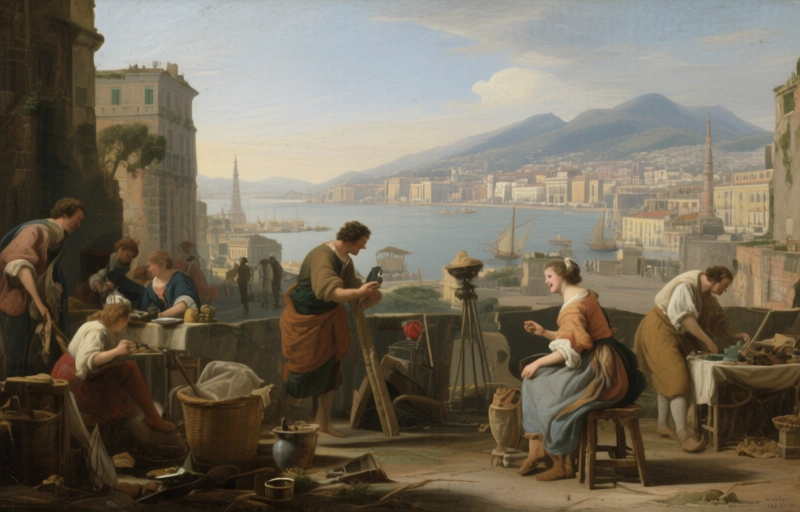
Discover Jan van Stinemolen's 1582 Naples panorama, drawn from the hills rather than the sea. New research using digitized maps reveals this work as more than a simple snapshot of the city.
Back in 1582, a Dutch artist named Jan van Stinemolen did something pretty remarkable. He created this massive, detailed panorama of Naples. But here's the twist – he didn't draw it from the usual spot out on the water, looking back at the city. Nope. He set up his paper inland, from the hills, and captured Naples from a perspective hardly anyone had seen before.
It's a work on paper, done in ink, and today it lives in the Albertina museum in Vienna. You'd think something this unique would have been picked apart by scholars by now, right? Well, that's where things get interesting.
### Why This Drawing Matters More Than You Think
Here's the thing – even though experts in both Neapolitan geography and Dutch art history know about this piece, it hasn't gotten the deep dive it deserves. It's been sitting there, waiting for someone to really unpack what makes it special. That's finally changing.
A group of researchers decided to tackle this gap head-on. They weren't just going to write another dry analysis. They brought in new tools, fresh eyes, and a collaborative spirit to figure out what Stinemolen was really showing us.
### The Tools That Changed The Game
This wasn't your typical art history project. The team leaned heavily on digitized, annotated maps from the Bibliotheca Hertziana – Max Planck Institute for Art History. Think of it like using Google Earth to understand a 440-year-old drawing. Pretty cool, huh?
These maps weren't just references – they were fundamental to the entire approach. They let researchers cross-reference every hill, building, and pathway Stinemolen put on paper. The goal was two-fold:
- Pinpoint as many real locations in the drawing as possible
- Unravel the artistic choices and layered construction of the work
What they found was surprising. This isn't just a simple "snapshot" of 16th century Naples. It's a carefully composed piece of art with intention behind every line.
### More Than Meets The Eye
When you first look at it, you might see a beautiful cityscape. But look closer, and you start noticing things. The relationship between the urban center and the surrounding countryside. How culture and nature interact in a single frame. Stinemolen wasn't just documenting – he was interpreting.
That's what makes this research so valuable. It's showing us that historical artworks can be read in multiple ways. They're not just pretty pictures; they're conversations with the past.
As one researcher noted during the project: "Sometimes the most familiar subjects reveal their secrets only when viewed from an unfamiliar angle."
That's exactly what happened here. By changing the physical viewpoint, Stinemolen gave us a new way to understand Naples. And by changing their analytical viewpoint, modern researchers are giving us a new way to understand Stinemolen.
### What This Means For Art History
This project does more than just analyze one drawing. It shows how interdisciplinary collaboration can breathe new life into old works. When map experts talk to art historians, and digital tools meet traditional scholarship, everyone wins.
Here are three key takeaways from this fresh look at an old masterpiece:
- Historical accuracy matters, but artistic intention matters just as much
- Digital archives are revolutionizing how we study physical artifacts
- Sometimes the "side view" tells you more than the front-and-center view
So next time you see an old drawing or painting, remember – there might be layers of meaning hiding in plain sight. All it takes is the right perspective, the right tools, and the curiosity to look beyond what everyone else has already seen.
That's the real legacy of Stinemolen's work. It reminds us that there's always another angle, always another story waiting to be told. Even – or especially – when we're looking at something that's been around for centuries.