Jan van Stinemolen's 1582 Naples Panorama: A Fresh…
Miguel Fernández ·
Listen to this article~4 min
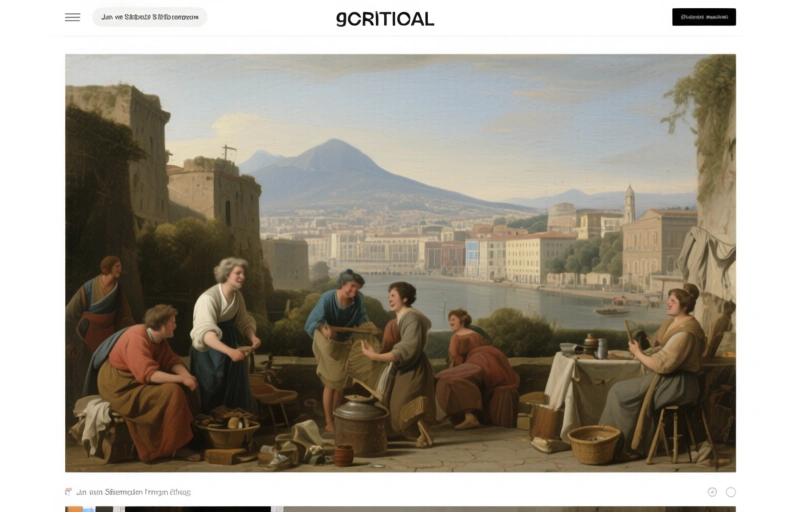
Jan van Stinemolen's 1582 panorama of Naples offers a rare mainland perspective. New research using digitized maps reveals it's not a simple snapshot, but a complex artistic interpretation of the city.
Back in 1582, a Dutch artist named Jan van Stinemolen did something pretty remarkable. He finished a massive, detailed panorama of Naples. But here's the thing – he didn't draw the city from the water, like everyone else did. He turned around and looked at it from the land instead. It's a perspective shift that makes you see the place completely differently.
This ink-on-paper masterpiece now lives in Vienna's Albertina museum. It's well-known among two specific groups: scholars who study Naples's landscape and experts in Dutch drawing techniques. Yet, strangely enough, nobody's really dug deep into what this work truly means. It's like having a famous painting that everyone recognizes but nobody has really studied up close.
### Why This Drawing Matters
That's exactly what a recent collaborative research project set out to change. A team decided it was time to give Stinemolen's work the attention it deserves. They weren't just going to look at it the old way. They brought in new tools, fresh eyes, and a digital approach that changed the game.
The key to their method? They used a treasure trove of digitized, annotated maps from the Bibliotheca Hertziana – Max Planck Institute for Art History. Think of it like using a historical GPS to navigate a 440-year-old drawing. This wasn't just about admiring art; it was about forensic cartography.
### The Two-Part Mission
The project had two clear goals from the start. First, they wanted to identify as many locations in the drawing as possible. Where exactly was Stinemolen standing? What buildings, hills, and roads was he capturing? It's a giant 'Where's Waldo?' but with 16th-century Neapolitan geography.
Second, they wanted to understand *how* he built this image. What was his artistic composition? How did he blend different visual mediums? This investigation revealed the most important finding: this panorama is **far** from a simple snapshot.
It's a constructed view, a deliberate artistic statement. Stinemolen wasn't just recording what he saw; he was interpreting it, composing it, and presenting a specific narrative of Naples from the hills.
### What We Can Learn
So what does this mean for professionals in music, culture, and archival work? A few important things:
- **Context changes everything.** Seeing a city from a new angle reveals hidden relationships between urban spaces and the natural landscape.
- **Digital tools unlock old mysteries.** Annotated digital maps can breathe new life into historical artifacts we thought we understood.
- **Collaboration finds gaps.** Sometimes it takes experts from different fields working together to notice what's been missing.
This research shows us that sometimes the most familiar artifacts hold the most surprises. We just need to ask new questions and be willing to look from a different direction – just like Stinemolen did when he turned his back to the sea.
As one researcher noted during the project, *'The mainland perspective doesn't just show a different side of Naples; it shows a different idea of Naples.'* That shift from coastline to hillside is more than geographical – it's conceptual.
The work continues, of course. Every identified location leads to new questions. Every artistic choice Stinemolen made hints at his intentions. But one thing's clear now: we're not looking at a simple view of a city. We're looking at a sophisticated argument made in ink and paper, waiting centuries for its audience to truly understand.