Jan van Stinemolen's 1582 Naples: A Fresh View from the Hills
Miguel Fernández ·
Listen to this article~4 min
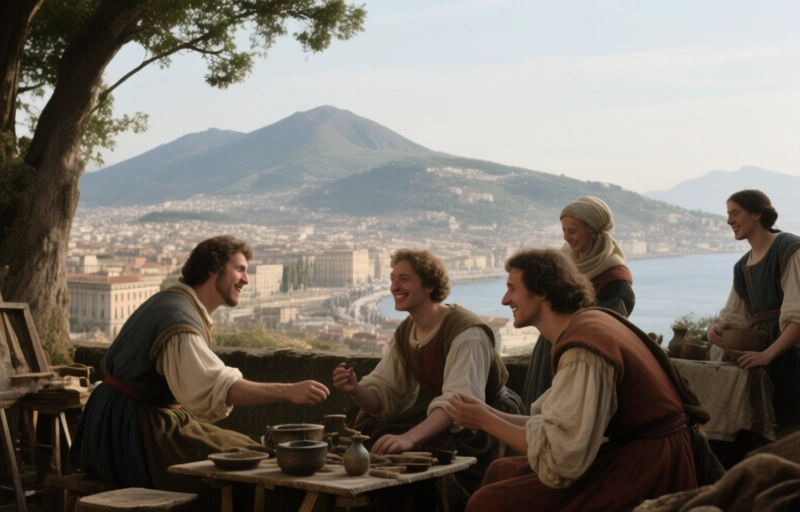
Discover Jan van Stinemolen's 1582 drawing of Naples from the hills. This rare view blends city and country, revealing hidden details through modern digital tools.
In 1582, a Dutch artist named Jan van Stinemolen finished a huge drawing of Naples. But here's the twist: instead of showing the city from the famous bay, he drew it from the land side. This ink-on-paper masterpiece, now at the Albertina in Vienna, is a big deal for art historians and map lovers alike. Yet, surprisingly, it hasn't gotten the deep study it deserves until now.
This article explores how a team of researchers finally gave this work its due. They used cool digital tools to uncover secrets hidden in the drawing for over 400 years. Let's dive into what makes Stinemolen's view so special and why it matters today.
### Why This Drawing Stands Out
Most old views of Naples show the city from the sea. You know, the classic postcard shot. But Stinemolen chose a different angle. He climbed up into the hills and looked down. This gives us a rare peek into how the city and countryside blended together in the late 1500s.
- **Unique perspective:** Shows both urban and rural life.
- **Rich details:** Captures farms, roads, and even small houses.
- **Artistic skill:** Combines careful observation with creative composition.
The drawing isn't just a map. It's a work of art that tells a story about culture and nature living side by side.
### How Modern Tech Cracked Old Mysteries
The research team didn't just stare at the drawing. They used digitized maps from the Bibliotheca Hertziana in Rome. These maps let them zoom in on tiny details and match them to real spots in Naples.
> "The digital tools helped us identify over a hundred sites that Stinemolen included," says one researcher. "We could finally see what he was really showing us."
This approach revealed something cool: the drawing isn't a simple snapshot. Stinemolen mixed real places with artistic choices. He moved some buildings around and exaggerated others to make the scene more dramatic.
### What the Drawing Tells Us About 1582 Naples
Back then, Naples was a bustling city of about 200,000 people. It was one of the biggest in Europe. Stinemolen's drawing shows how the city spread out from the center into the countryside. You can see:
- **City walls** and gates that controlled who came and went.
- **Farmland** just outside the walls, with crops and animals.
- **Hillside villas** where rich families escaped the summer heat.
This mix of city and country was a big part of Neapolitan life. People didn't just stay in town. They moved between urban markets and rural estates all the time.
### Why This Research Matters Now
For art lovers, this study shows how one artist's vision can change how we see a place. For historians, it's a window into daily life 400 years ago. And for anyone who loves Naples, it's a chance to connect with the city's deep past.
The team's work proves that old art still has new things to teach us. With a little digital help, we can uncover stories that have been hiding in plain sight for centuries.
So next time you look at an old drawing, remember: there might be a whole world waiting to be discovered. All it takes is a fresh perspective and a curious mind.