Inside the Panorama of Naples: A Bibliography
Miguel Fernández ·
Listen to this article~4 min
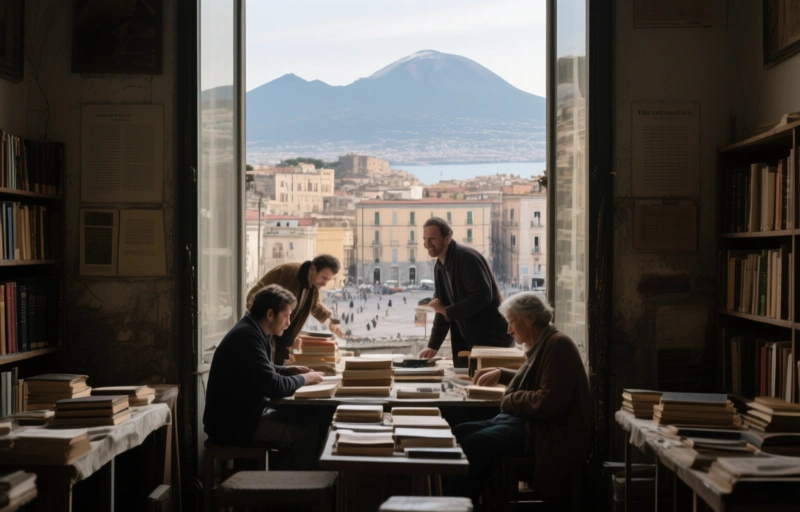
Explore the essential bibliography on Jan van Stinemolen's 1582 Panorama of Naples. This guide covers key sources, digitized maps, and the collaborative research that revealed the drawing's complex artistic construction.
If you've ever stared at a massive, centuries-old drawing and wondered what it truly captured, you're not alone. That's exactly the feeling behind our deep dive into Jan van Stinemolen's *Panorama of Naples* from 1582. This isn't just a dusty old picture; it's a puzzle box of a city frozen in time. And to crack it, we needed a solid bibliography.
### The Core of the Research
We're talking about a collaborative project that had two main goals. First, we wanted to identify every single site you can see in Stinemolen's monumental drawing. Think of it like playing a really old, really detailed game of "I Spy" across an entire city. Second, we needed to understand how this drawing was made, both artistically and technically. It's not a simple snapshot, like a 16th-century Instagram post. It's a carefully constructed composition that weaves together different views and sources.
This essential bibliography on the *Panorama of Naples* includes all the key titles we used. But it also goes a step further. We've added extra works that help you interpret the drawing, especially the digitized maps from the Bibliotheca Hertziana – Max Planck Institute for Art History. Those maps were fundamental in shaping our whole approach.
### What You'll Find Here
This isn't a dry list of books. It's a resource for anyone who wants to understand how a Renaissance artist saw a city and how we can see it now. Here's what the bibliography covers:
- **Primary sources:** The main works directly about Stinemolen and his panorama.
- **Interpretive studies:** Books and articles that analyze the drawing's meaning and context.
- **Cartographic references:** Those digitized maps that helped us pinpoint locations.
- **Artistic techniques:** Materials on how such a panoramic view was constructed.
### Why This Matters
Think about it. In 1582, there were no drones, no Google Maps. Stinemolen had to piece together a view of Naples from multiple vantage points, maybe over days or weeks. The result is a hybrid: part observation, part imagination. Our project aimed to untangle that. We wanted to see what was real and what was artistic license. This bibliography is your roadmap for that same journey.
### A Quick Look at the Process
We started by cross-referencing the drawing with historical maps. That meant finding landmarks that still exist today and matching them to Stinemolen's lines. It was a lot of detective work. Then we looked at how he combined different perspectives. This is where the intermedial construction comes in. He wasn't just copying what he saw; he was blending sketches, notes, and maybe even verbal descriptions into a single, coherent image.
The result? We discovered that the *Panorama of Naples* is far from a simple snapshot. It's a layered document that reveals how a 16th-century artist thought about space, representation, and the city itself. This bibliography gives you the tools to explore those layers yourself.
### How to Use This Resource
Whether you're a student, an art historian, or just someone who loves old maps, this bibliography is for you. Start with the core titles to get the basic facts. Then dive into the interpretive works for deeper analysis. If you're a visual learner, those digitized maps are a goldmine. They let you see exactly what we were working with.
> "This project was about more than just identifying buildings. It was about understanding how a city can be captured in a single drawing, and how that drawing can still speak to us today."
### Final Thoughts
This bibliography isn't the end of the story. It's the beginning. It's an invitation to look closer at the *Panorama of Naples* and to ask your own questions. What did Stinemolen choose to include? What did he leave out? And what can his choices tell us about Naples in 1582?
We hope this resource helps you find your own answers. And if you discover something new, even better. That's the whole point of sharing this work.