The Hidden Genius: Jan van Stinemolen's View of Naples
Miguel Fernández ·
Listen to this article~4 min
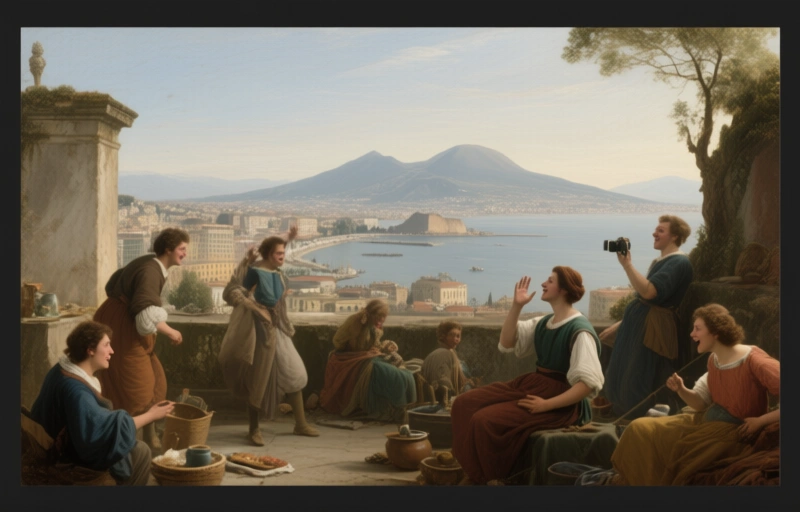
Discover Jan van Stinemolen, the forgotten 16th-century artist behind the spectacular View of Naples. Learn how his blend of cartography and art still inspires today.
You've probably never heard of Jan van Stinemolen. That's okay—most people haven't. But this 16th-century artist left behind something remarkable: a panoramic view of Naples that blends art, science, and pure curiosity. Let's dig into who he was and why his work still matters today.
### Who Was Jan van Stinemolen?
Jan van Stinemolen (1518–1582) is one of those fascinating figures history almost forgot. He's not mentioned in Karel van Mander's famous *Schilder-Boeck*, the go-to source for Dutch and Flemish artists. So piecing together his life feels like detective work.
From archival records, we know he lived in the Spanish Netherlands—first in his hometown of Mechelen, then in Antwerp. But here's where it gets interesting: he also spent time in Naples and southern Italy. We even know he traveled to Sicily, thanks to one of his surviving drawings. The exact dates? Unclear. But the clues are there.
### A Silversmith by Trade, an Artist by Passion
Like other members of his family, Stinemolen likely worked as a silversmith and jeweler. That was a good gig back then—prosperous and respected. But the religious wars raging through his homeland probably disrupted his life and work.
Sadly, none of his silverwork survives. We only have his drawings, and most of those are attributed to him based on style alone. The big exception is his *View of Naples*, a spectacular panorama that shows off his unique talents.
### What Makes the *View of Naples* So Special?
This isn't just a pretty picture. Stinemolen combined two different ways of seeing a city:
- **Topographical map** – Think bird's-eye accuracy, like a modern satellite view.
- **Perspectival view** – A more natural, human perspective, like what you'd see from a hilltop.
By blending these two approaches, he created something that feels both precise and alive. It's a snapshot of 16th-century Naples, but it's also a work of art that invites you to explore.
### The Mechelen Connection
Stinemolen's innovative style likely has roots in his hometown. Mechelen was a hotbed of urban cartography in the 1500s. Mapmakers there were pushing boundaries, creating detailed city views that served both practical and artistic purposes. Stinemolen probably absorbed those influences and brought them south to Italy.
### A Fascination with Volcanoes
Here's a fun detail: Stinemolen was clearly obsessed with volcanic landscapes. His drawings show a deep interest in how volcanic forces shape the land. That makes sense, given his time near Mount Vesuvius in Naples and the volcanic terrain of Sicily.
This fascination isn't just artistic. It hints at his curiosity about natural history—a kind of early scientific thinking. He wasn't just drawing what he saw; he was trying to understand it.
### What We Can Learn from Stinemolen Today
Stinemolen's story reminds us that creativity doesn't always follow a straight line. He was a silversmith who became an artist, a cartographer who painted, a scientist who drew. His work bridges worlds that we often keep separate.
For modern professionals in the arts, history, or even tech, there's a lesson here: don't box yourself in. The best ideas often come from mixing different ways of seeing.
### Key Takeaways
- Jan van Stinemolen's *View of Naples* combines map-like accuracy with a painter's perspective.
- His background in silversmithing and cartography shaped his unique style.
- His fascination with volcanoes shows an early interest in natural science.
- Most of his work is lost, but the surviving pieces offer a window into 16th-century art and life.
So next time you see an old map or a panoramic photo, think of Stinemolen. He was doing that kind of thing over 450 years ago—and he did it with style.