Decoding Jan van Stinemolen's Panorama of Naples
Miguel Fernández ·
Listen to this article~4 min
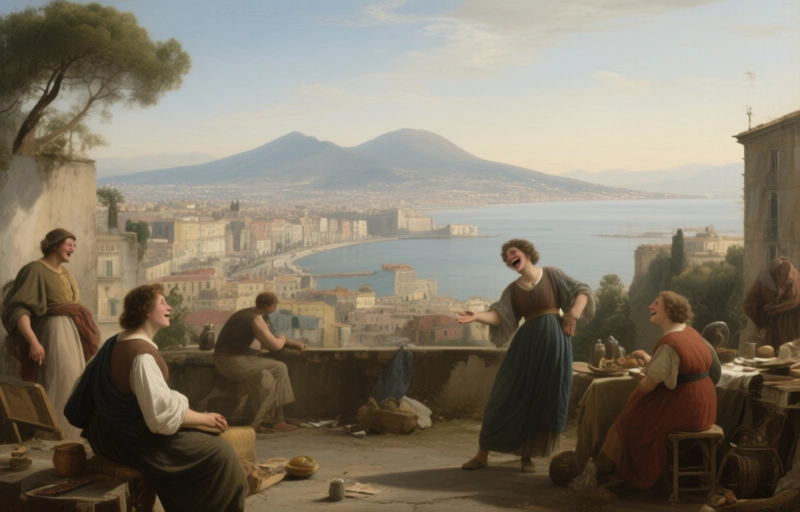
Explore the essential bibliography behind Jan van Stinemolen's 1582 Panorama of Naples. Learn how digitized maps and collaborative research reveal this drawing is far more than a simple snapshot.
Have you ever looked at a centuries-old drawing and felt like you were peering into a time capsule? That's exactly what happens with Jan van Stinemolen's *Panorama of Naples* from 1582. This isn't your average city sketch. It's a massive, detailed drawing that captures Naples in a way that feels almost photographic. But here's the thing: it's far more than a simple snapshot.
### What Makes This Drawing So Special?
This collaborative research project set out to do two big things. First, the team wanted to identify as many of the sites you can see in Stinemolen's drawing as possible. Think of it like a giant game of "I Spy" across history. Second, they dug deep into how the drawing was put together—its artistic composition and the way it mixes different media. What they found is that this work is a carefully constructed piece of art, not just a quick view of Naples in 1582.
### The Essential Bibliography
To get to the bottom of this, the researchers relied on a key bibliography. This list of essential titles includes works on Stinemolen's drawing and related interpretations. But it also goes further. The team used digitized maps from the Bibliotheca Hertziana – Max Planck Institute for Art History. These maps were absolutely fundamental to their approach. They helped the researchers see Naples from above and understand the layout of the city at that time.
Here's a quick look at what made this bibliography so important:
- **Core titles:** Books and articles directly about the *Panorama of Naples*.
- **Interpretive works:** Studies that help explain the meaning and context of the drawing.
- **Digitized maps:** Annotated maps from the Bibliotheca Hertziana that provided a geographic backbone.
### How the Research Unfolded
The research was a true team effort. Scholars from different fields came together to tackle this complex piece. They didn't just look at the drawing in isolation. They compared it to other maps, historical records, and artistic works from the same period. This approach helped them see how Stinemolen might have used different sources to create his panorama. It's like piecing together a puzzle where each piece gives you a new clue about the past.
### Beyond a Simple Snapshot
One of the biggest takeaways from this project is that the *Panorama of Naples* is not a neutral, objective view. Stinemolen made choices about what to include, how to arrange the buildings, and even how to show the landscape. These choices reveal a lot about the artist's intentions and the culture of the time. The drawing is a mix of observation, artistic skill, and maybe even a little bit of storytelling. It's a window into how people in 1582 saw their city and wanted to present it to the world.
### Why This Matters for Art History
For anyone interested in art history, this research is a goldmine. It shows how a single artwork can be a starting point for a much larger investigation. By combining bibliography, digitized maps, and careful analysis, the team was able to uncover layers of meaning that you'd miss just by glancing at the drawing. It's a reminder that every old piece of art has a story to tell, and sometimes you need a whole team of experts to help you hear it.
So, next time you see an old map or drawing, remember: it's probably not as simple as it looks. There's always more to discover.