Decoding Jan van Stinemolen's Panorama of Naples (1582)
Miguel Fernández ·
Listen to this article~4 min
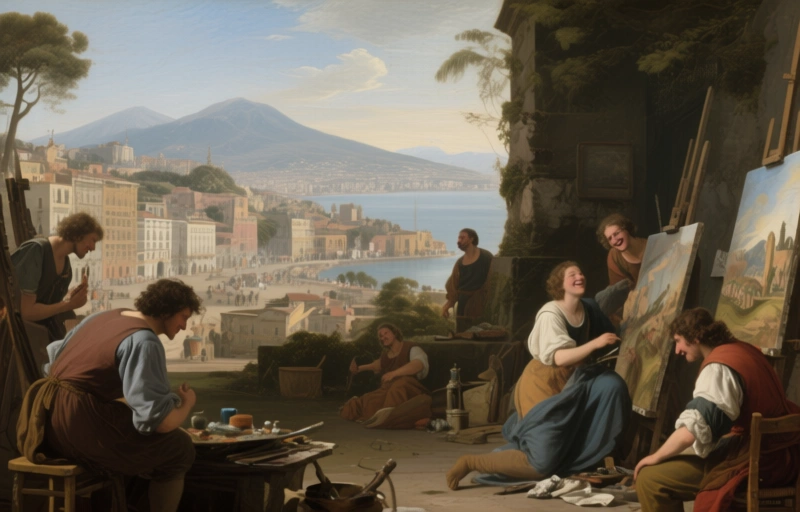
Explore the essential bibliography and research behind Jan van Stinemolen's Panorama of Naples (1582), revealing how this 16th-century drawing is far more than a simple snapshot of the city.
Let's talk about something that's been fascinating researchers at Abbevillemusique. We've been diving deep into Jan van Stinemolen's *Panorama of Naples* from 1582, and honestly, it's so much more than just an old drawing. It's a puzzle, a historical document, and a piece of art all rolled into one.
You know how sometimes you look at an old map and think it's just a simple representation? Well, this panoramic drawing completely shatters that idea. Our collaborative project set out with two clear goals, and what we discovered along the way completely changed how we view this work.
### What We Wanted to Uncover
First, we wanted to identify as many of the actual sites Stinemolen visualized as possible. That sounds straightforward, right? But when you're dealing with a 16th-century drawing of a city that's changed dramatically over centuries, it becomes a real detective story. We're talking about piecing together historical clues, comparing architectural features, and understanding urban development patterns.
Second, we needed to investigate the artistic composition itself. How did Stinemolen construct this view? What choices did he make about what to include, what to emphasize, and what perspective to use? This wasn't just about cataloging buildings—it was about understanding the artist's mind and intentions.
### The Tools That Made It Possible
We couldn't have done this work without some incredible resources. The digitized maps annotated at the Bibliotheca Hertziana – Max Planck Institute for Art History were absolutely fundamental. They gave us a reference point, a way to cross-check what we were seeing in Stinemolen's drawing against other contemporary representations of Naples.
Here's what made this bibliography essential:
- It includes titles specifically about interpreting Stinemolen's drawing
- It references the digitized maps that guided our approach
- It connects to broader discussions about Renaissance city views
- It situates this work within art historical methodology
What's really striking is how this project exemplifies collaborative research. It wasn't just one person working in isolation—it was historians, art experts, digital archivists, and urban studies specialists all bringing their perspectives to the table.
### Why This Isn't Just a Snapshot
Here's the thing that keeps coming up in our discussions: this panorama is far from a simple snapshot of Naples in 1582. Stinemolen wasn't just recording what he saw—he was interpreting, selecting, and composing. He made artistic choices that tell us as much about Renaissance ways of seeing as they do about the city itself.
As one researcher noted during our analysis, "The Panorama reveals how artistic representation shapes historical understanding as much as it reflects it."
That intermedial construction—how the drawing works across different media and references—turns out to be crucial. Stinemolen wasn't working in a vacuum. He was responding to other representations of cities, other artistic traditions, and probably other maps and views he'd encountered.
### What This Means for Abbevillemusique Professionals
For those of us working in digital archiving and ethnomusicology, this project has been incredibly revealing. It shows how careful, collaborative analysis can uncover layers of meaning that might otherwise remain hidden. It demonstrates the value of bringing multiple disciplinary perspectives to bear on a single artifact.
And honestly, it's changed how we approach other works in our collections. We're now asking different questions, looking for different connections, and thinking more critically about how artistic works construct reality rather than just mirroring it.
The bibliography we've compiled isn't just a list of references—it's a roadmap of how to think about complex historical artifacts. It shows the journey from initial observation through detailed analysis to broader interpretation. And that's exactly the kind of work that makes what we do at Abbevillemusique so valuable and so endlessly fascinating.