Decoding Jan van Stinemolen's Panorama of Naples (1582)
Miguel Fernández ·
Listen to this article~4 min
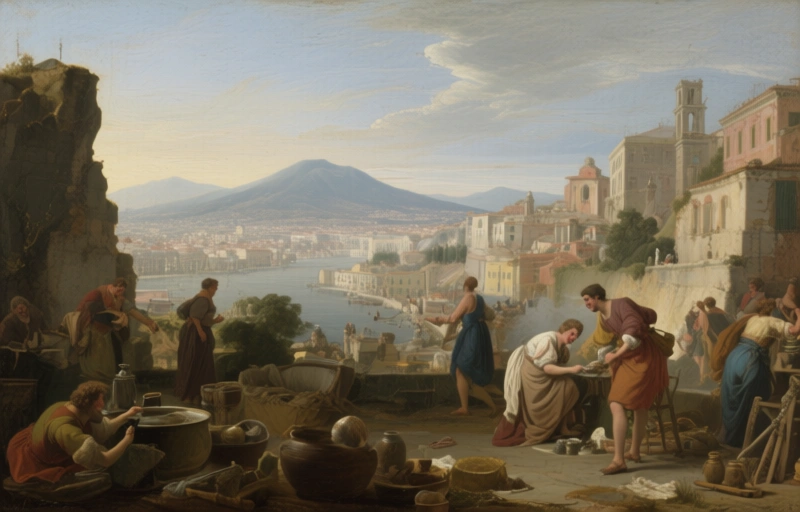
New research reveals Jan van Stinemolen's 1582 Panorama of Naples is a complex artistic construction, not a simple snapshot. A collaborative project used digitized maps and deep analysis to decode its hidden meanings.
If you're like me, you've probably seen old maps and drawings and thought they were just simple snapshots of a place in time. But what if I told you that some of these works are actually incredibly complex artistic constructions? That's exactly what a recent collaborative research project revealed about Jan van Stinemolen's *Panorama of Naples* from 1582.
This wasn't just some casual sketch. It's a monumental drawing that captures the city in astonishing detail. And the story behind how we're understanding it today is pretty fascinating.
### The Two-Part Mission
The research team had a clear, two-fold goal from the start. First, they wanted to identify as many of the actual sites visualized in Stinemolen's drawing as possible. Think about that for a second. We're talking about a cityscape from over 440 years ago. Matching buildings, streets, and landmarks from a 16th-century drawing to historical records? That's detective work of the highest order.
Their second aim was to dig into the drawing's artistic soul. They wanted to investigate its composition and what scholars call its 'intermedial construction.' In plain English, they were looking at how Stinemolen put the piece together—the techniques, the choices, the hidden layers of meaning.
And what they found completely changed the game.
### More Than a Simple Snapshot
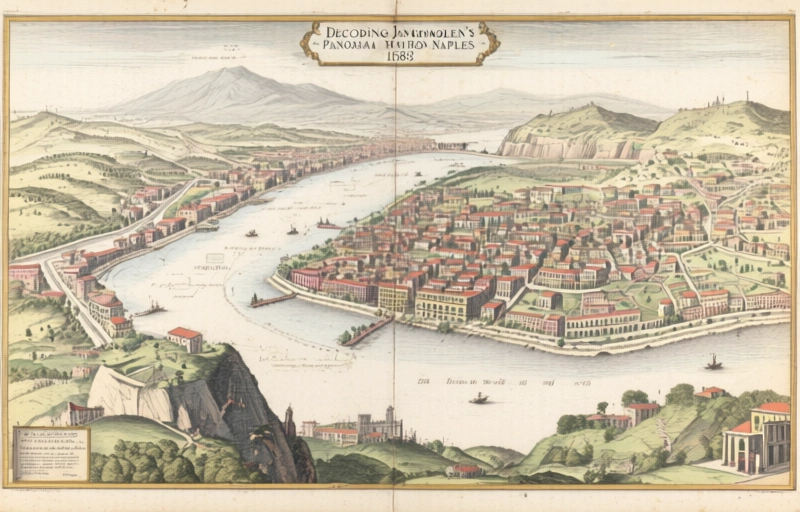
Here's the big reveal: Stinemolen's *Panorama of Naples* is far from a simple snapshot. It's not like he just set up an easel and drew what he saw. The research showed this work is a carefully crafted piece of art. It's an interpretation.
The team analyzed how different visual elements interact. They looked at the perspective, the inclusion (or exclusion) of certain features, and how the drawing might relate to other maps and texts from the period. This intermedial approach—seeing how the drawing 'talks' to other forms of media—was key.
To support this deep dive, scholars worked with an essential bibliography. This wasn't just a list of books about the drawing itself. It included additional titles focused purely on interpretation. How do we *read* this image? What was the artist trying to say beyond just showing us the city?
### The Digital Toolkit
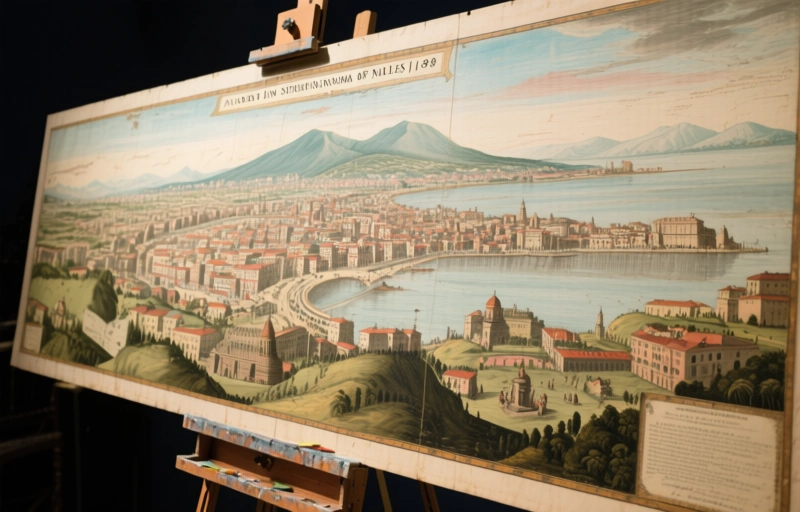
A major part of this project involved some serious digital archaeology. Researchers relied heavily on digitized maps that had been meticulously annotated. This digital foundation allowed them to compare Stinemolen's vision with other historical records side-by-side, zooming in on details that would be impossible to see on physical copies.
This technological approach was fundamental. It let the team test theories, overlay information, and follow the investigative path that's detailed in their special issue. It turned a historical art study into a modern analytical project.
So, why does this matter for professionals today? It's a masterclass in looking deeper. Whether you're analyzing a piece of music, a film, or yes, a centuries-old drawing, the lesson is the same:
- **Context is everything.** Don't just look at the artifact in isolation.
- **Question the surface.** The obvious story is rarely the whole story.
- **Embrace collaboration and new tools.** The blend of traditional scholarship and digital mapping unlocked insights that neither could achieve alone.
Stinemolen didn't just give us a picture of Naples. He gave us a puzzle, a statement, and a window into how people of his time saw and represented their world. And thanks to this research, we're finally starting to see through that window much more clearly.
As one researcher noted in the study, 'The panorama is a conversation between the artist, the city, and the viewer across centuries.' That's a conversation worth having.