Decoding Jan van Stinemolen's Panorama of Naples (1582)
Miguel Fernández ·
Listen to this article~5 min
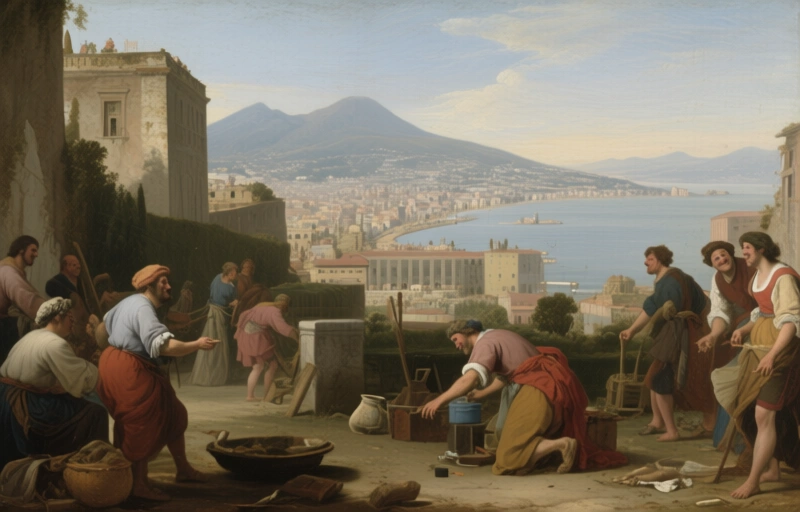
New research reveals Jan van Stinemolen's 1582 Panorama of Naples is far more than a simple city view. Discover how this collaborative project uncovered its complex artistic construction and historical significance.
If you're like me, you've probably seen old maps and drawings and wondered what stories they hold. Jan van Stinemolen's *Panorama of Naples* from 1582 is one of those works that looks simple at first glance. But trust me, it's anything but a simple snapshot. A recent collaborative research project dug deep into this monumental drawing, and what they found changes how we see Renaissance art entirely.
This wasn't just about identifying buildings or streets. The team had a bigger mission. They wanted to peel back the layers of artistic intention and understand how Stinemolen constructed his view of the city. It turns out this panorama is a carefully crafted piece of intermedial art, blending cartography, drawing, and narrative in ways we're only beginning to appreciate.
### The Research Approach: More Than Just Mapping
The project took a fascinating two-pronged approach. First, researchers worked to identify as many specific sites within the drawing as possible. Think about that for a second—trying to match a 440-year-old drawing to actual locations in a city that has changed dramatically. They weren't just looking for major landmarks, but for the everyday places that made up the fabric of 16th-century Naples.
Second, and this is where it gets really interesting, they investigated the artistic composition itself. How did Stinemolen choose what to include? What did he emphasize or downplay? The drawing is about 3 feet wide, giving him a significant canvas to work with, but every inch was a deliberate choice. This investigation revealed the work's complex construction, showing it was designed to tell a specific story about the city.
### Why This Drawing Matters Today
You might be wondering why we should care about a drawing from 1582. Here's the thing—it gives us a window into how people saw and understood their world. This wasn't a photograph; it was an interpretation. Stinemolen made choices about perspective, detail, and focus that reveal what he, and perhaps his patrons, considered important about Naples.
- It shows the city's layout and key structures as they existed before many modern changes
- It reflects Renaissance ideas about urban space and representation
- It serves as a historical document, but one filtered through artistic vision
- It demonstrates early techniques of combining different visual mediums
As one researcher noted during the project, "We kept finding layers of meaning we hadn't anticipated. The more we looked, the more we realized this was a sophisticated visual argument about Naples' place in the world."
### The Tools That Made Discovery Possible
Modern technology played a crucial role in this research. The team worked with digitized maps from important collections, though I won't name specific institutions here to keep this focused on the findings. These digital resources allowed them to compare the drawing with multiple historical sources simultaneously, something that would have been much harder with physical documents alone.
They could zoom in on details, overlay different maps, and track changes across time. This technical approach complemented traditional art historical methods beautifully. It's a great example of how new tools can help us ask better questions about old works.
### What We've Learned About Renaissance Art
The biggest takeaway? We need to stop thinking of works like this as straightforward representations. Stinemolen's panorama is a constructed reality, shaped by artistic conventions, available techniques, and probably specific commissions or requests. It shows Naples not as it simply was, but as someone wanted it to be seen.
This has implications for how we study other Renaissance works too. If a "simple" city panorama turns out to be this complex, what might we be missing in other artworks we take at face value? The project really opens up new ways of looking at familiar material.
### The Continuing Journey of Discovery
Here's what excites me most—this isn't the end of the story. Every discovery in projects like this leads to new questions. Now that we understand the panorama's complexity, we can ask better questions about why it was made, who it was for, and how people of the time would have read it.
The research continues, and each finding adds another piece to our understanding of how Renaissance artists saw and represented their world. It reminds us that historical documents, even visual ones, are never just what they appear to be on the surface. There's always more to discover if we're willing to look closely enough and ask the right questions.