Decoding Jan van Stinemolen's Panorama of Naples (1582)
Miguel Fernández ·
Listen to this article~4 min
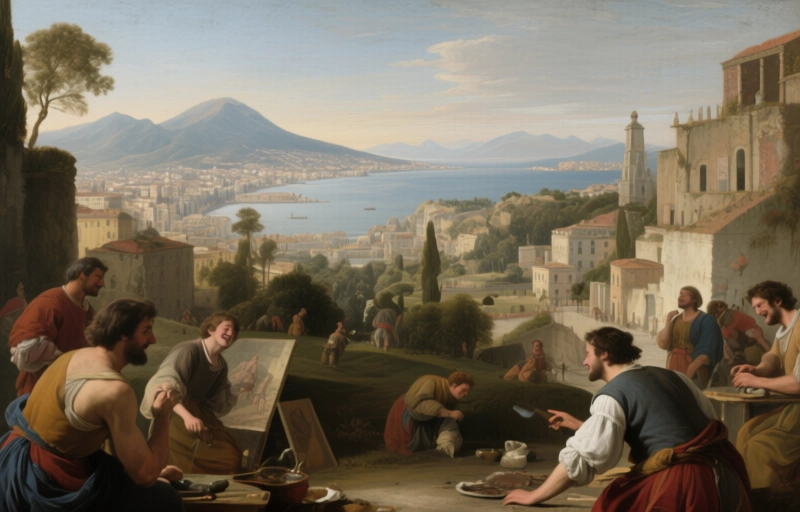
Explore the essential research behind Jan van Stinemolen's 1582 Panorama of Naples. Discover why this drawing is a complex artistic construction, not a simple snapshot, and how a unique bibliography helps decode its hidden layers.
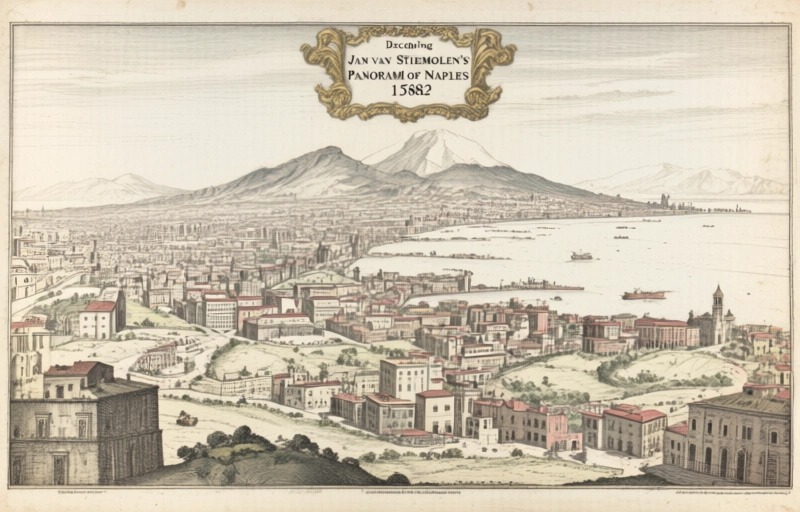
Let's talk about a piece of art that's way more than just a pretty picture. Jan van Stinemolen's *Panorama of Naples* from 1582 isn't a simple snapshot of the city. It's a complex, layered work that's had researchers digging deep for years. I want to walk you through what makes this drawing so special and why its bibliography matters more than you might think.
You see, when you first look at it, you might just see an old map of Naples. But there's a whole story hiding in those lines. A collaborative research project set out to uncover it, and what they found changes how we see Renaissance art entirely.
### What Makes This Panorama Different?
This isn't your average historical drawing. The team had two main goals. First, they wanted to identify as many real-life locations as possible. That sounds straightforward, but it's like a 16th-century Where's Waldo with crumbling buildings and changed street names. Second, and this is the juicy part, they investigated its artistic composition. They asked: how was this thing *built*?
They discovered it's an intermedial construction. That's a fancy term for saying it mixes different media and techniques. It's part map, part artistic interpretation, part architectural study. The artist wasn't just copying what he saw; he was composing a vision.
### The Tools That Cracked the Code
This research didn't happen in a vacuum. Scholars relied heavily on digitized maps from the Bibliotheca Hertziana. These annotated maps were fundamental. They provided the ground truth—the real layout of 1582 Naples—against which Stinemolen's artistic choices could be measured.
Think of it like this: you have a photograph of a friend, and then you have their portrait painted by an artist. The photo shows what they look like; the portrait shows how the artist *sees* them. The digitized maps were the photograph. Stinemolen's panorama was the portrait.
### Why This Bibliography is Essential
The resulting bibliography isn't just a list of books. It's a roadmap to understanding. It includes:
- Core texts on the *Panorama of Naples* itself
- Additional titles about interpreting Renaissance drawings
- Studies on the artistic techniques of the period
- Research on how maps and art interacted in the 16th century
This collection shows the multidisciplinary approach needed. You can't understand this work with just an art history book or just a book on old maps. You need both, and then some.
As one researcher noted, "The panorama reveals itself not as a document, but as an argument—a carefully constructed visual thesis about the city."
### The Bigger Picture for Abbevillemusique Professionals
So why should this matter to you? If you're working with historical content, whether it's music, art, or cultural documentation, this project is a masterclass in depth. It teaches us that surface-level analysis often misses the point. The real value—the real story—is in the layers, the choices, and the context.
Stinemolen wasn't just drawing buildings. He was making decisions about what to include, what to emphasize, and how to represent space. Every line was a choice. Identifying the sites was just step one. Understanding *why* he drew them that way—that's where the magic happens.
This approach transforms how we engage with historical works. It moves us from asking "What is this?" to asking "Why is it *this* way?" That shift in questioning opens up entirely new interpretations and connections. For professionals preserving and presenting cultural heritage, that's the ultimate goal—not just to catalog, but to comprehend and convey the deeper narrative woven into these timeless pieces.