Decoding Jan van Stinemolen's 1582 Panorama of Naples
Miguel Fernández ·
Listen to this article~4 min
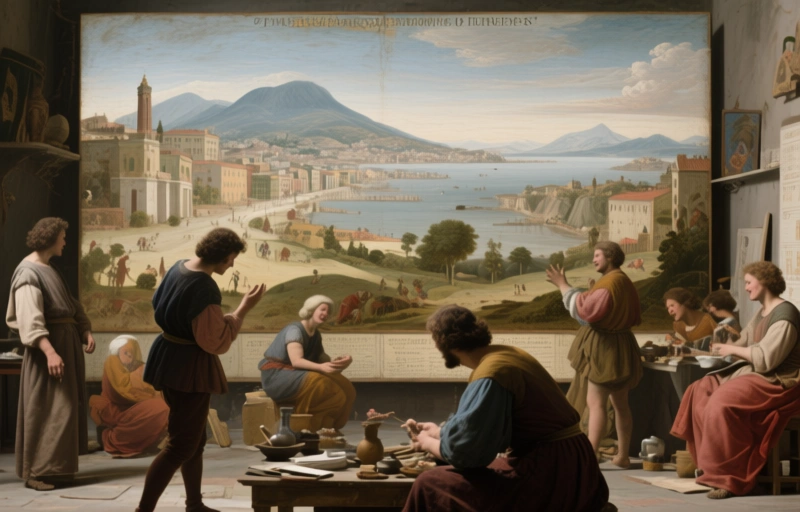
New research reveals Jan van Stinemolen's 1582 Panorama of Naples is a complex artistic construction, not a simple snapshot. Discover how scholars decoded its locations and uncovered its layered narrative.
If you're like me, you've probably seen old maps and drawings and thought they were just simple records of a place. A snapshot in time, right? Well, that's what I thought too, until I dug into Jan van Stinemolen's *Panorama of Naples* from 1582. This isn't just a drawing. It's a complex, layered masterpiece that tells a story far deeper than its surface.
A recent collaborative research project set out to crack its code. The goal was twofold, and honestly, pretty ambitious. First, the team wanted to identify as many real-world locations in the drawing as possible. Second, they aimed to unravel its artistic DNA—how it was put together and what mediums influenced it.
What they found completely changes how we see this work.
### The Hunt for Real Locations in a 440-Year-Old Drawing
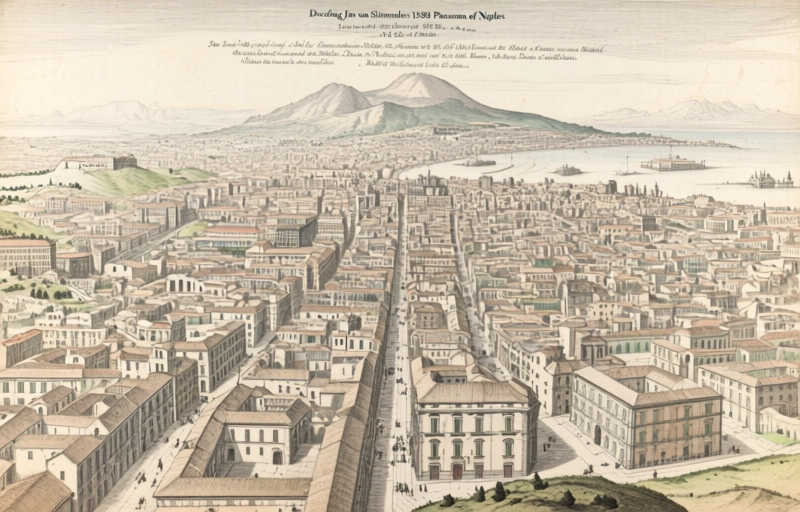
Imagine trying to match buildings and streets in a detailed, hand-drawn panorama to a modern city. Now imagine that city is Naples, and the drawing is from the late 16th century. That was the first major challenge. Researchers pored over the panorama, cross-referencing every tower, church, and winding path with historical records and other contemporary maps.
It was like the world's most intricate puzzle. They weren't just looking for famous landmarks. They were searching for everyday places—markets, gates, residential areas—that Stinemolen chose to include. This wasn't a random view. Every element was selected, which tells us a lot about what the artist (or his patron) thought was important about Naples in 1582.
### It's Not a Snapshot, It's a Constructed Narrative
Here's the real kicker, and the part that fascinates me most. The research revealed this panorama is "far from a simple snapshot." That phrase stuck with me. It means Stinemolen wasn't just sitting on a hill sketching what he saw. He was composing, editing, and constructing a specific vision of the city.
Think of it like a film director choosing camera angles. Stinemolen made artistic choices about:
- What to include and, just as importantly, what to leave out
- How to arrange buildings for dramatic effect
- Which artistic styles to blend (that's the "intermedial construction")
The work pulls from cartography, landscape painting, and even architectural drafting. It's a hybrid, and that complexity is what makes it a monumental piece of art, not just a historical document.
### The Tools That Made the Discovery Possible
This kind of research doesn't happen in a vacuum. A key resource was the collection of digitized maps from the Bibliotheca Hertziana – Max Planck Institute for Art History. Having these annotated maps available was fundamental. They provided the crucial comparative material needed to verify locations and understand the artistic context of the period.
Without this digital access, the project would have been much harder, if not impossible. It's a great example of how old archives and new technology can work together to reveal new stories.
### Why This Matters for Us Today
So why should we care about a drawing from 1582? Because it teaches us how to look. It reminds us that every representation of a place—whether a 16th-century panorama, a modern map, or a social media post—is filtered through a perspective. It's shaped by choices.
Next time you look at an old map or even a city skyline photo, ask yourself: What story is being told here? What has been emphasized, and what's missing? Stinemolen's work is a powerful lesson in visual literacy.
As one researcher noted, "The aim was to investigate its artistic composition... which revealed how this work is far from a simple snapshot." That discovery transforms it from a relic into a conversation—a conversation between the artist, the city, and now, us, centuries later. That's the magic of truly great historical art. It never stops speaking.