Decoding Jan van Stinemolen's 1582 Panorama of Naples
Miguel Fernández ·
Listen to this article~4 min
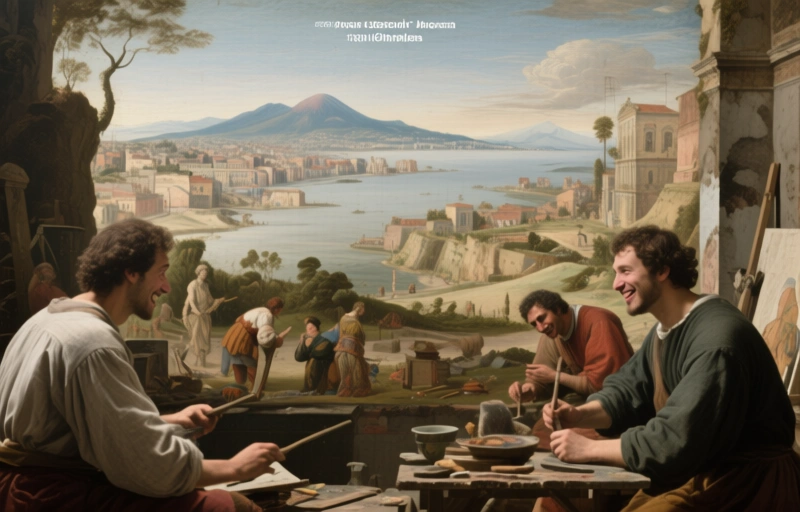
Explore the collaborative research into Jan van Stinemolen's 1582 Panorama of Naples, revealing it as a complex artistic construction, not a simple snapshot. Discover the annotated maps and bibliography that decoded this historical puzzle.
If you're like me, you've probably seen old maps and drawings and wondered about the stories they hold. They're not just historical documents—they're puzzles waiting to be solved. That's exactly what a fascinating collaborative research project set out to do with Jan van Stinemolen's *Panorama of Naples* from 1582. This wasn't about just looking at a pretty picture. It was a deep dive into understanding a city frozen in ink and paper.
Let's be honest, when we first glance at something like this, it's easy to think it's just a snapshot. A simple view of what Naples looked like over four centuries ago. But that's where we'd be wrong. This project revealed that Stinemolen's work is anything but simple. It's a carefully constructed piece of art, layered with meaning and intention.
### The Two Main Goals of the Research
The team had two clear objectives from the start. First, they wanted to identify as many real locations as possible within the drawing. Think about that for a second. We're talking about a city that has changed dramatically over 400 years. Streets have shifted, buildings have risen and fallen, and the coastline itself might have moved. Pinpointing specific sites is like detective work without a modern map.
Their second goal was even more intriguing. They wanted to investigate the artistic composition and what scholars call its 'intermedial construction.' In plain English? They wanted to figure out *how* Stinemolen put this panorama together and what other art forms or media influenced him. Was he copying from other maps? Was he blending different views? The answers tell us about the artist's mind and the tools he had available.
### Why This Drawing is More Than Meets the Eye
What they discovered is that this panorama is far from a straightforward record. It's not like someone set up a camera on a hill and took a picture. Stinemolen made choices. He decided what to include, what to emphasize, and what perspective to use. These choices turn the drawing from a document into an interpretation. It shows us Naples through his eyes and the cultural lens of his time.
This is where the special bibliography comes in. It's not just a dry list of books and articles. It's a toolkit for understanding. It includes:
- Key texts that interpret the drawing's significance
- References to the digitized maps that were crucial for the research
- Scholarly works that place the panorama in its historical context
The annotated maps from the Bibliotheca Hertziana were particularly important. They served as a Rosetta Stone, helping researchers cross-reference the drawing with known geography. Without these resources, the project would have been like trying to solve a jigsaw puzzle with half the pieces missing.
### The Bigger Picture for Art History
So, what's the takeaway for professionals and enthusiasts? This project is a perfect example of how technology and traditional scholarship can work together. Digitizing old maps doesn't just preserve them—it makes them active tools for new discovery. Researchers can zoom in, overlay images, and share findings across the globe in ways that weren't possible a generation ago.
It also reminds us that historical art is rarely just about aesthetics. A drawing like this is a complex document. It's a geographical record, a political statement, and a personal artistic expression all rolled into one. Unpacking it requires patience, collaboration, and a willingness to ask the right questions.
As one researcher noted, 'The real discovery wasn't just identifying a building or a street. It was understanding the thought process behind the panorama.' That's the magic of projects like this. They connect us to the past in a way that feels immediate and human. They show us that an artist in 1582 faced many of the same creative decisions that an artist would face today—what to show, how to show it, and what story to tell.