Decoding Jan van Stinemolen's 1582 Panorama of Naples
Miguel Fernández ·
Listen to this article~4 min
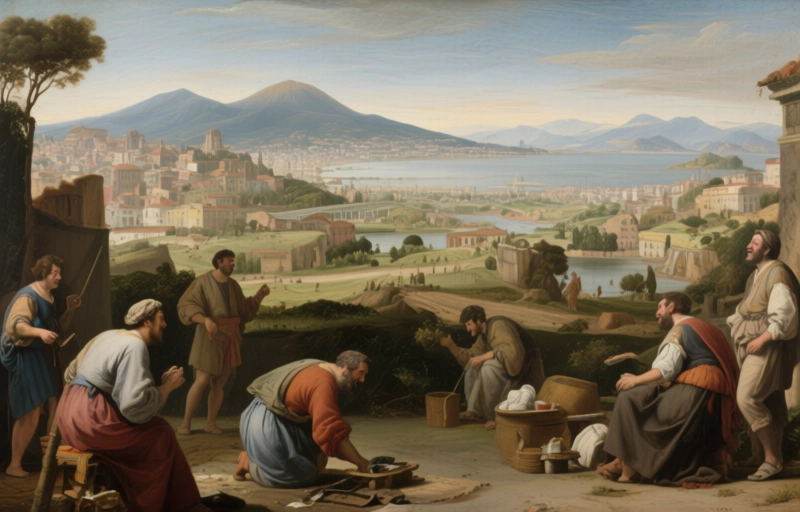
New research reveals Jan van Stinemolen's 1582 Panorama of Naples is a complex artistic construction, not a simple snapshot. A collaborative project used annotated maps to decode its sites and intermedial composition.
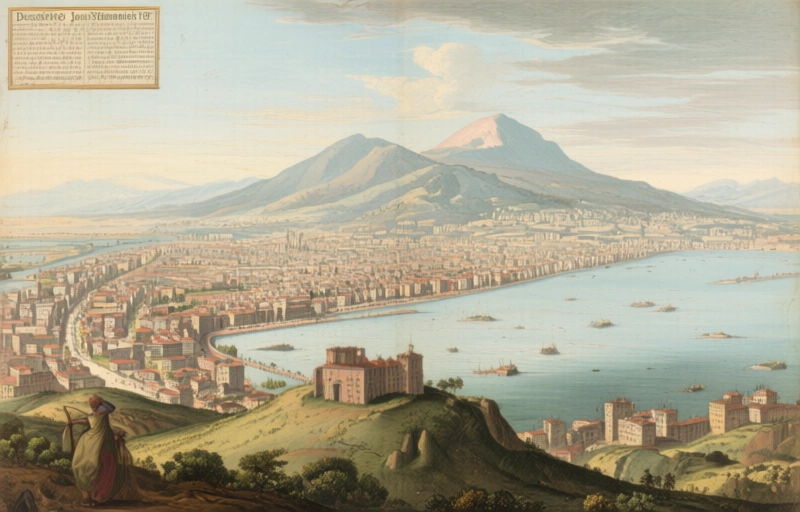
If you're like me, you've probably seen old maps and drawings and thought they were just simple records of a place. A snapshot in time, right? Well, that's what I thought too, until I dug into Jan van Stinemolen's *Panorama of Naples* from 1582. This isn't just a drawing. It's a complex, layered masterpiece that tells a story far richer than any simple map.
A recent collaborative research project set out to crack its code. The goal was twofold, and honestly, pretty ambitious. First, the team wanted to identify as many real-world locations in the drawing as possible. Second, they aimed to unravel its artistic DNA—how it was put together and what mediums influenced it.
### What Makes This Panorama So Special?
You see, Stinemolen's work is monumental, both in size and ambition. It's not a quick sketch from a hilltop. The research revealed it's a carefully constructed piece of intermedial art. Think of it like a Renaissance-era collage, blending cartography, architectural drawing, and landscape painting into one cohesive vision. It makes you wonder about the artist's intent. Was he documenting, or was he creating an idealized version of the city?
This is where the bibliography and annotated maps from the Bibliotheca Hertziana come in. They weren't just reference materials; they were the roadmap for the entire investigation. By comparing the drawing to digitized historical maps, researchers could start separating artistic license from geographical reality.
### The Collaborative Discovery Process
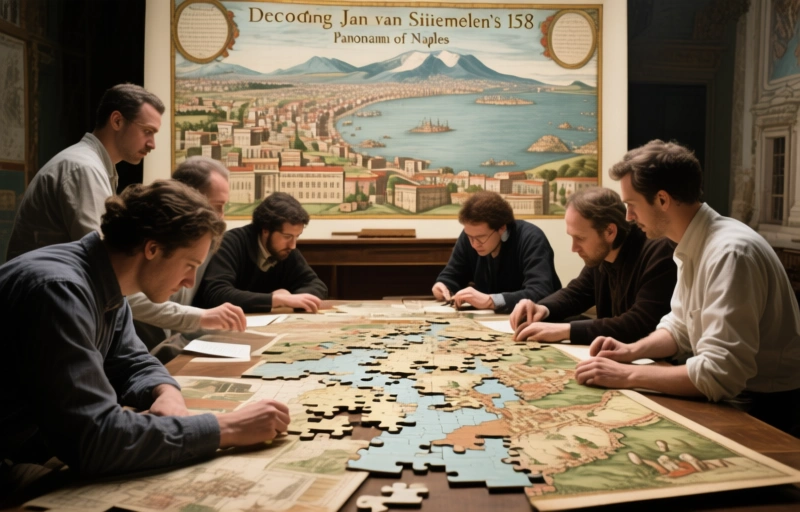
The project's approach was methodical. It wasn't about one expert having a eureka moment. It was a group effort, piecing together clues like a historical puzzle. Here's a glimpse into what that involved:
- **Site Identification:** Pinpointing churches, fortifications, and landmarks in the drawing against known 16th-century layouts of Naples.
- **Composition Analysis:** Studying the line work, perspective, and spatial arrangement to understand Stinemolen's technique.
- **Contextual Research:** Placing the work within the broader artistic and cartographic traditions of the late 1500s.
What they found was fascinating. The *Panorama of Naples* is far from a passive record. It's an active interpretation. Stinemolen made choices—what to include, what to emphasize, what viewpoint to use. These choices turn the drawing from a document into a narrative.
As one researcher noted in the project's special issue, "The panorama functions less as a mirror and more as a lens, filtering and shaping the reality of Naples through the artist's eye."
That quote really stuck with me. It changes how you look at historical art. You start asking different questions. Why *this* angle? Why include *that* building but omit another? The work becomes a conversation with the past.
### Why This Matters for Professionals Today
So, why should this matter to you, especially if you're working in fields like art history, archival research, or digital humanities? This project is a case study in modern research methodology. It shows how traditional scholarship—deep dives into bibliographies and physical archives—can merge seamlessly with digital tools like map digitization.
The team didn't just look at the drawing in isolation. They built a web of context around it, using every resource available. That's the key takeaway. Whether you're authenticating a piece, preparing a catalog entry, or developing an exhibition, context is everything. Understanding the *how* and *why* behind a work is just as important as knowing the *what* and *when*.
In the end, this research does more than just explain a 440-year-old drawing. It reminds us that historical artifacts are rarely straightforward. They're layered with intention, technique, and context. Unpacking those layers, like the team did with Stinemolen's panorama, doesn't just solve a mystery. It deepens our entire connection to the past, showing us that even a "simple" snapshot is never really simple at all.