Decoding Jan van Stinemolen's 1582 Panorama of Naples
Miguel Fernández ·
Listen to this article~4 min
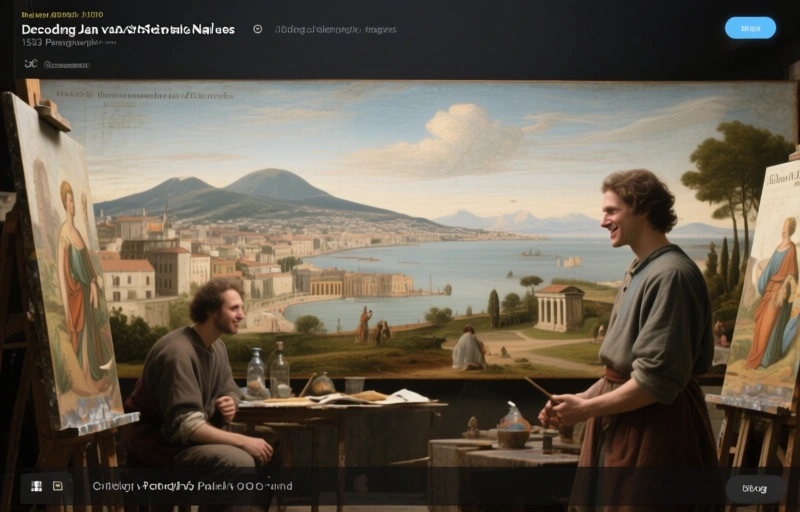
New research reveals Jan van Stinemolen's 1582 Panorama of Naples is far more than a simple city view. Discover how artistic choices and digitized maps helped decode this Renaissance masterpiece's hidden meanings.
You know how sometimes you look at an old map or drawing and think, "Wow, that's just a simple picture of how things looked back then"? Well, that's exactly what researchers thought about Jan van Stinemolen's *Panorama of Naples* from 1582. Until they looked closer.
Turns out, this monumental drawing is anything but simple. It's a complex artistic statement, a carefully constructed view of a city that reveals more about the artist's vision than about the actual streets of Naples. And that's what makes it so fascinating.
### What This Research Project Uncovered
A collaborative team recently dove deep into this work, and they had two main goals. First, they wanted to identify as many real locations as possible within the drawing. You'd think that would be straightforward, right? Just match buildings to what was there in 1582.
But here's the thing - Stinemolen wasn't creating Google Street View for the Renaissance. He was making artistic choices, composing his panorama with intention. Which brings us to their second goal: understanding the drawing's artistic composition and what we call its "intermedial construction."
That's just a fancy way of saying they looked at how different media - drawing techniques, map-making conventions, artistic styles - all came together in this single work. And what they found surprised everyone.
### Why It's More Than Just a Snapshot
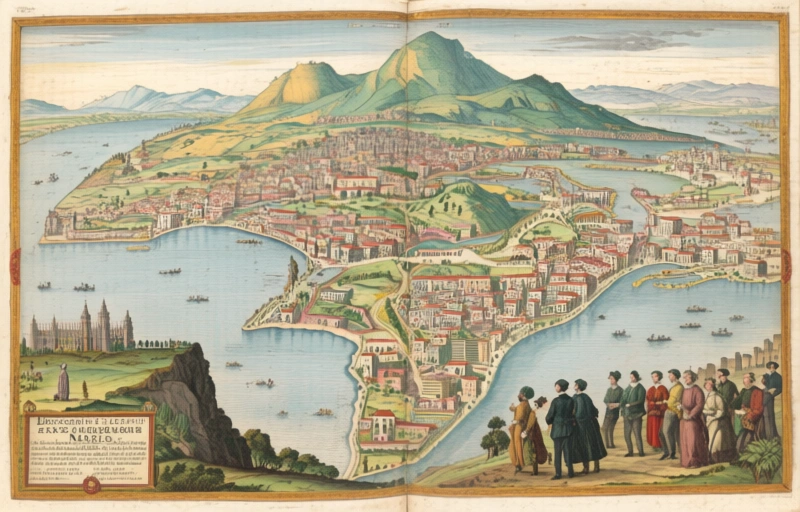
Let me put it this way. If you take a photo of your neighborhood today, you're capturing what's actually there (plus whatever filters you use, I suppose). But Stinemolen was doing something different. He was creating a *version* of Naples, one that served his artistic purposes.
- He might emphasize certain buildings to make a political point
- He could arrange elements for better visual flow, even if that meant moving things around
- He likely incorporated symbolic elements that meant something to his contemporary viewers
This research project used digitized maps from the Bibliotheca Hertziana – Max Planck Institute for Art History as their foundation. These annotated maps became their roadmap for understanding what was real, what was artistic license, and what was somewhere in between.
### The Essential Bibliography
Now, if you're diving into this topic yourself, you'll want to know where to start. The bibliography that came out of this project isn't just a dry list of academic papers. It's a curated collection that helps you understand:
- Different interpretations of the drawing over time
- How mapping technology has changed our understanding
- The artistic context of late 16th-century Europe
- Specific studies on Stinemolen's techniques and choices
One researcher put it perfectly: "We stopped looking for Naples in the drawing and started looking for Stinemolen's Naples." That shift in perspective changed everything.
### What This Means for Understanding Historical Art
Here's why this matters, even if you're not an art historian. When we look at historical works, we often make assumptions. We think they're trying to show us "how things were" with perfect accuracy.
But artists have always been storytellers, not just recorders. They make choices about what to include, what to emphasize, what to leave out. Stinemolen's panorama reminds us that every historical document comes through someone's perspective.
This research helps us read between the lines - or in this case, between the pen strokes. It shows us how to appreciate the artistry while still learning about the historical reality. And that's a skill that applies far beyond Renaissance drawings.
So next time you look at an old map or historical drawing, ask yourself: What is the artist trying to tell me? What choices did they make? You might just see something no one else has noticed yet.