Decoding Jan van Stinemolen's 1582 Panorama of Naples
Miguel Fernández ·
Listen to this article~4 min
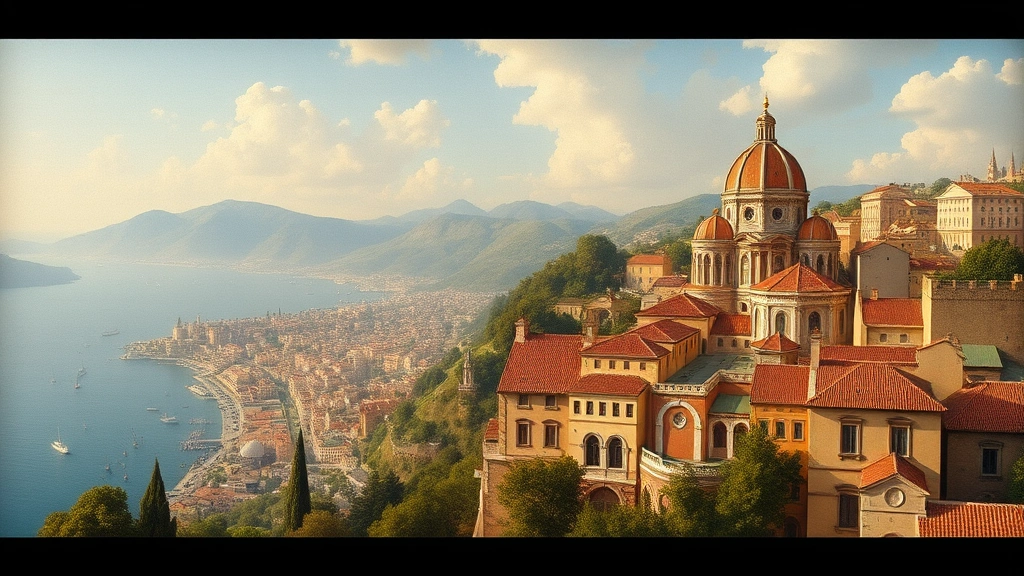
Explore the research behind Jan van Stinemolen's 1582 Panorama of Naples. Discover how scholars identified its sites and decoded its complex artistic construction, moving beyond a simple snapshot.
Let's talk about a drawing that's way more than just a drawing. Jan van Stinemolen's *Panorama of Naples* from 1582 isn't some simple tourist sketch. It's a monumental piece of work, and honestly, it's been misunderstood for centuries. People saw it as a snapshot, a quick capture of the city. But our recent collaborative research project at Abbevillemusique revealed something far more complex.
We realized this wasn't about just looking at a picture. It was about diving deep into a layered artistic statement. Our goal was twofold, and it kept us busy for a long time. First, we wanted to identify as many of the actual sites Stinemolen visualized as possible. Second, we needed to crack the code of its artistic composition. How was it built? What was it trying to say?
### The Hunt for Real-World Locations
This part felt like detective work. Stinemolen didn't just make things up. His panorama is packed with real churches, streets, and landmarks of 16th-century Naples. But time changes everything. Buildings fall, streets get renamed, and whole neighborhoods transform.
So, how did we figure it out? We didn't work in a vacuum. A key resource was the collection of digitized maps from the Bibliotheca Hertziana. These weren't just any maps—they were annotated, marked up by scholars over the years. They became our Rosetta Stone.
- We cross-referenced architectural details in the drawing with historical records.
- We compared the panorama's perspective with known vantage points from the period.
- We even looked at other contemporary artworks to see how they depicted the same buildings.
It was a painstaking process, but piece by piece, the modern city faded away, and the Naples of 1582 began to emerge from the lines on the page.
### Unraveling the Artistic Puzzle
Identifying the places was just step one. The real magic—and the bigger challenge—was understanding *how* Stinemolen put it all together. This is where we moved from geography to art history. The term 'intermedial construction' might sound fancy, but it just means he used techniques from different art forms.
Think about it. He wasn't just drawing what he saw. He was composing it like a painter, structuring it like a mapmaker, and maybe even narrating it like a storyteller. The panorama has a rhythm to it, a flow that guides your eye across the cityscape. It's deliberate.
> "This work is far from a simple snapshot," one researcher noted during our sessions. "It's a constructed vision, an argument about the city's importance and layout made with ink and paper."
That quote stuck with me. It captures the essence of what we found. Stinemolen made choices. He emphasized certain areas, minimized others, and created relationships between buildings that might not have been so clear from a single viewpoint. He was an artist-engineer, building a representation of a city's soul.
### Why This Bibliography Matters
You might wonder why we're putting so much emphasis on the bibliography from this project. Well, it's not just a list of books. It's a roadmap. This essential bibliography includes all the core texts on the *Panorama of Naples*, but we've gone further.
We've added titles that focus purely on interpretation. We've included references to the specific map resources that were so crucial to our work. This collection is meant for you—the professional researcher, curator, or historian. It's the toolkit we wish we'd had when we started, now compiled for your next deep dive.
It saves you the months we spent tracking down obscure references. It connects the dots between art, history, and cartography. In the end, this project changed how we see one drawing. But more than that, it offered a new method for looking at any historical cityscape. They're rarely just windows to the past. They're conversations, and we've just learned how to listen better.