Decoding Jan van Stinemolen's 1582 Naples Panorama
Miguel Fernández ·
Listen to this article~5 min
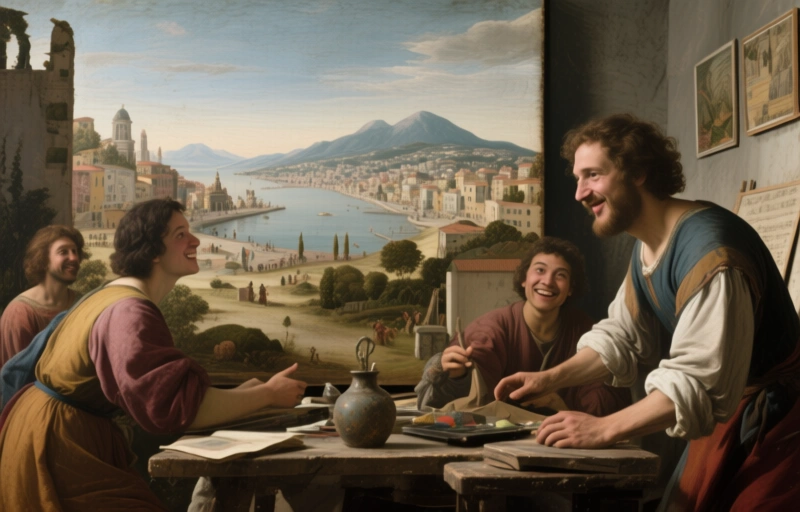
Explore the research behind Jan van Stinemolen's 1582 Panorama of Naples, revealing it as a complex artistic construction rather than a simple city snapshot, through collaborative analysis and digitized resources.
Let's talk about something that's way more than just an old drawing. Jan van Stinemolen's *Panorama of Naples* from 1582 isn't what it seems at first glance. It's not a simple snapshot of the city. It's a complex artistic statement, a carefully constructed visual narrative that researchers have been unpacking for years.
I want to walk you through why this piece matters, especially if you're deep in the world of art history or cultural research. We'll look at what makes it tick, how modern scholars are approaching it, and what we can learn from their methods.
### What Makes This Panorama So Special?
First off, calling it a 'drawing' almost feels like an understatement. Stinemolen created a monumental work that captures Naples at a specific moment in time. But here's the catch – it's not documentary. The artist made deliberate choices about what to include, what to emphasize, and how to arrange the cityscape.
Researchers discovered this wasn't about accuracy alone. It was about creating a particular impression of Naples. The composition tells a story, one that reveals as much about the artist's perspective as it does about the city itself.
### The Collaborative Research Approach
A recent project took on this panorama with two clear goals. They wanted to identify as many real locations as possible within the drawing. But they also dug into the artistic construction – how Stinemolen built this visual experience.
They used some fascinating resources:
- Digitized historical maps from major research institutions
- Comparative analysis with other Renaissance city views
- Technical examination of drawing techniques and materials
This intermedial approach – looking at how different visual forms interact – revealed layers of meaning that a straightforward analysis would miss.
### Why This Research Methodology Matters
Here's where it gets really interesting for professionals. The team didn't just look at the drawing in isolation. They built what I'd call a 'research ecosystem' around it. They brought together:
- Bibliographic resources that contextualize the work
- Annotated digital maps that allow for spatial analysis
- Comparative studies of similar panoramic works
One researcher noted, 'We stopped asking *what* he drew and started asking *why* he drew it this way. That changed everything.'
That shift in questioning opened up new interpretations. It moved the conversation from identification to interpretation, from cataloging to understanding artistic intention.
### Practical Applications for Professionals
So what can you take from this if you're working with historical visual materials? Several approaches proved particularly valuable:
- Cross-referencing multiple source types (drawings, maps, texts)
- Considering the artist's possible audiences and purposes
- Analyzing compositional choices as deliberate statements
- Using digital tools to examine details at different scales
These methods help us see historical works not as transparent windows to the past, but as constructed views with their own logic and agenda.
### The Bigger Picture
What we're really talking about here is how to read historical images critically. Stinemolen's panorama becomes a case study in Renaissance visual thinking. It shows how artists synthesized observation, memory, convention, and invention.
For contemporary professionals, this research demonstrates the value of collaborative, interdisciplinary approaches. It's not just art historians talking to art historians. It's bringing together cartographers, digital humanists, architectural historians, and cultural theorists.
That collaborative energy generates insights that siloed research might never reach. It creates conversations across specialties that enrich everyone's understanding.
### Moving Forward with Historical Analysis
The work on this panorama reminds us that historical images are always more than they appear. They're cultural artifacts that encode values, perspectives, and worldviews of their time.
As we develop new digital tools and collaborative frameworks, we're not just getting better at identifying what's in these images. We're getting better at understanding what they meant to the people who made them and the people who first saw them.
That's the real payoff – not just knowing more about 1582 Naples, but understanding better how people in 1582 saw and represented their world. And that understanding, in turn, helps us think more critically about how we represent our world today.