Decoding Jan van Stinemolen's 1582 Naples Panorama
Miguel Fernández ·
Listen to this article~5 min
Explore how Jan van Stinemolen's 1582 Panorama of Naples reveals complex artistic construction beyond simple documentation, with insights from collaborative research using digitized historical maps.
Hey there, let's talk about something that's been fascinating art historians and music professionals alike. We're diving deep into Jan van Stinemolen's *Panorama of Naples* from 1582. Now, you might be thinking, "What's a 16th-century drawing got to do with music?" Well, stick with me—it's more connected than you'd think.
This isn't just some old sketch. It's a monumental drawing that captures Naples at a specific moment in time, but here's the kicker: it's not a simple snapshot. The research team behind this project discovered something pretty incredible. They found that Stinemolen's work is actually a complex artistic construction, carefully composed to tell a story beyond what meets the eye.
### The Research Project's Dual Mission
The collaborative effort had two clear goals. First, they wanted to identify as many locations in the drawing as possible. Imagine trying to match 16th-century landmarks with modern Naples—it's like the world's most challenging puzzle. Second, they dug into how Stinemolen actually put this thing together. What artistic choices did he make? How did he blend different media and perspectives?
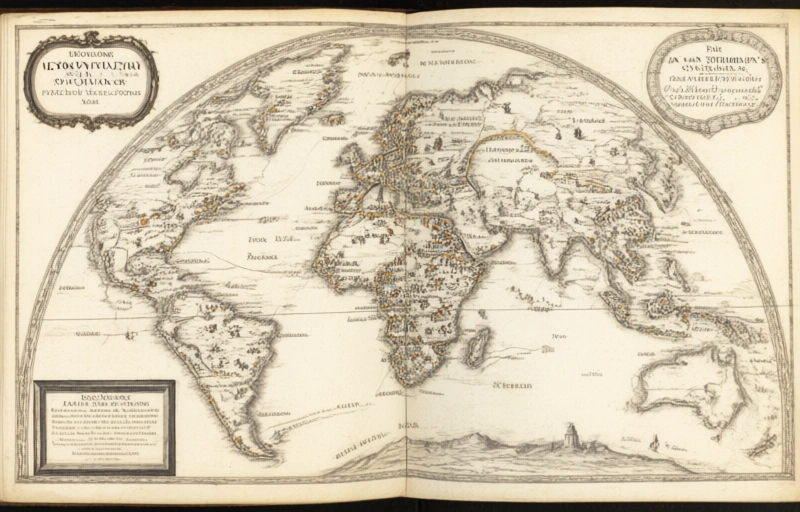
What they found will change how you look at historical art. This panorama isn't just a view of Naples—it's a carefully crafted narrative. The team used digitized maps from the Bibliotheca Hertziana that were absolutely crucial to their approach. These weren't just reference materials; they were the roadmap that helped decode Stinemolen's vision.
### Why This Matters for Music Professionals
Okay, so you're in the music industry. Why should you care about a 1582 drawing? Here's the thing: understanding how artists construct their work across different media gives us insights into creative processes that transcend time and discipline. Stinemolen wasn't just documenting—he was composing, much like a musician arranges notes to create something greater than the sum of its parts.
Think about it this way: when you're producing a track or arranging a composition, you're not just throwing sounds together. You're building layers, creating tension and release, telling a story. Stinemolen was doing the same thing visually. His panorama measures about 3 feet wide (we're talking imperial measurements here), but within that space, he packed an entire city's story.
### The Tools That Made Discovery Possible
The research team didn't just rely on gut feelings. They used:
- Digitized historical maps with detailed annotations
- Comparative analysis with other Renaissance artworks
- Geographic information systems to verify locations
- Interdisciplinary collaboration between art historians and geographers
One researcher put it perfectly: "We realized we weren't just looking at a city—we were looking at how one artist saw and reconstructed that city through his unique lens."
### What We Can Learn About Creative Interpretation
Here's where it gets really interesting for creative professionals. Stinemolen's work shows us that representation is always an interpretation. He made choices about what to include, what to emphasize, and how to arrange elements. Sound familiar? It should—it's exactly what happens when you're mixing a track or scoring a film.
The team identified dozens of specific sites in the drawing, but here's what surprised them: Stinemolen wasn't going for photographic accuracy. He was creating an experience, a feeling of Naples in 1582. He manipulated perspective, combined multiple viewpoints, and arranged elements for maximum impact.
### Applying These Insights Today
So what can we take from this 400-year-old artwork? Plenty. Whether you're working on album art, music videos, or even stage design, understanding how visual elements work together to create meaning is crucial. Stinemolen teaches us that every creative choice matters—from what you include to what you leave out.
The research continues, but one thing's clear: great art, whether visual or musical, never just shows us something. It makes us feel something, think something, experience something new. And that's a lesson that transcends centuries and creative disciplines.
Next time you're working on a project, ask yourself: are you just documenting, or are you composing? Are you just showing, or are you telling a story? Stinemolen's panorama reminds us that the most powerful creative work does both—and does it with intention, craft, and vision that stands the test of time.