When Art Meets Design: Signac, Anarchism, and Bourgeois…
Miguel Fernández ·
Listen to this article~4 min
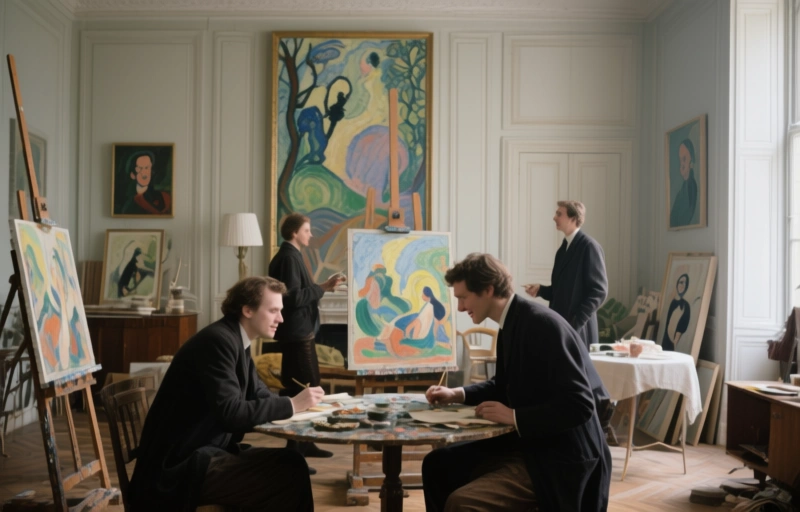
Explore the surprising link between Paul Signac's anarchist paintings and Henry Havard's bourgeois design guides. Discover how science bridged their ideological divide.
Let's talk about something that seems like a contradiction. On one side, you have Paul Signac, a Neo-Impressionist painter deeply rooted in anarchist thought. On the other, you have Henry Havard, an authority on interior design writing for the rising bourgeois consumer. They shouldn't agree on anything, right?
But they did. And it's fascinating.
This isn't just about pretty pictures or furniture placement. It's about how two wildly different worldviews—one rejecting society, the other building it—found common ground in science and color theory. We're looking specifically at two of Signac's paintings of domestic spaces: *Salle à manger* (1886–1887) and *Un Dimanche* (1888–1890).
### The Unlikely Pair: Signac & Havard
Signac's art wasn't created in a vacuum. His theories on color and composition were a form of visual anarchism, aiming to create a new, harmonious order. Havard, meanwhile, was publishing the rulebooks for the fashionable home, like *L'Art dans la maison* (1884) and *La Décoration* (1892).
One man was critiquing the system from the outside. The other was helping to furnish its most comfortable rooms. You'd think their manuals would be completely different.
Yet, when you lay them side by side, the parallels are startling. They were both drawing from the same well of scientific thought that was buzzing in the late 19th century. Think about optics, psychology, and the belief that you could engineer a better experience through rational principles.
### The Science of Space and Color
Where does this shared language show up? Everywhere. But especially in two key areas:
- **Furniture Arrangement:** Both were concerned with balance and flow. It wasn't just about stuffing a room. It was about creating a specific atmosphere through spatial relationships.
- **The Power of Color and Line:** This is the big one. Havard gave advice on which colors to use in a dining room versus a bedroom, often hinting at their psychological effects. Signac used his pointillist technique—those tiny dots of pure color—to scientifically create luminosity and emotion from a distance.
They both believed color wasn't just decorative; it was functional. It could calm you, energize you, or shape your perception of a space. That's a powerful idea.
> "A shared confidence in progress through science linked these divergent ideologies."
That quote sums it up perfectly. Even with opposing end goals, they shared a fundamental faith that science—especially the science of vision—was the tool to get there. Havard used it to sell sofas and define taste. Signac used it to quietly suggest a new way of seeing the world, one meticulous dot at a time.
### Why This Matters for You
So, why should we care about a 130-year-old debate between a painter and an interior designer? Because it shows that inspiration and influence come from the most unexpected collisions.
It reminds us that good design, whether on a canvas or in a living room, often rests on a foundation of understood principles. It's about intentionality. The next time you choose a color for a wall or arrange a room, you're tapping into that same history of thought—the endless dance between art, science, and the society we live in.
It turns out extremes can meet. And sometimes, where they meet is in the details of our daily lives, in the light falling across a table or the color that makes a room feel like home.