Art & Ideology: When Signac's Anarchism Met Bourgeois Design
Miguel Fernández ·
Listen to this article~3 min
Explore the surprising link between Paul Signac's anarchist Neo-Impressionist paintings and Henry Havard's bourgeois design guides. Discover how both used the same color science.
Let's talk about something fascinating. It's about how two seemingly opposite worlds—art and commerce, rebellion and conformity—ended up speaking the same visual language. We're looking at Paul Signac, the Neo-Impressionist painter with strong anarchist leanings, and Henry Havard, the go-to expert for the rising bourgeois class on how to decorate their homes.
On the surface, they couldn't be more different. Signac was all about challenging the status quo through his art. Havard? He was writing the rulebook for it, literally. His books, *L'Art dans la maison* (1884) and *La Décoration* (1892), were the ultimate guides for creating the perfect, respectable interior.
### The Unexpected Common Ground
Here's where it gets interesting. Both men, despite their opposing ideologies, were drawing from the same well of scientific thought. The late 19th century was obsessed with progress through science, and this bled into everything—even how you arranged your sofa.
Signac's paintings of bourgeois interiors, like *Salle à manger* (1886–1887) and *Un Dimanche* (1888–1890), aren't just pretty pictures. They're studies. He applied theories of color and line with almost mathematical precision, believing this could evoke specific psychological responses. He wanted to use this science to subtly challenge the very society he was depicting.
Now, flip through Havard's design manuals. You'll find something remarkably similar. He wasn't just telling people to buy expensive furniture. He was prescribing:
- Specific color palettes based on room function and desired mood
- The psychological impact of line and form in furniture arrangement
- How to use decor to project a specific social identity
It's wild, right? The anarchist and the arbiter of taste were both convinced that the science of visual perception could shape human experience. One wanted to liberate minds; the other wanted to solidify social standing. But their toolkits looked suspiciously alike.
### A Shared Faith in Science
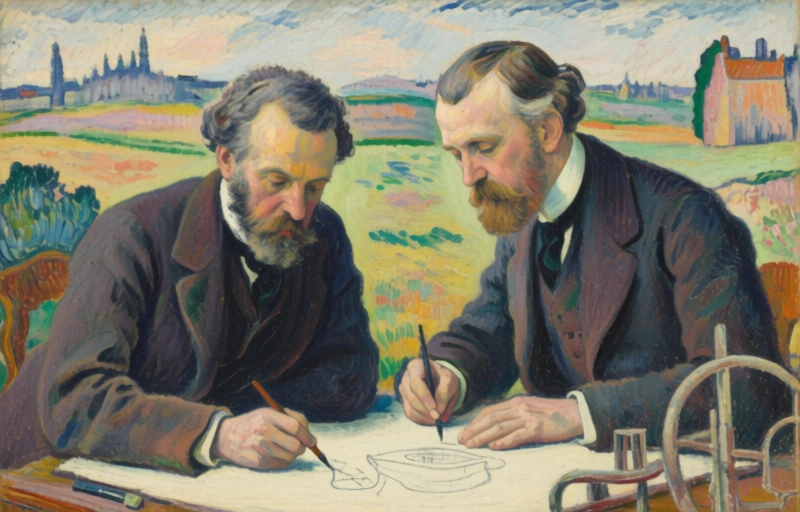
That's the real connection. A shared, almost unshakable, confidence that science—particularly color theory and optics—held the key to progress. For Signac, that progress was social and spiritual liberation. For Havard and his readers, it was about mastering the new consumer society and using their homes as a badge of achieved status.
Think of it like two chefs with completely different philosophies—one a radical foraging purist, the other a master of classic French cuisine. Yet, they both swear by the exact same, precise temperatures for cooking a perfect steak. The end goals are worlds apart, but the foundational technique is identical.
This convergence tells us something crucial about that era. It shows how pervasive certain ideas were, crossing ideological battle lines. The methods for influencing perception through color, light, and form became a common language. Whether you were painting a revolutionary masterpiece or choosing a wallpaper for your parlor, you were participating in the same cultural conversation about science, control, and the human environment.
So next time you look at a painting from that period, or even think about decorating a room, remember this strange partnership. The most radical ideas and the most conventional practices often share a hidden, common root. They're just pointing the growth in different directions.